Fort Lawton Needs Your Voice: Make a Public Comment in Support 

Read through our advocacy stories from the last seven years and you’ll find a common theme: The ongoing saga of the Fort Lawton Redevelopment Plan. Since 2019, when Former Mayor Jenny Durkan signed the Fort Lawton development into law, it has become an emblematic project of our long and invested work in enacting real change to housing systems in Seattle.  

The former military base in Magnolia has been slated for transformation into affordable housing for nearly 20 years, though that vision has yet to be fully realized. That means countless families have been waiting nearly two decades for the promise of more affordable housing in one of Seattle’s most expensive neighborhoods.  

When this project is finished, it will provide homes across the housing continuum: Chief Seattle Club will build permanent supportive housing; Catholic Housing Services of Western Washington, in partnership with United Indians of all Tribes, will develop affordable rental apartments. And, Habitat SKKC has been slated to develop affordable homeownership opportunities.

“We can’t solve this region’s housing issues ourselves — no one organization can. Together with Catholic Community Services, we look forward to creating a development that offers a whole continuum of affordable housing options in a highly desirable area of Seattle,” said Habitat SKKC CEO Brett D’Antonio in 2019, shortly after the law was signed. At that point, Habitat SKKC planned to build 52 affordable homes for purchase on the site 

By 2024, Former Mayor Bruce Harrell began focusing on a redevelopment plan for the stalled project. By the time the plan was updated in 2025, our own plans for affordable homes increased to 200 units. We knew then that if we were going to address the housing crisis in Seattle, we would have to be more ambitious. 

When the capital budget was passed in 2025, it included $100 million for The Connecting Housing to Infrastructure Program (CHIP). Within that program, $10 million has been allocated for Fort Lawton—an amount of money that helps ensure this project will move forward.  

Earlier this month, The Office of Housing released the second Draft Supplemental Environmental Impact Study (DSEIS), and this is where our advocacy network’s voice is needed. Public comment on the DSEIS will be open from August 6 – September 8, 2026. 

There are three ways to submit public comment:  

  • In-person: An in-person verbal public comment can be given at Seattle Municipal Tower in the 3rd floor lobby on Thursday, August 27 from Noon to 3:00 PM. 

Learn more about the various ways to raise your voice for Fort Lawton—and stay up to date with our advocacy work by signing up for Habitat SKKC action alerts.   

Whether you’ve submitted comments for the Fort Lawton Redevelopment Plan in the past or it’s your first time doing so, we need you to show up in support of affordable housing and homeownership. Advocacy is not a job for the experts to handle alone. Advocacy is actionable work that everyday citizens can undertake. If we want to stop letting much-needed land sit empty and turn it into affordable homes for our neighbors, while affecting real change to Seattle’s housing landscape, we must stand up together.    

Washington State Senate Recognizes Habitat for Humanity SKKC

Last week, the Washington State Senate passed a resolution recognizing Habitat SKKC’s four decades of impact. The resolution highlights the essential role affordable housing plays in building strong, stable communities across Washington. It also reflects Habitat’s ongoing efforts to elevate housing affordability as a shared statewide priority, while celebrating the impact of affordable homeownership and honoring the volunteers and partners who make this work possible. 

Senate Resolution 8697, sponsored by Senator Emily Alvarado (D-Seattle), recognizes the connection between stable housing and outcomes such as improved health, educational success, and economic opportunity. As part of Habitat’s ongoing advocacy and awareness efforts, Habitat SKKC works to raise awareness of the housing challenges facing Washington residents and highlight the proven, results-driven solutions that address them. The full resolution can be found online here. 

During the resolution testimony, multiple elected officials spoke in support of our work, including Senator Emily Alvarado (D-34th Legislative District and sponsor of the resolution), Senator Judy Warnick (R-13th Legislative District, which includes Kittitas County, home of our Cle Elum and Ellensburg projects), Senator Rebecca Saldaña (D-37th Legislative District, which includes the neighborhood where we build Liberty Commons), and Senator Keith Wagoner (R-39th Legislative District). 

TVW was on hand to film the proceedings. Watch the inspiring clip below: 

Housing Impact Day: Real Stories, Real Impact

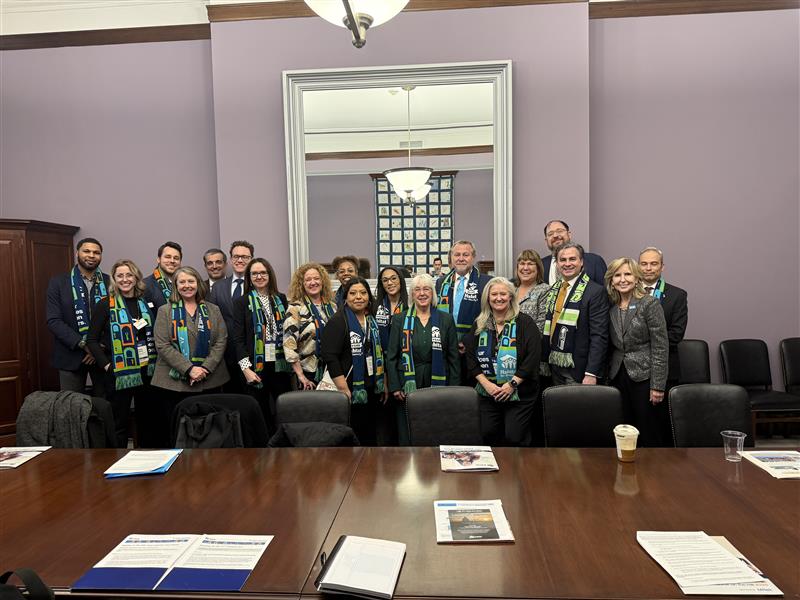
Habitat SKKC returned to Olympia on February 18 for our second annual Housing Impact Day, and we brought with us more passionate affordable housing advocates! Housing Impact Day is a full day during the Washington State legislative session dedicated to direct engagement with state legislators and their staff. Participants included Habitat staff, homeowners, homebuyers, volunteers, and supporters who shared why affordable homeownership matters and advocated for policies and funding that support it.  

Washington is in a housing affordability crisis, particularly in King County and the Puget Sound region, where housing costs far outpace what many households can afford. Because of this, legislators need to hear directly from constituents about how housing policies affect real people, not just from professional advocates or statistics.  

At Housing Impact Day, advocacy shows up as the act of everyday people influencing government decisions by sharing their experiences, values, and priorities with elected officials. Housing Impact Day is an important reminder that advocacy is accessible and impactful. It does not require expertise, only a willingness to speak up. 

Habitat SKKC’s Advocacy and Policy Manager Ryan Makinster explained the need for advocates to share their personal stories: “This is an opportunity to create connections between our mission, homeowners’ experiences, and legislator’s policy decisions. All work together, but it’s important for elected leaders, especially when they’re in the middle of a legislative session, to connect the dots. As they’re looking at legislation or funding decisions they are making, it can seem clinical, and we need to put color around that. Your voice is more important: You bring the heart. That’s what really moves legislators to make the decisions to support our efforts addressing this housing crisis.” 

Attendees kicked off Housing Impact Day with a morning meeting to review talking points, legislative updates, schedules, and expectations for the day. Participants were then assigned to small meeting groups that included at least one constituent of the legislator and an experienced advocate or staff member. Groups spent the day moving between scheduled 15‑minute meetings where they shared short personal stories related to housing and Habitat’s impact, supported by a clear “ask” provided by Habitat.  

During their 34 meetings, Habitat SKKC advocates asked that elected officials prioritize affordable housing in the capital budget and invest as much money as possible towards affordable housing in the Housing Trust Fund. 

Meanwhile, Chief Advocacy Officer, Ryan Donohue was testifying in support of some of our policy objectives, such as restricting the use of pocket listings in real estate as well as making it easier to bring infill-style condominium projects to the market. Ryan later noted that “Housing Impact Day is always a great opportunity to highlight the importance of homeownership to the housing continuum and having the opportunity to bring Habitat voices into the room at the same time we are testifying on important issues makes this one of the best days of the year.” 

Longtime Habitat SKKC volunteer Vince S. took part in Housing and Homelessness Advocacy Day, a different advocacy day put on by other partner organizations including the Washington Low Income Housing Alliance, several times in past years, and was excited to join for the second annual Housing Impact Day. He reflected, “I believe the lack of affordable housing is one of the most serious issues facing our society. If many people struggle to afford — or cannot afford at all — the basic necessity of decent shelter, our entire city, state, and nation are worse off. This has to be a central concern for our government at all levels, and it must find meaningful ways to partner with organizations such as Habitat for Humanity so that they can do more to provide the needed affordable shelter. Habitat can’t solve the problem for each family, but the problems Habitat solves tend to stay solved.” 

If you’re interested in participating in next year’s Housing Impact Day, learn more and sign up for our Advocacy Alerts here. No advocacy experience is required, and participants are supported with preparation, materials, and staff guidance. 

Habitat SKKC Goes to Washington

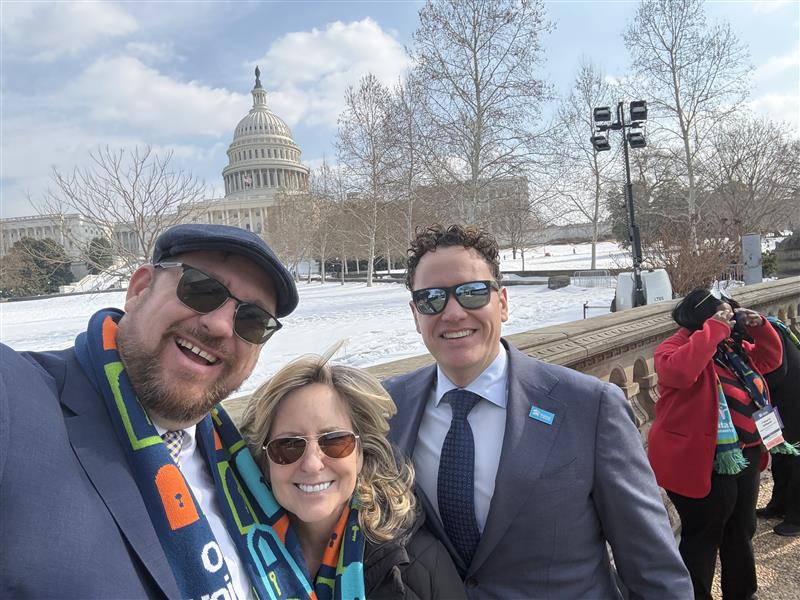
At this year’s Habitat on the Hill (Feb. 10-12, 2026), Habitat SKKC leadership joined close to 500 other Habitat for Humanity representatives from across the country in Washington D.C. to advocate for abundant affordable housing. This year’s Habitat on the Hill fell during a milestone year: It’s Habitat SKKC’s 40th anniversary, Habitat for Humanity International’s 50th anniversary, and the 20th anniversary of the annual advocacy conference. 

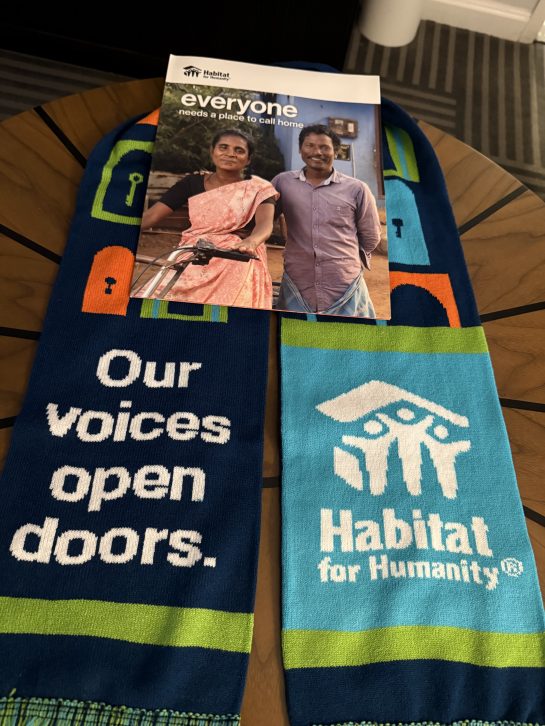
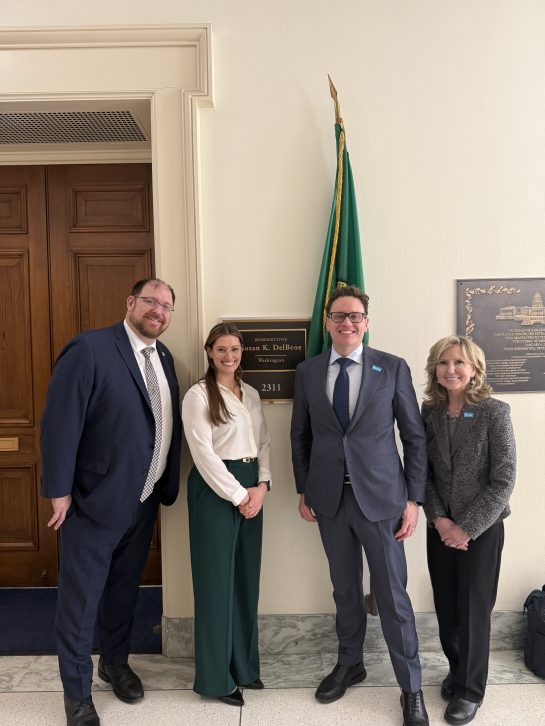
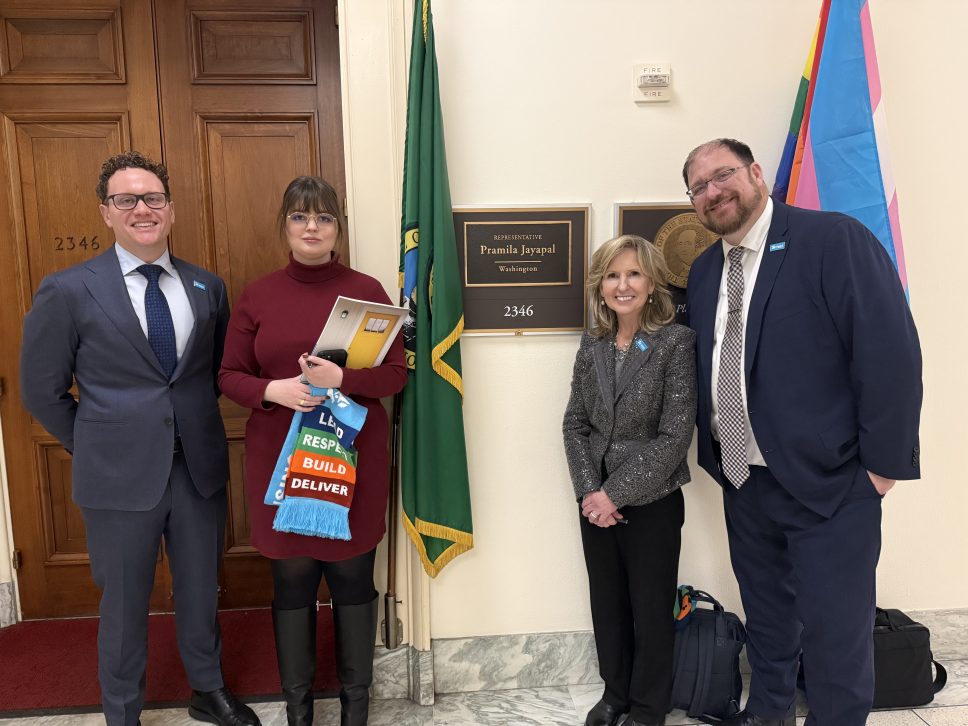
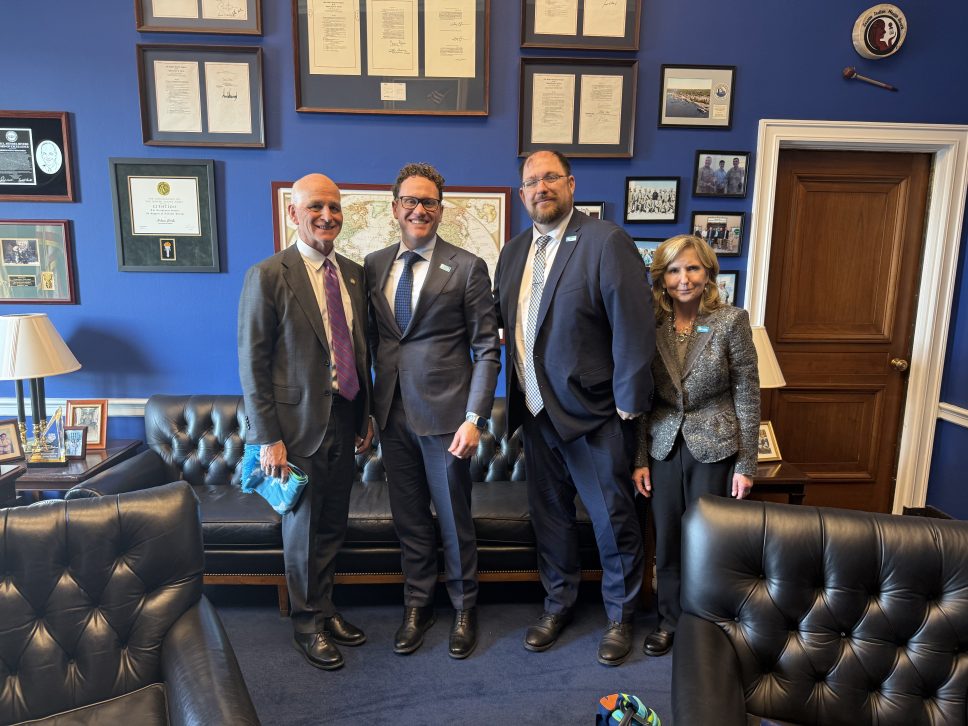
This year’s conference theme was “Our Voices Open Doors,” and together, we opened a lot of doors at our nation’s capital! Alongside our colleagues from other Habitat affiliates, Habitat SKKC CEO Brett D’Antonio, Chief Development Officer Amy Farrier, and Chief Advocacy Officer Ryan Donohue had the opportunity to meet with some 300 lawmakers. Their aim was to build on the momentum of recently passed legislation in both the Senate and House: The Senate’s ROAD to Housing Act (S. 2651) and the House’s Housing for the 21st Century Act (H.R. 6644). 

Habitat representatives came to their meetings equipped with a list of affordable housing priorities they wanted to put directly in front of elected officials: 

  • Funding for the Self-help Homeownership Opportunity Program at no less than $20 million in the Transportation-HUD appropriations bill 
  • Funding for the Home Investment Partnerships Program at no less than $1.5 billion in the Transportation-HUD appropriations bill 
  • Funding for the USDA Section 502 Direct Loan Program at no less than $1.25 billion in the Agriculture, Rural Development, Food and Drug Administration appropriations bill 

As we did last year, Habitat affiliates once again urged legislators to champion the Homeownership Supply Accelerator, the innovative federal policy concept that will make homeownership a reality for hardworking people nationwide. 

Reflecting on his time in D.C., Ryan Donohue said, “Being able to go to Washington, D.C., and talk with our representatives about the importance of affordable housing and homeownership is critically important. We make the trip to the other Washington once a year because putting affordable homeownership on the agenda is something only Habitat for Humanity can do.” 

“If we are going to build a world where everyone has a safe, decent, and affordable place to call home, we need the federal government to play a part,” he continued. “Fortunately, our representatives in D.C. understand that and fight for us in the halls of Congress every day.” 

Building a Better Seattle: Speak Up for a Bold, Inclusive Comprehensive Plan

Next week, Seattle residents have an opportunity to make a real impact on the future of the city. With your help, we can deliver an important message to the City Council: We want Seattle to be sustainable, diverse, and affordable for all its citizens. As part of the Complete Communities Coalition, Habitat SKKC supports a bold comprehensive plan for Seattle. 

As a refresher: Comprehensive plans happen only every ten years, and they serve as a blueprint for where housing, transportation, and businesses will go in a city. Seattle’s plan is currently in front of the Select Committee on the Comprehensive Plan, where an amendment package is being considered before it will be passed out to the full Seattle City Council. 

The Complete Communities Coalition is pushing for more housing density to match our city’s rapid growth. To do that, we need to build more homes of all types, particularly townhomes, triplexes, stacked flats, and other affordable housing options.  

“This comp plan is our opportunity to address our housing crisis through increased supply at a more reasonable price point,” says Ryan Makinster, Advocacy and Policy Manager at Habitat SKKC.  

We also need to expand the number of proposed neighborhood centers: Small walkable communities within a city that give residents access to grocery stores, childcare, and other essential services near public transit. By adding eight more neighborhood centers—in Alki, Dawson, Roanoke Park, Gasworks, South Wedgwood, Broadview, Loyal Heights, and Nickerson-South Canal—than were proposed in the original comp plan, we aim to ensure that Seattle has affordable and inclusionary communities that are supported by ample public transportation. 

We need to go big if we want to see big changes! The next public hearing when residents can comment on amendments to the comp plan happens September 12. Add your voice and encourage City Council to take bold action on the One Seattle Comprehensive Plan amendments.