Change doesn’t happen all at once – it’s built slowly, through the dedication of people and rooted in the conviction that there is good worth working for.
In Washington, recent breakthroughs like passing Middle Housing (HB 1110), ADU legalization (HB 1337), and renewing the Seattle Housing Levy reflect the power of this commitment. As pandemic era funding continues to sunset in 2025, the challenge now is clear: local and state leaders must double down to sustain progress, scale proven programs, and address persistent development barriers.
This fall, Habitat for Humanity SKKC’s advocacy efforts made meaningful headway on several fronts:
In King County, we championed support for a revolving construction loan program as part of the County Council’s Workforce Housing Initiative. This initiative has now advanced to the County Executive, marking a big step toward faster, more efficient housing development.
In Seattle, our coalition played a critical role in shaping the Comprehensive Plan update to build on statewide reforms. While the updates reflect significant progress, we’re pushing to expand density bonuses beyond Neighborhood Residential zones and refining design standards to keep housing production on track. At the same time, we’re advocating for Payroll Expense Tax funds to directly address housing needs.
On the Eastside, our partnerships with the Bellevue Roundtable and Eastside Affordable Housing Coalition spurred important changes. Updates to Bellevue’s Wilburton neighborhood plan will unlock new housing opportunities, and the creation of a dedicated Office of Housing—secured in the latest budget—will streamline and expedite future construction projects.
Looking ahead to the 2025 legislative session, we’re laser-focused on four priorities: expanding investment in proven programs like the Housing Trust Fund and CHIP, implementing solutions to close the racial homeownership gap, establishing dedicated funding tools like revolving construction loan funds, and removing regulatory barriers that slow affordable housing development. With over 300 units in our pipeline, we’re working with legislators to create lasting solutions for affordable homeownership across Washington state.
These achievements – and the work still ahead – represent more than legislative wins; they are tangible steps toward ensuring everyone has a safe, decent, and affordable place to call home.
Please join us in our efforts by signing up for Habitat SKKC’s Advocacy Alertshere.
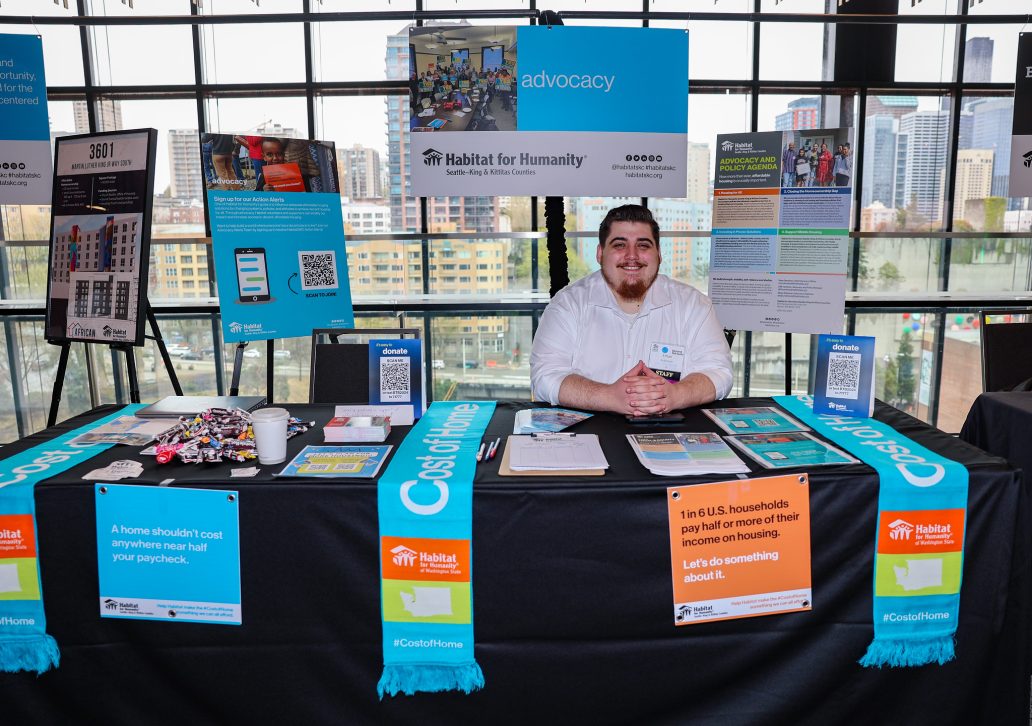
Habitat for Humanity SKKC found common ground with other Washington State Affordable Housing groups at this year’s Housing Washington conference in Spokane. And according to our Chief Advocacy Officer Ryan Donohue, the conference was sold out for the first time in its history, evidence that more individuals and organizations are ready to address the housing crisis. “The increased focus on homeownership in the housing continuum is really important and helpful for the health of the continuum overall,” said Ryan.
The annual conference hosted multiple sessions on advocacy and communications, homeownership, multifamily management and development. There were sessions addressing the intersections of housing affordability and wages; the importance of public funding; the role of Black homeownership to support equity in wealth creation, and more.
We were encouraged to see such incredible alignment with our own Legislative Policy Agenda for 2025-26.
For the upcoming session, Habitat SKKC will work to encourage funding for proven solutions like the Housing Trust Fund (HTF) and the Connecting Housing to Infrastructure Program (CHIP). Building a strong future for Washington requires strategic investments in these programs, because they are essential to expanding affordable housing solutions across Washington. Habitat SKKC has been able to utilize this funding to grow our construction pipeline to over 300 permanently affordable homeownership units in the next five years. Expanding these funding programs will continue to increase the availability of affordable homeownership.
To accelerate progress in affordable homeownership, Habitat will continue to work to implement bold solutions that close the racial homeownership gap. While efforts such as the Black Home Initiative (BHI) and important pieces of legislation like the Covenant Homeownership Account (CHA) represent significant steps forward, closing the racial homeownership gap demands ongoing effort and commitment. It is essential for our leaders to prioritize addressing the harm caused by discriminatory policy-making practices that have directly impacted Black and PoC communities and meet the immediate needs of these communities by tackling the systemic inequities at their core.
Housing Supply is critical to addressing the housing shortage. We will work to support policies that leverage successful solutions to scale up the availability of affordable homeownership opportunities. Elements such as construction loan funds are vital for starting and sustaining affordable housing projects, but accessing these loans remains a challenge for nonprofit developers. The creation of revolving construction loan funds can help overcome these barriers, enabling us to build vibrant, resilient communities.
The path to affordable housing production is layered with regulatory obstacles. Habitat SKKC will work during the coming legislative session to chip away at those obstacles with efforts to create a regulatory environment that actively supports and accelerates affordable housing development. Nonprofit developers face significant challenges due to the steep costs of high tax obligations and liability insurance premiums. Reducing these financial burdens on nonprofit developers like Habitat would make it more feasible to deliver crucial affordable housing solutions. We will, once again, tackle the Sales and Use Tax Exemption and Condo Liability Reform.
Attending the Housing Washington conference in September has enriched us with connections to other groups focused on solving the State’s affordable housing crisis. Together, we will create a stronger coalition of advocates sharing our goal of assuring that everyone has a safe, decent and affordable place to live.
To stay informed about Habitat SKKC’s Advocacy initiatives, please sign up for Advocacy Alerts here.
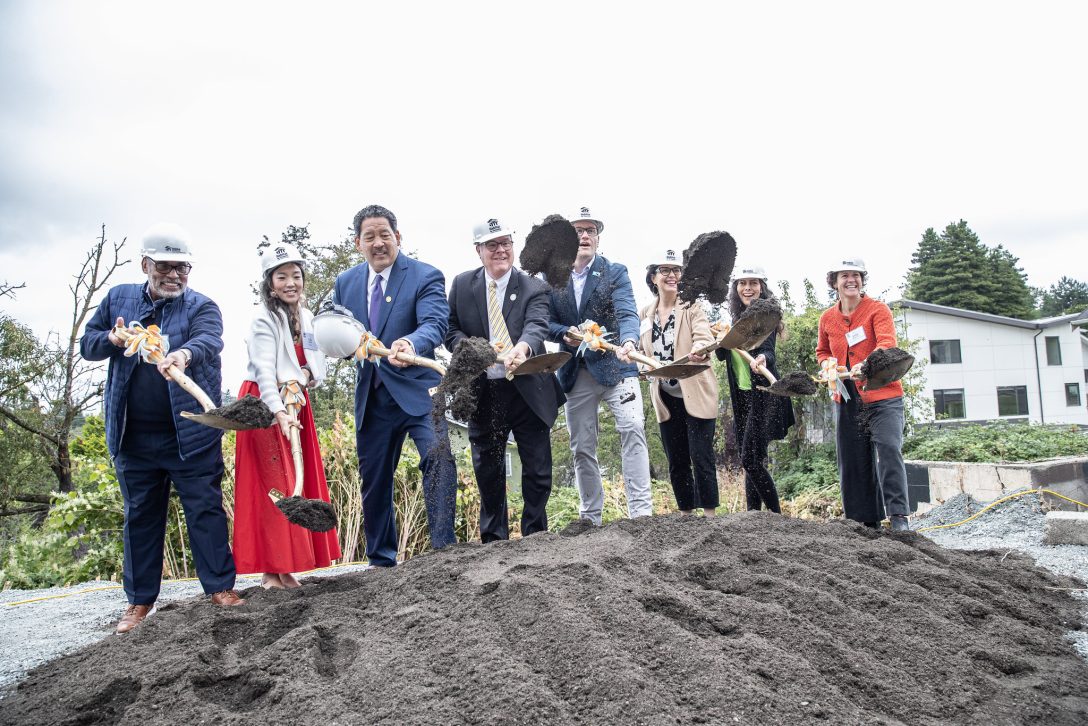
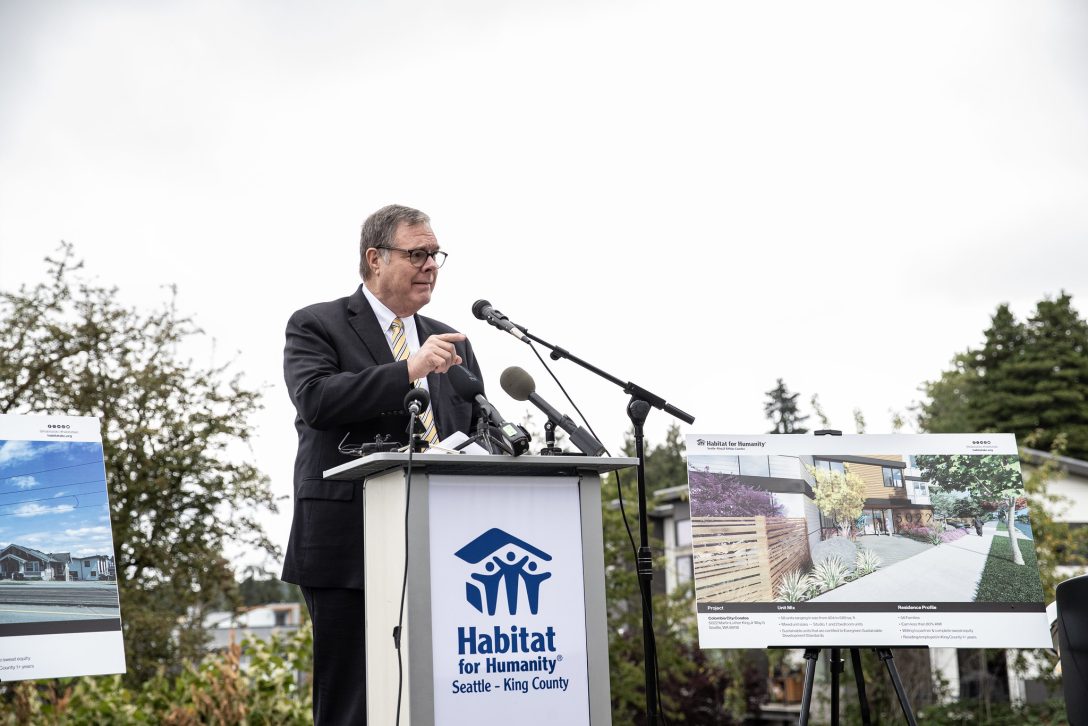
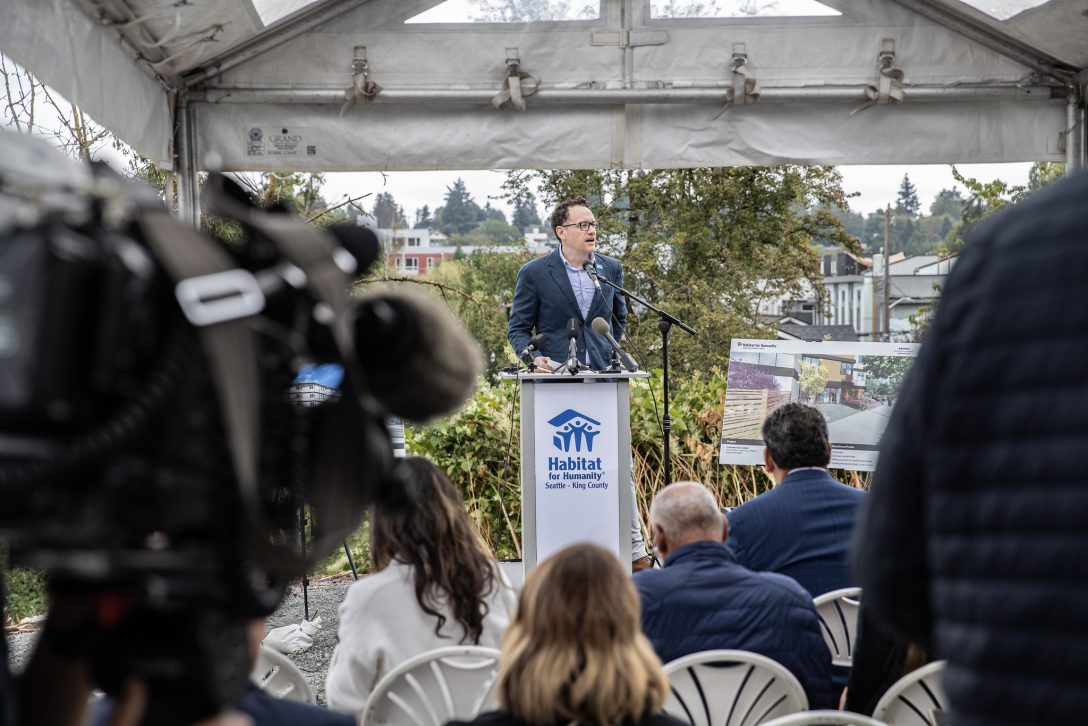
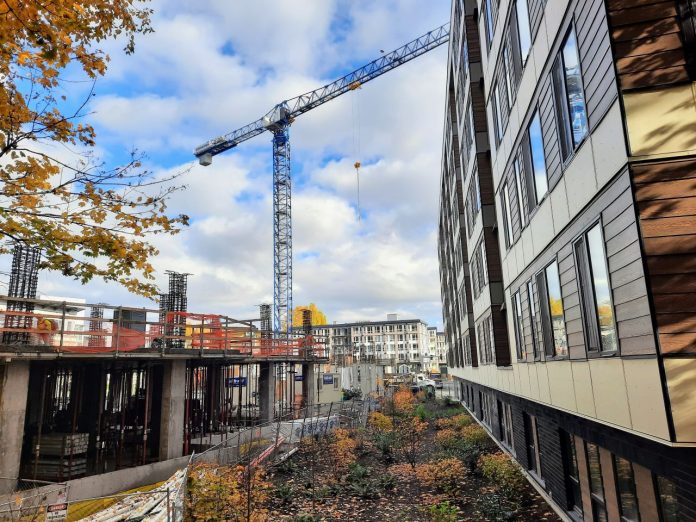
On Monday, September 16, Habitat for Humanity Seattle-King & Kittitas Counties broke ground on 5022 MLK in the Columbia City neighborhood. With 58 affordable housing units, 5022 MLK is our largest endeavor to date, surpassing the Miller’s Creek 40-home project underway in Burien, where we broke ground in August.
Slated for completion in Spring of 2028, 5022 MLK is also the largest Habitat for Humanity single building multi-family project in the country—surpassing the previous largest single building project, the 56-unit Sydney House in the Bronx borough of New York.
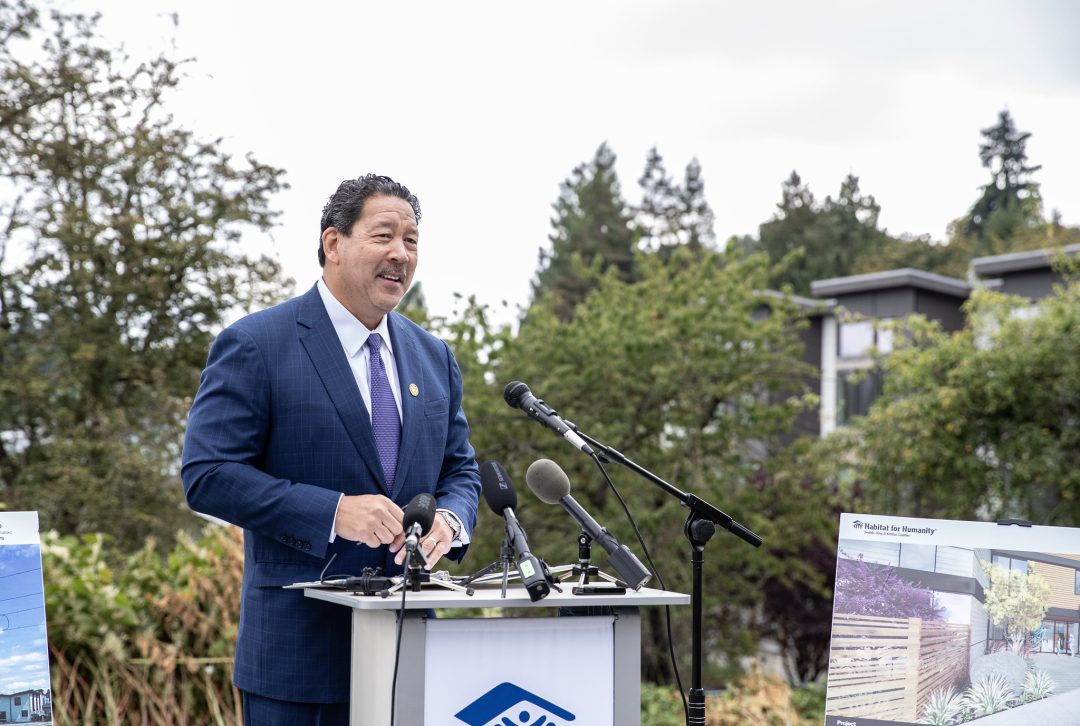
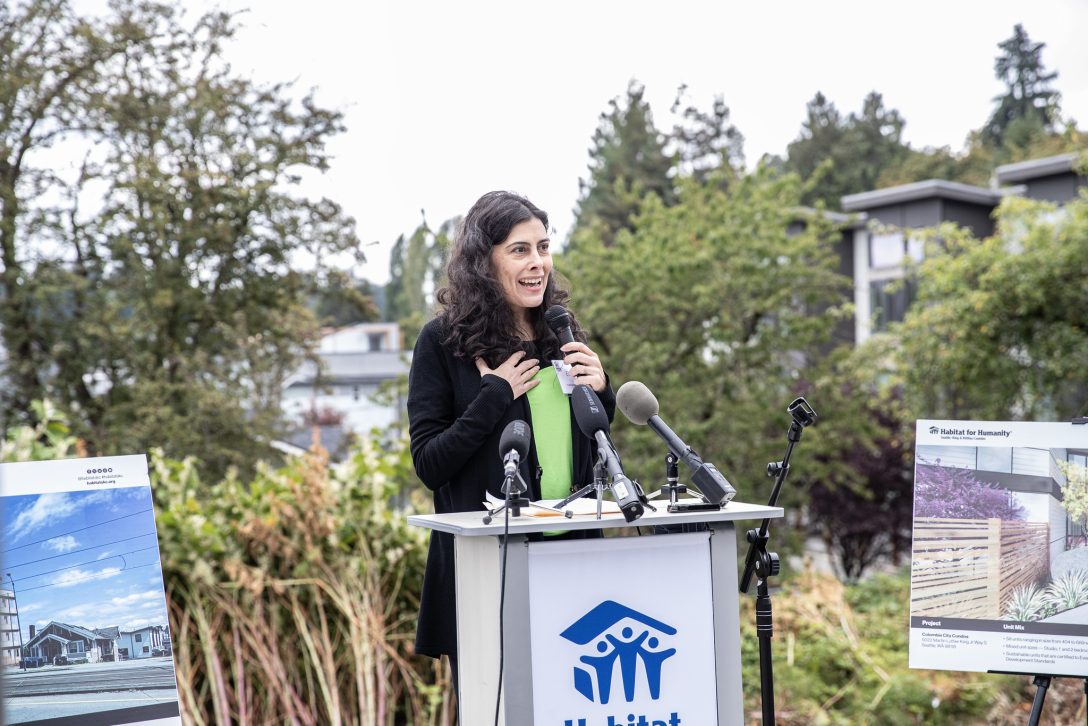
In attendance and speaking were Lt. Governor Denny Heck and Seattle Mayor Bruce Harrell, both champions of affordable housing, as well as Lily Kim with Amazon’s Housing Equity Fund and Habitat Homebuyer Elena D.
5022 MLK capitalizes on smart density design with five stories of condominiums, including five studios, 26 one-bedroom units, and 27 two-bedroom units with homes ranging in size from 370 to 690 square-feet. The project will also include a 2,000 square-foot outdoor courtyard designed to encourage a sense of shared community within the project.
Located in Seattle’s culturally and economically diverse Columbia City neighborhood, 5022 MLK is a Transit Oriented Development (TOD). The site is located just two blocks from the Columbia City Light Rail Station for easy access to jobs, schools, restaurants, and services. Legislative work conducted by Habitat SKKC in 2023 helped to make the project possible by securing a $6 million investment from Washington State.
As with all new home projects developed by Habitat SKKC in King County, this community will offer families making less than 80% of the Area Median Income (AMI) affordable homes with mortgages set at no more than 35% of their incomes. The property will be placed in a Land Trust ensuring permanent affordability for future generations. In an area with average home prices at $850,000 and rising, these homes will ensure that families with low incomes continue to have a place to build lives in Seattle for generations to come.
The 5022 MLK project was made possible through the support of Washington State, The City of Seattle, Washington State Department of Commerce, Amazon and the National Housing Trust, Washington Trust Bank, and the Washington State Department of Ecology.
Every evening, thousands of families in Seattle and the metro area wonder where they’ll live next year. Will they be able to renew their lease? Will they be able to afford a mortgage? Will they be able to find a home that meets their needs? The One Seattle Comprehensive Plan is important, because it will affect generations of families like this for decades to come. We must get the One Seattle plan right to create housing solutions, so more of our neighbors don’t have to worry about where they’ll be able to live and, instead, they can start living.
As a permanently affordable housing provider, Habitat for Humanity has worked with community members in Seattle, King, and Kittitas Counties for 38 years. We’ve heard and seen families and individuals buckling under pressure from rising housing prices and very few options.
The path forward is clear: a revised and ambitious Comprehensive Plan that should reform zoning rules and housing policies to allow more homes of all shapes and sizes; and incentivize affordable housing and homeownership. More importantly, we need to build upon our recent historic, nearly $1 billion investment in affordable housing, the Seattle Housing Levy. Systemic problems call for systemic solutions.
ATTN: Mayor Bruce Harrell, OPCD Director Rico Quirindongo and Councilmember Morales Seattle City Hall 600 4th Ave. Seattle, WA 98144
Dear Mayor Harrell, Director Quirindongo and Chair Morales,
My name is Cliff Cawthon and I am the Advocacy and Policy Manager for Habitat for Humanity of Seattle-King and Kittitas Counties. I thank you for the opportunity to provide written comment on the draft One Seattle Comprehensive Plan.
First, I want to express gratitude on behalf of Habitat for Humanity for the work that the Seattle Office of Planning and Community Development has done on this draft. Habitat for Humanity Seattle-King & Kittitas Counties has been a permanently affordable housing provider in the region for the last 38 years by partnering with families to build homes and communities. Our vision is that we can create a world where everyone has a safe, decent and affordable place to live, and we believe that getting the comprehensive plan updated right is a critical part of achieving that goal.
We recognize that the intention of the One Seattle Draft plan is to offer a framework for more housing and forge an equitable, green, and dynamic path forward for the city to manage its growth, however we believe that the current draft can be improved in several areas.
Embracing Middle Housing and creating more opportunities to build housing.
The passage of HB 1110 has opened the door to now allow more affordable multifamily housing types in neighborhoods across the state in the form of duplexes, triplexes, and forms all the way up to sixplexes. Sadly, the One Seattle Plan in its current form does not live up to this vision that was originally charted by the city through the use of ADUs and DADUs before almost any other jurisdiction statewide. We urge the city of Seattle to fully implement HB 1110 in neighborhoods throughout the city instead of pursuing the alternative compliance route.
Habitat’s record of developing permanently affordable homes in Seattle was possible through using more affordable housing typologies. For example, our High Point duplexes in West Seattle are where our homeowner, Christine bought her first home in 2010 and since then she’s turned her adversity into purpose. She experienced incarceration and homelessness, while striving to be a fantastic mother. Buying one of the units in a duplex in the High Point’ community gave her a life-changing sense of stability. Now, she’s an Executive Assistant at Oracle and she spends her spare time advocating for incarcerated people and other marginalized people in her community. Under the current plan, building a home like Christine’s in many areas of Seattle for someone like her or another family would be impossible.
Make sure new housing and new affordable housing projects can “pencil out.”
The FAR standards in this plan are way too low. The draft plan calls for a standard of 0.9 FAR for density of at least 1 unit per 2,200 sq ft (e.g., three or four units on a 5,000 sq ft lot); 0.7 FAR for density between 1/4,000 and 1/2,200 sq ft (e.g., two units on a 5,000 sq ft lot), and 0.5 FAR for density below 1/4,000 sq ft (e.g., one unit on a 5,000 sq ft lot).
The FAR standards are too low for efficient use of land in Seattle, particularly for small lots. In Seattle, the rising cost of land requires affordable housing developers, such as, Habitat and other developers to often use 100% of a lot to accommodate the number of units necessary to make the project financially sustainable while meeting the needs of the community. For general housing construction, allowing for a FAR up to 1.6 for density for an average lot of 5000 sq./ ft, while allowing for up to 100% lot coverage will allow for production of more units on a single lot.
Under the proposed plan in the draft, affordable housing development can go up to 1.8 FAR for affordable housing as well as a maximum lot coverage of 60%. We believe that increasing the lot coverage to 100% for affordable housing construction and allowing for a FAR bonus of 2.2 would allow more flexibility for permanently affordable homeownership projects to move forward.
For example, the Capitol View building is an example of these standards in action. Amber Cortez. She and twelve other households like hers are now homeowners. Amber is a local arts institution worker and previously she was almost priced out of Seattle. Now, she can live in a building without having to worry about eventually being displaced. This project an exemption from parking minimums due to its proximity to the light rail; and with 100% lot coverage we built thirteen new homes on what used to be a single-family lot.
End exclusionary zoning and advance racial equity.
We applaud the city of Seattle’s commitment to addressing the harms of racism and exclusion in the past, as well as the anti-displacement policies that it proposes. We believe that an effective approach to reversing the exclusionary housing and growth patterns that we’ve seen in Seattle historically involves dispersing density and growth throughout the city, instead of concentrating most of the housing production in limited areas.
In the Office of Community Planning and Development’s report from 2021 stated the Urban Village’ model’s failure:
The urban 9 village approach continues to reinforce the exclusion, generally, of everything except single-family residential construction on 75 percent of the residentially zoned land in the city. Given its racist origins, single-family zoning makes it impossible to achieve equitable outcomes within a system specifically designed to exclude low-income people and people of color.
The Draft Plan retains the urban village model under a different guise. This is especially important as the lack of available homes and especially affordable first-time homeownership opportunities has caused housing prices to skyrocket. Instead of restricting growth to mainly Urban Centers, we recommend adding more Neighborhood Centers and allowing for structures in Urban Centers to group to twenty stories and adding a couple of floors of height for affordable housing in Neighborhood Centers, respectively.
Areas that have a high-displacement risk do not have enough affordable homeownership opportunities. Most affordable housing that is built in the city is at 50-60% of the Area Median Income (“AMI”) and that average AMI level does not provide the financial basis for homeownership that allows families to build generational wealth. Families can build generational wealth when they are able to gain equity on a property that they own, and they can use that equity to purchase another home, invest in a small business or family stability- all are anchors against physical or economic displacement.
Our homeowner, Lila has Black, Native and White ancestry and their family has lived in Washington State for generations. Habitat’s program has allowed her to be one of the only people in her family to own a home and have an opportunity to develop generational wealth. We recommend creating opportunities for people like Lila through prioritizing first-time homeownership opportunities. We can take advantage of the opportunities that HB 1110 has afforded us to allow for more affordable housing types and utilize those as first-time homeownership opportunities. Allowing density up to a sixplex in every Neighborhood residential area will allow for the kind of development capacity that leads to more affordable homeownership options.
Furthermore, we recommend providing technical assistance to homeowners who are interested in redeveloping their property for multigenerational housing, or to create community-focused affordable housing.
Fully utilize transit-oriented development opportunities
New light rail stations and new Bus Rapid Transit opportunities in Seattle provide numerous opportunities to build housing near jobs and transit. To achieve our goals of creating more opportunities for upward mobility and eliminating the racial wealth gap we need to make opportunities available for homeownership near conduits of opportunity.
We recommend that in a revision to the One Seattle draft, rules should be changed to allow for midrise housing in all areas served by frequent transit, in the ¼ mile around frequent bus service and ½ mile around light rail. Furthermore, we suggest that we enlarge the proposed Neighborhood Centers, to ¼ mile and add proposed Neighborhood Centers that were studied under Alternative Five but not included in the Draft Plan.
Our joint project with African Community Housing and Development and the Office of Community Planning will produce 65 family sized and single-person condo units near the Columbia City light rail. This is due to incentives through Office of Housing Seattle’s Rainier Valley Affordable Homeownership Initiative, which leverages transit and provided incentives that made our
partnership possible. This is an example of how we hope the city will consider leveraging transit investments to promote housing units that Seattleites desperately need.
Remove parking mandates.
We encourage the city to remove all parking mandates. In our experience, we include one parking stall per unit, however, in several projects’ suspension of parking minimums due to the availability of off-street parking and transit have allowed us to utilize several innovative housing types.
For one Habitat homeowner, Becaley, she would’ve faced displacement if not for her home in our Capitol View condos. A suspension of parking minimums allowed us to build our Capitol View homes. Becaley is an enthusiastic Habitat advocate and volunteer who has worked in the service sector in several different jobs, yet she found herself working 2-3 jobs (including gig work) to survive in Seattle. Now, as a Habitat homeowner she is finally able to own a stable home, in which she won’t have to worry about potentially moving every year due to increased costs. Her condominium building was built on what used to be a single-family lot without the usual 1 parking spot per unit standard.
Locating denser affordable housing near transit, as discussed before, will allow developers to create more units that are desperately needed. For every additional parking stall, a developer will spend upwards of [figure needed]. That deducted cost will allow developers to pass those savings onto homebuyers.
The removal of parking mandates doesn’t equate to a ban on parking. Instead, it gives developers and communities the flexibility to decide the kind of parking situation that will best meet their needs. For example, in our Highland Terrace development we included parking spots for each of our homes due to homeowners’ requests.
Take an ambitious ‘All-of-the Above’ approach.
In conclusion, we will need various tools including funding mechanisms, incentives and proactive land use and zoning policies. Limiting density to specific Urban Centers repeats the failed Urban Village model and embracing a land use approach that opens previously exclusive parts of the city to denser housing will bring down housing costs while creating the mixed-income communities that leads to more equitable wealth distribution.
The scarcity of land has led to rising costs alongside the post-pandemic rising costs of construction materials and high interest rates have led to a current market, according to Axios, for single individuals that requires 27.1 years to save enough money to buy a typical starter home. For Black families, less than half of them own their homes, in comparison to white families- with other groups in-between.
Through many policy changes and financial tools, Habitat has expanded its five-year pipeline to over 300 units, serving over hundreds of families. We look forward to continuing this dialogue in the future and continuing to work with you to improve the One Seattle plan so we can achieve the dream of a Seattle where we have an equitable, green and prosperous city where everyone has a safe, decent and affordable place to live.
Best Regards,
Clifford Carl Cawthon
Advocacy and Policy Manager
Habitat for Humanity Seattle-King and Kittitas Counties
CC: Other Council Members (Marco Lowe, Christa Valles)