Forever, Home: Jackie B.

Every home has a story, and as Habitat SKKC celebrates our 40th anniversary in 2026, we’re excited to share the stories that have shaped the past four decades. Throughout the year, we’ll be highlighting legacy family stories from across our history — stories of partnership, resilience, and hope that remind us why this work matters.  
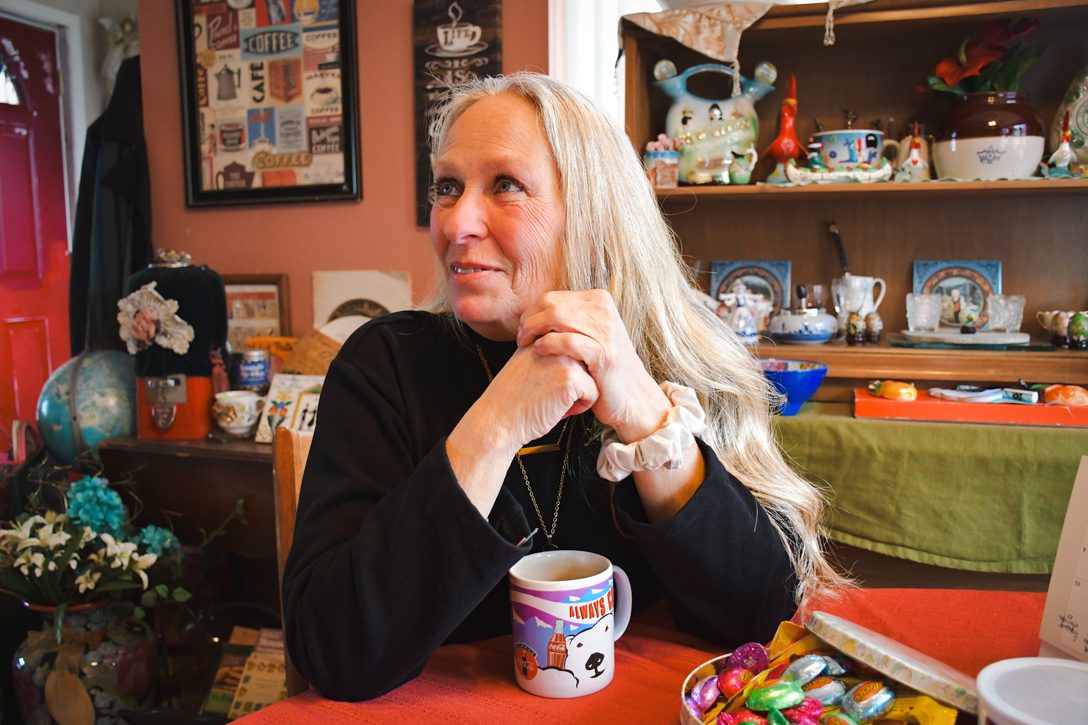
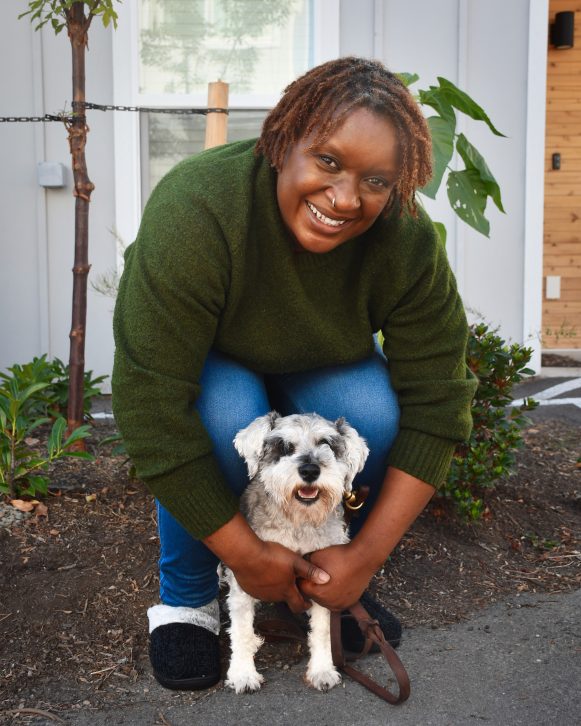
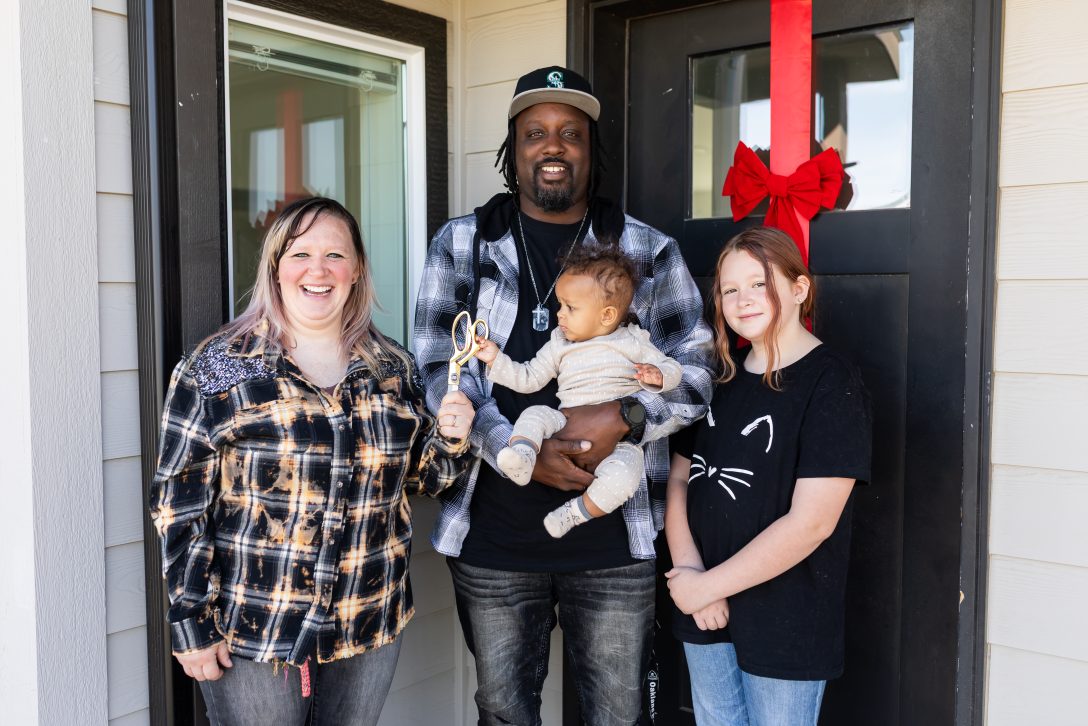
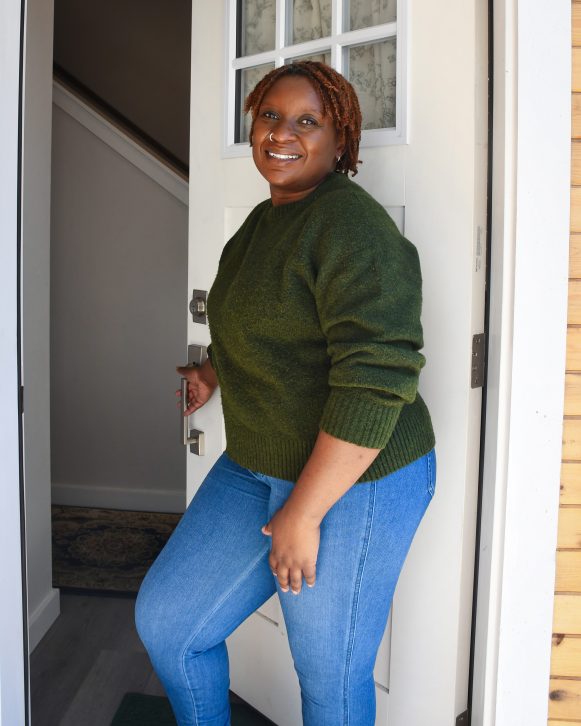
Jackie B. has turned her Habitat home into the hub of her community. Whether she is hosting family, friends, or the occasional foster dog, her house has been “packed from day one.” Despite the hardships she has faced in her life, she maintains a positive attitude and stays focused on what matters to her most: Caring for others. 

Jackie was born and raised in the Seattle–Tacoma area. She has always been a curious and handy person. Before she started kindergarten, her father had her rebuilding car motors, teaching her how to read mechanical instructions at a young age. Jackie was raised in a family that loved muscle cars and racing. Her parents and extended family raced cars and motorcycles. She is one of four girls, and her father chose her to teach mechanical and hands-on skills. 

Before becoming a homeowner, single mom Jackie lived in a one-bedroom apartment, where she converted the den into a bedroom for her three daughters. At the time, she was working two jobs: full-time at an auto auction and detailing repossessed motorhomes on the weekends. At the auto auction, she worked in many roles, including title clerk and switchboard operator. She always worked around vehicles, but the auto auction was the best job she ever had.  

She learned about Habitat for Humanity after paying off debt from her first marriage and being prequalified to buy a home on her own. After completing the application process, she was accepted into the program and received the first Habitat home built in the city of Renton. It was one of two single-story homes built on nearby lots. 
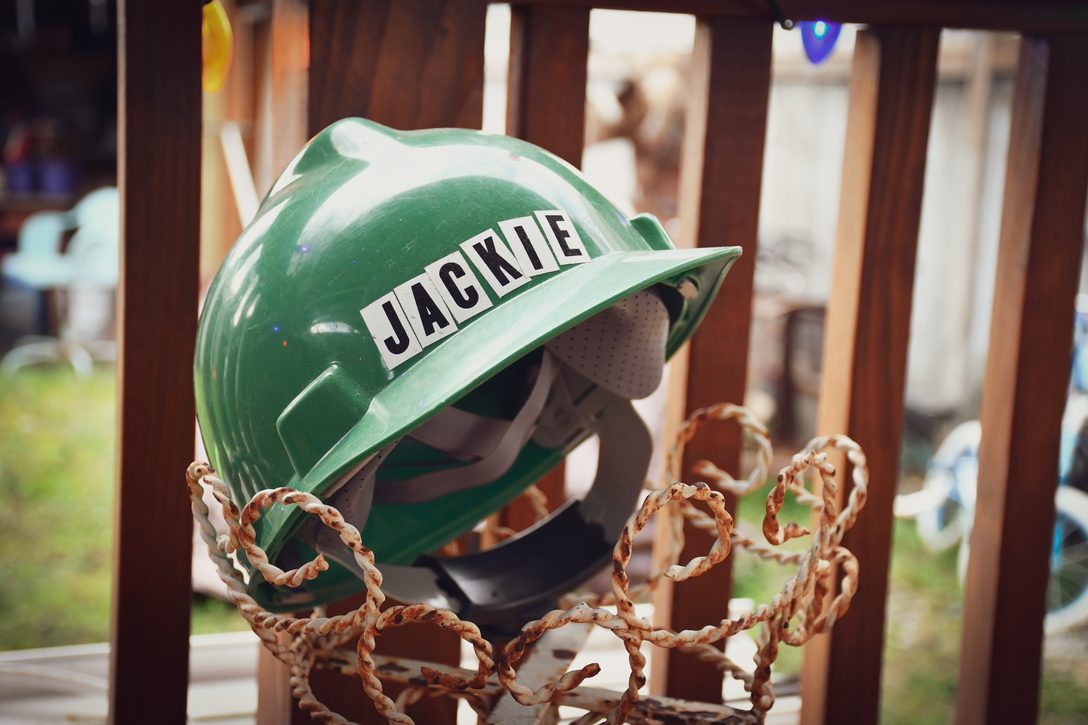
While the house was being built, Jackie worked full time during the week and still worked weekends, but she spent Saturdays volunteering on the build. Many of her coworkers volunteered as well. During construction, she helped dig the crawlspace, sewer, and power lines; tied rebar; laid floor joists; and installed insulation. She learned extensive construction skills through the process. Being involved in building the house gave her a deep understanding of the structure and pride in the home. 

The move into her new home included a dedication ceremony that was attended by the mayor of Renton, local reporters, and students from Lindbergh High School who helped design the house with their teacher. Jackie explains, “They helped work on the house and drew up the blueprints with their teacher. I guess at the time, this was the only teacher that had worked with his class like this. They did blueprints for both houses, they were submitted to the City, and they got to follow it along through the whole process.” 

— 

When she moved into the house, her youngest daughter Chelsea had just started kindergarten, and her two older daughters, Stephanie and Bree, were in middle school. Her first year in the house was a big adjustment after living in a small apartment while working and raising her daughters.  
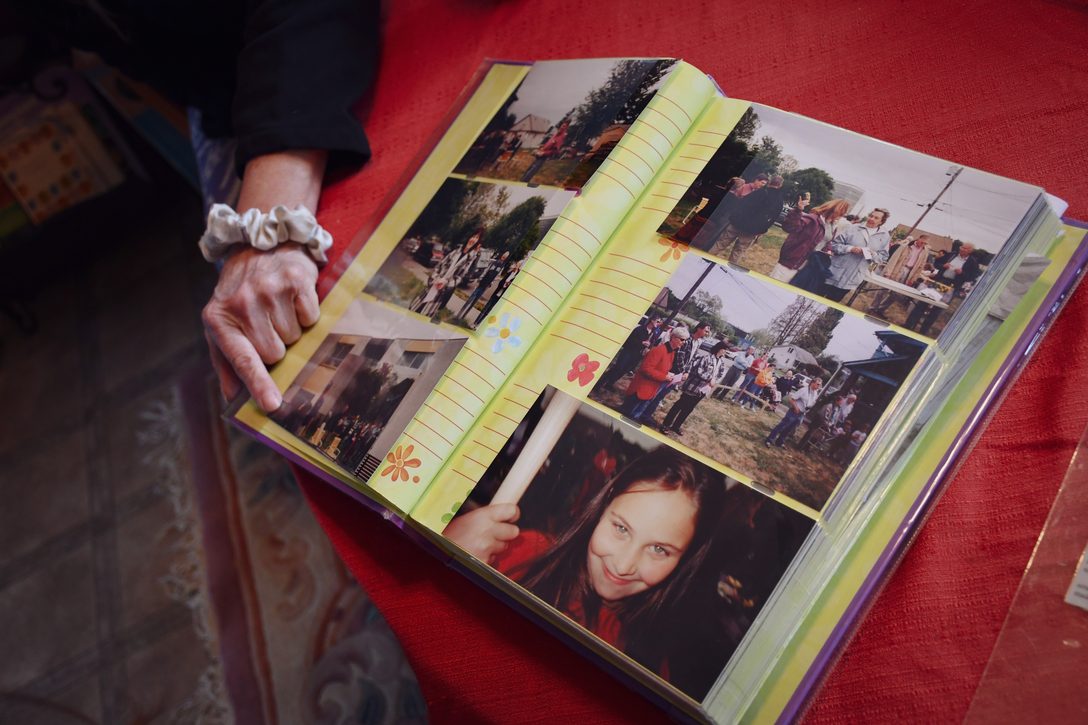
The house allowed her daughters to grow up in a stable neighborhood where they could put down roots and experience a strong sense of community, something that would have been difficult in an apartment setting. She says, “They got to grow up in the neighborhood. They got to ride their bikes up and down the street and play with the neighbors. It’s the kind of thing that you don’t have if you’re in an environment where your neighbors are changing all the time.” 

Her daughters remain close as adults. Her eldest daughter and her husband moved to Las Vegas for work. Her middle daughter lives in Enumclaw with her husband and young daughter. Chelsea now lives with her boyfriend, but previously she and her daughter Lily lived in the house when Lily was one month old. Jackie’s legacy of homeownership extended to a third generation. 

— 

Jackie’s loves her living room, which faces the street, because it allows her to interact with her neighbors. She adds, “I get to see them right out the front window. I get to see everybody walking by. I’ve watched all the neighborhood kids go from grade school to grown up.”  
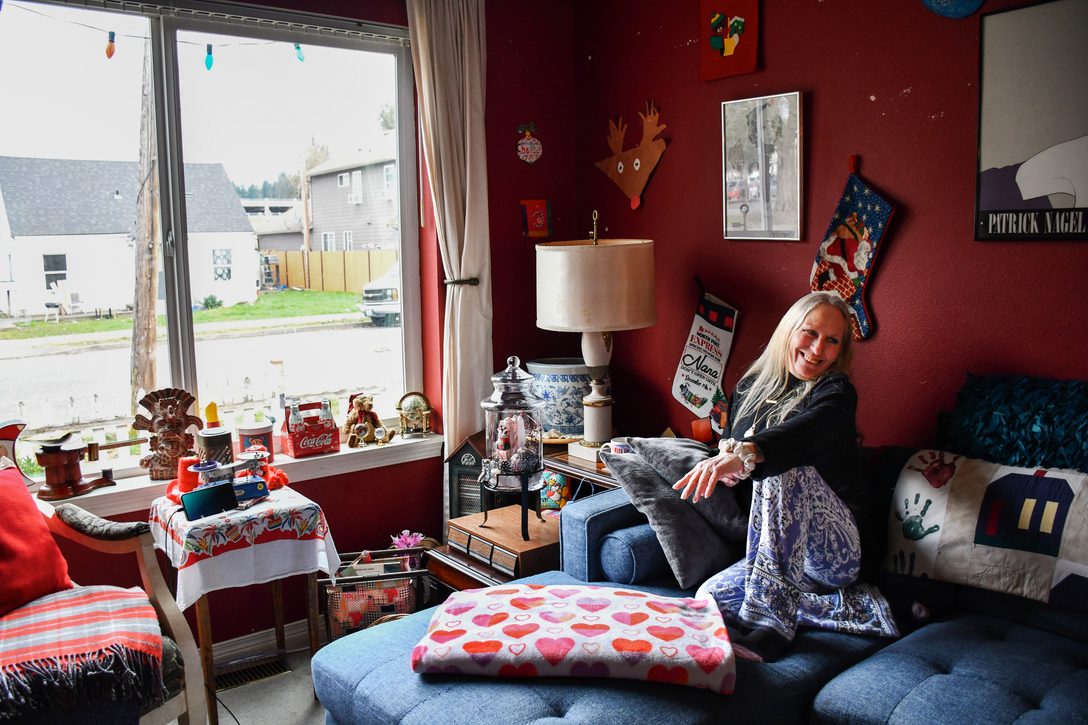
She often hosts holidays and gatherings and enjoys bringing neighbors together in her home. Over the years, she has built strong relationships within the community. She remains close to the Habitat home nearby and has welcomed new families as they moved into it. 

She plans to stay in the house for the long-term and to add a ramp to the front of the house if needed. She has completed many repairs herself over the years, including repairing fencing and replacing fence posts, relying on skills learned growing up in a family where fixing things yourself was expected. 

If she were to offer advice to new Habitat homeowners, she would encourage them to reach out for help more often than she did. She described herself as “stubborn but resilient” and has survived multiple major health events and numerous chronic conditions. Despite these challenges, she remains active and appreciative of life. She is also grateful for her neighbors’ support during her health challenges. One neighbor, who has lived in the neighborhood since the 1960s, hand carved a cane for her that was adorned with painted flowers. It’s an example of the many ways neighbors show up for each other, and a reminder to Jackie that kindness comes back to those who give it. 
Foundations for Hope: Future Z.

Future Z. was born in a small village called Mberengwa that sits at the bottom of granite mountains in Zimbabwe. She was adopted at age four by her mother, who saw where she was living and decided to move her to the city. She explained, “That was my first real lucky break in life.”  

She and her mother lived in Zimbabwe until she was 13. Due to political instability and safety concerns, her family left on political asylum and came to the United States, settling in the Bay Area, where they had old family friends to welcome them. Future attended high school in Berkeley. Arriving in California during her first semester of high school was a big culture shock, particularly with language: She spoke English with a British accent and had to adopt American speech. A quick adapter to new environments, she worked through the unexpected language barrier and settled into her new life in the U.S. 

She first visited Seattle around 2017 and immediately felt drawn to it. While serving in the Army, she was stationed in Oklahoma and Hawaii, but she eventually requested Washington state for her final assignment because she loved Seattle. She moved to Washington in October 2020 and was stationed at Joint Base Lewis-McChord (JBLM), where she later retired from the military. Following the passing of Future’s stepdad in 2016, her mother moved with her through Future’s different military stations and now lives with her in Seattle, where she works for the FAA. Future works at the VA hospital in inventory management and supply, the same field she worked in during her time in the military.  

Outside of work, Future spends much of her time enjoying Seattle’s sports and entertainment scene. She set a goal of attending games for every major Seattle sports team and has been checking them off, including the Seahawks, Mariners, Storm, and Reign. She frequently attends concerts at Climate Pledge Arena and also enjoys comedy shows and Broadway productions. 

She has two miniature schnauzers, Aries and Cairo. She adopted her first dog during a difficult period recovering from surgery to encourage herself to get out, walk, and interact with others. The experience helped her heal, and she later adopted a second dog during another recovery. 

While in the military and experiencing multiple moves, Future hadn’t been rooted in a single place. Now that she has put roots down in Seattle, she looks forward to volunteering and wants to join her local Rotary Club. She said, “I’ve been a beneficiary of so many organizations that I want to give back to.” 

— 

Prior to buying her Habitat home at Yarrow Cottages in South Park, Future lived in an apartment in Mukilteo, a location she chose when working at her previous job at Boeing. Her long commute from Mukilteo to the VA hospital in Columbia City was difficult and limiting, particularly in her ability to spend time with her dogs. After six months of searching for a home within her price range and preferred location, she found a Habitat SKKC listing on Zillow that met her needs. She was initially unsure whether she would qualify, but after applying, she qualified for a Habitat home. Receiving that news was one of the happiest moments she had experienced in a long time. 

Her experience with the homebuying process was positive and supportive. She appreciated the clear communication, structured steps, and educational classes that helped her understand each part of the homebuying process.  

She felt excitement about living close to work, reducing her commute, and being close to parks, a library, and the nearby Georgetown neighborhood. As they prepared to move into their new home, Future and her mother looked forward to the community that awaited them: “We’re so excited to be in a community again. We haven’t really been in a community since I retired.”  

Future was especially excited about decorating, and as she planned for her move, she created a large mood board and chose paint colors for the walls for the first time since childhood. She was most excited about the kitchen, imagining a bright green and yellow space where she could cook and host friends. She enjoys making dishes such as Japanese curry and cooking recipes influenced by her mother, who is from Nigeria. She plans to host dinners and welcomes the opportunity to gather with friends and coworkers in her new home. She added, “I finally get to be in my own space where I can express myself.”  

Upon moving into her house in May, she blessed the home by expressing gratitude and setting positive intentions. Now, she looks forward to creating a space filled with love, where her dogs can run and her family can feel at home. She views her home as a place where all the elements that already make up her sense of home, her mother, her dogs, and her experiences, can finally come together in one place. 

South Park Community Chooses Habitat SKKC Development’s Name

As part of Habitat SKKC’s effort to better include the community surrounding our developments in our work, we extended an invitation for South Park residents to submit name ideas for our development on South Cloverdale Street.  

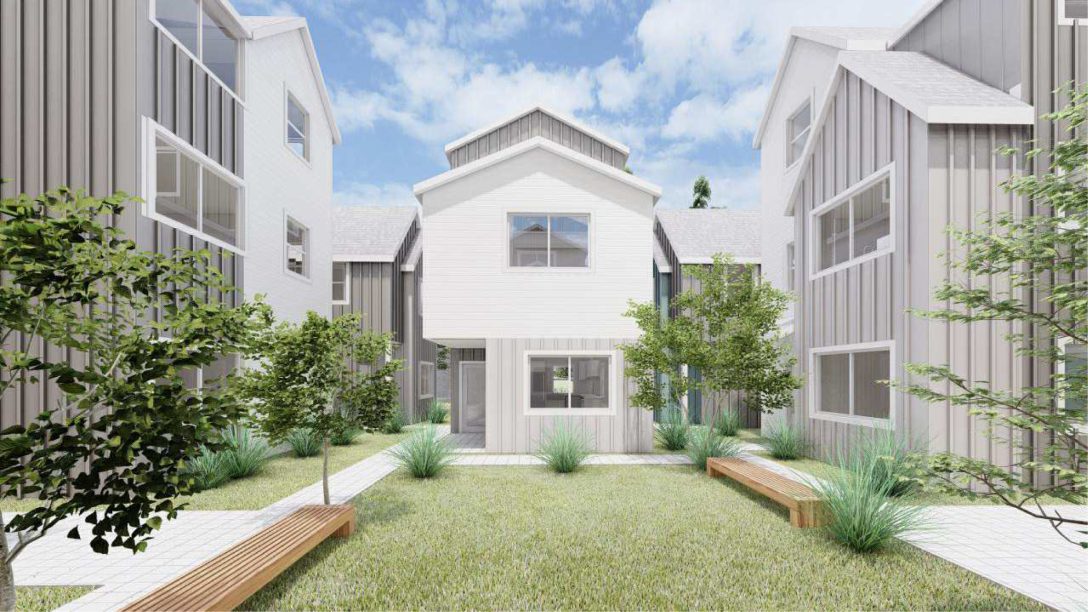
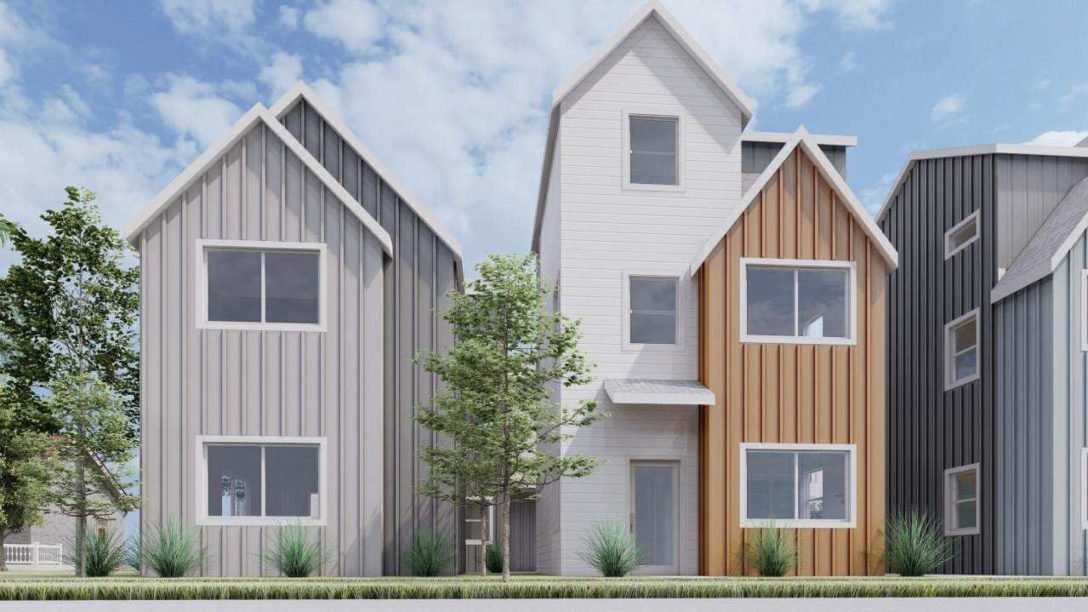
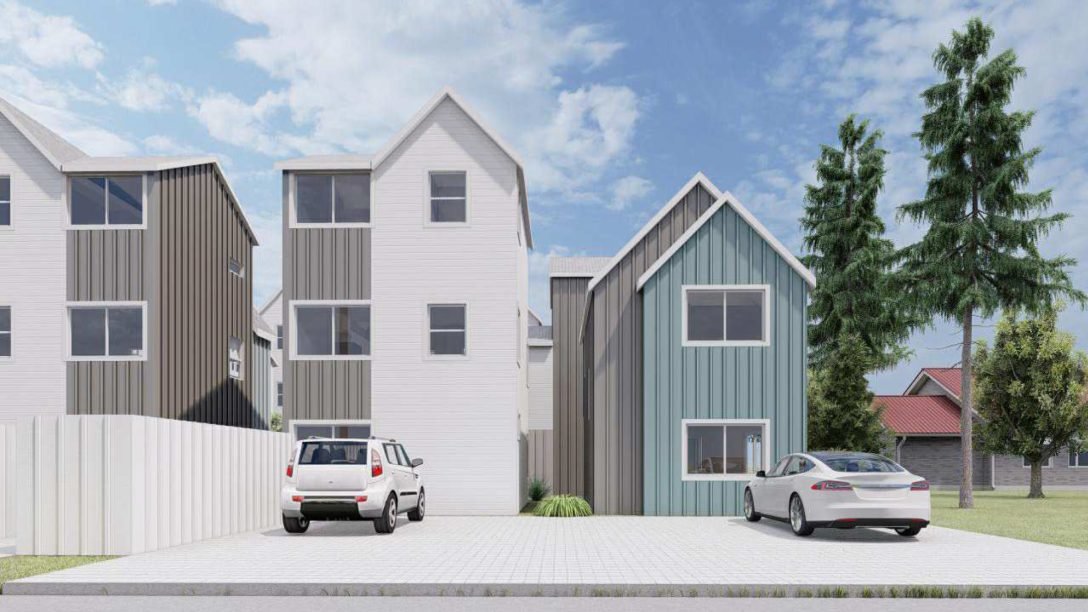
The 22 homes currently being built (slated for completion in spring 2029) will add to the vibrant neighborhood with an active community and a growing local business scene. In just minutes, residents will be able to reach great restaurants, shopping, entertainment, and I-5 to take them to downtown Seattle. Ongoing urban renewal contributes to this diverse neighborhood’s revitalization. 

We asked for name suggestions and the meaning behind the submission, and we shared this with South Park Community Capacity, which is made up of South Park community organizations/non-profits, community leaders, local businesses, and community members. We encouraged them to share it with others in the community as well. 

Contributions included many mentions of the Spanish-speaking population in South Park and of the Duwamish River. We chose “Riverbend Comunidad” as a name that honors the Hispanic roots and the Duwamish River a few blocks away from this site.  

Incorporating South Park residents into the neighborhood naming process is a small but powerful way to connect our work to the communities where we build. 

Forever, Home: Iulia Z.

Every home has a story, and as Habitat SKKC celebrates our 40th anniversary in 2026, we’re excited to share the stories that have shaped the past four decades. Throughout the year, we’ll be highlighting legacy family stories from across our history — stories of partnership, resilience, and hope that remind us why this work matters.

When Iulia Z. and her family arrived in Seattle in February 2005, she wore a homemade fur coat and hat her mother had created especially for her move from eastern Europe. At the airport, where she was overheating in the crowds, Iulia saw people wearing far fewer clothes and was struck with the feeling that she had no idea where she was or what she was doing. The culture shock she experienced as a new immigrant to the United States took time to overcome, but Iulia’s persistence and strong will helped her to not only acclimate to a new city, but to make it feel like home. 

Iulia was born and raised in Moldova, a small country between Romania and Ukraine. She had a very happy childhood with a large extended family, including lots of aunts, uncles, and cousins. However, things took an unprecedented turn when the Soviet Union collapsed. In the early 1990s, her parents, who were engineers, ended up out of work for an extended amount of time and then got sick. With her parents spending months at the hospital, Iulia had to grow up abruptly. There were times of extreme poverty while her parents were in the hospital, to the point of not knowing when the next meal would come.  

While she is not deeply attached to her homeland, she cherishes childhood memories and stays in touch with dear friends and family. Given an opportunity to leave after winning the diversity visa, she immigrated to Seattle with her ex-husband and son Nicolae. They were granted the visa on her son’s first birthday. They were allowed four suitcases, two of which got lost in the move.  

It was just the three of them seeking a fresh start with very limited resources. Iulia felt lucky to connect with a kind local family who picked them up from the airport, fed them, gave them beds, and guided them through the process of settling in. By day three, they had a car. By day six, her ex-husband was employed full time. Friends co-signed for their apartment, which she now understands was a big commitment. She feels grateful to the community who supported them through this major life transition. 

— 

Despite their quick acclimation to a new country, there were hurdles that prevented them from achieving their ultimate dream of homeownership. Iulia thought her family could buy a house from the open market, but the 2008 financial crisis changed everything. Their income dropped, and buying a house seemed unattainable. She learned about Habitat SKKC from friends she met through her son’s daycare. They had applied and were selected for a neighborhood in Snoqualmie. Motivated by their friends’ experience, Iulia’s family applied to Habitat in 2010 and were selected, a phone call she remembers as one of the best in her life.  

The home dedication was emotional for Iulia, and after receiving the key to her new home, she went alone to clean and prepare for move-in day. Those first months in her new home were a rollercoaster of emotions and busyness as she worked full-time and cared for a new baby. When life finally slowed down, new feelings emerged. Iulia explains, “I was going around the house washing the walls, the doors, and the windows. I kissed the carpet. I was that emotional. It was a moment of disbelief, like, oh, this is all mine.” 

They have now lived in the house for 16 years. 

— 

Today, Iulia is a higher education professional. She worked at a small technical college for years and now works at one of the largest colleges in the state. In her role, she touches every course and program and believes higher education is the most important social lift available. “I deeply care about the impact of my job. I was given an opportunity and therefore I want to pass it on,” she adds. 

Nicolae is now 22, and he graduated with an associate degree and zero student loan debt. He is figuring out his next steps while working full time and living at home. He is still close with the friend he made in daycare who lives in another Habitat neighborhood; Habitat’s community often extends beyond physical boundaries. Her daughter Vera is 16 and in the 10th grade at a local high school. They also have a dachshund who has been with them for two years. The dog has a strong personality and keeps everyone on their toes.  

Iulia enjoys hosting small, intimate gatherings at home, which has a view of Mount Si. Her favorite space is the kitchen, which is small but handy. Cooking puts her in a positive mindset, and she often thinks about the people who helped build her home. She explains, “When you cook, you get into a very specific mindset. You don’t want to be angry, you just want to think good thoughts about family and friends and the community. It’s been 16 years, but almost every day I remember those people who helped us build our house, who touched those walls, who donated money. Everyone has a lot of things they could do in their life, yet somehow people choose to go out and spend their time and funds to help strangers. That made such an impact on our lives. So, while I’m cooking, I think about all those people to whom we owe so much.”  

During COVID lockdowns, she felt grateful for the house, which provided security and space for her work and the kids’ schooling. They rearranged furniture and adapted, finding comfort in their home and its access to nearby trails. Their home provided solace during those uncertain years, a feeling that remains with Iulia now. 

She reflects, “I have a great sense of deep emotional security. This is our place, and the stability and safety that is provided to my children, to my family, is priceless. I keep thinking that if I didn’t have this house, my life would look so different. If not for Habitat, I absolutely would not be able to afford a house on my own, and who knows how my life would be? This is a sense of stability. This is a sense of peace. And I’m just so grateful we have it.” 

Serving Those Who Serve Our Country: Habitat SKKC Launches Veterans Down Payment Assistance Program

As part of our ongoing work to put homeownership within reach for more people, Habitat SKKC has launched a Veteran Down Payment Assistance (DPA) Program. Over the years spent working with veterans, we have learned that often the biggest barrier to homebuying for those applying for our program is too low of income to qualify for the loan amount. Habitat SKKC provides a way to lower their mortgage so that more veterans will be able to financially qualify.  

Using the DPA, veterans can purchase a Habitat home and focus on building equity for their families. As homeowners, they’ll find the stability that they ensured for others when they served our country. 

“I am excited to show my gratitude to veterans by offering them the stability, prosperity, and freedom that they fought to protect on all our behalf,” says Ali Sheibani, Director of Homeowner Services. 

Habitat SKKC’s down payment assistance exclusively for veteran buyers includes: 

  • Up to $150,000 
  • 0% deferred loan due upon transfer/sale 

Additional benefits of the Veteran DPA program include: 

  • Preserve VA Loan Benefits: Build equity in your Habitat home first, then use your VA loan on your next home. 
  • Prioritized Selection Process: Habitat SKKC prioritizes veteran applicants by reserving homes for veteran buyers and offering additional points in our selection process for veteran status. 
  • Step-by-Step Guidance: Buyers are assigned to a Habitat SKKC staff member who provides step-by-step guidance from loan-preapproval to the transaction and closing process. 

The Veteran DPA Program is a pilot program that will support the next five veterans in our homeownership program. Our long-term goal is to establish a self-sustaining revolving fund that will continue to support veterans for years to come. 

For veterans interested in applying for a Habitat home, visit buyhabitat.org.