This article, published by KUOW, was written by Joshua McNichols.
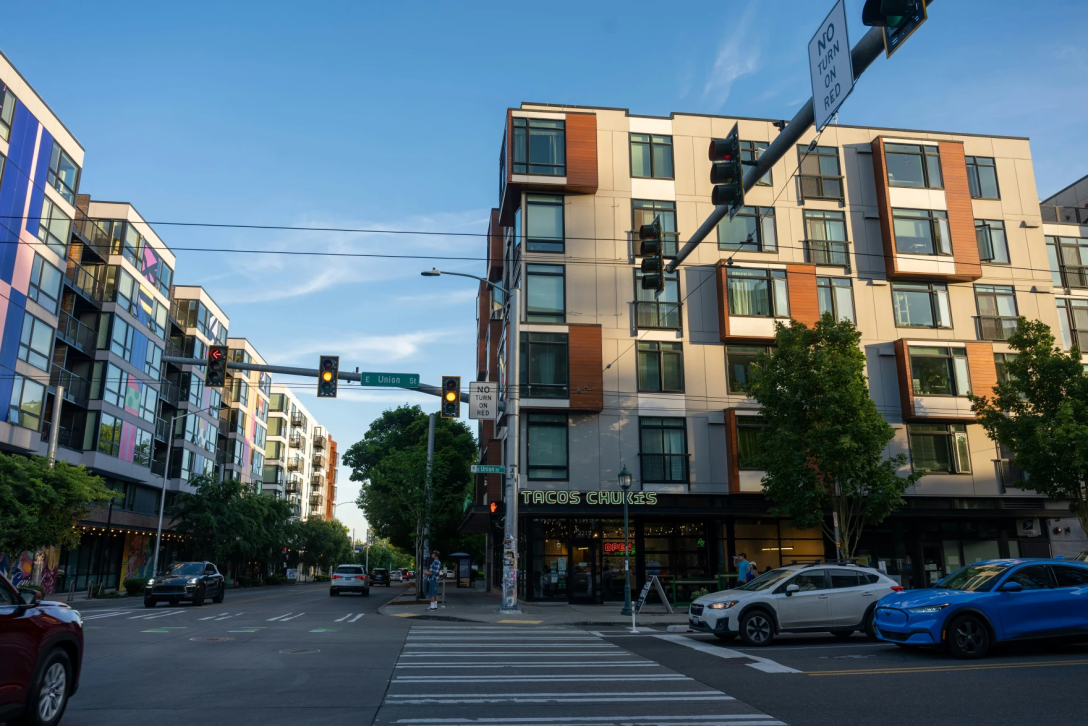
The Seattle City Council voted 5-4 this week to shield many citywide zoning changes from appeals to the city’s hearing examiner — a move supporters say will speed housing construction, but critics argue weakens an important check on government.
The vote came near the end of a marathon public meeting that highlighted a broader debate over how Seattle balances the need for more housing with neighborhood concerns about growth and change.
The State Environmental Policy Act requires a report on the environmental impact of government actions. Based on the report, the state may require further study, or determine that the change is “nonsignificant.”
A “determination of nonsignificance” ruling can be challenged in court or before a regional growth hearings board, or through a free petition to the Growth Management Hearings Board (which overturned former Councilmember Sara Nelson’s “Makers District”). These rulings can also be brought to Seattle’s own independent Hearing Examiner, a sort of referee who performs an additional investigation.
City leaders claim that appeals to the hearing examiner have delayed zoning reforms for half a year on average — or sometimes multiple years — slowing housing production and driving up housing costs before most appeals are withdrawn or rejected.
They also argue that eliminating the right to appeal to the hearing examiner, specifically, could speed up zoning changes related to Seattle’s Comprehensive Plan, which aims to spur at least 80,000 more housing units by 2044.
“Delay has a cost,” said Aliesha Ruiz of Habitat for Humanity Seattle-King & Kittitas Counties. “A family doesn’t need more review, they need a roof. Every month this redundant process drags on is another month they spend waiting for a home to call their own.”
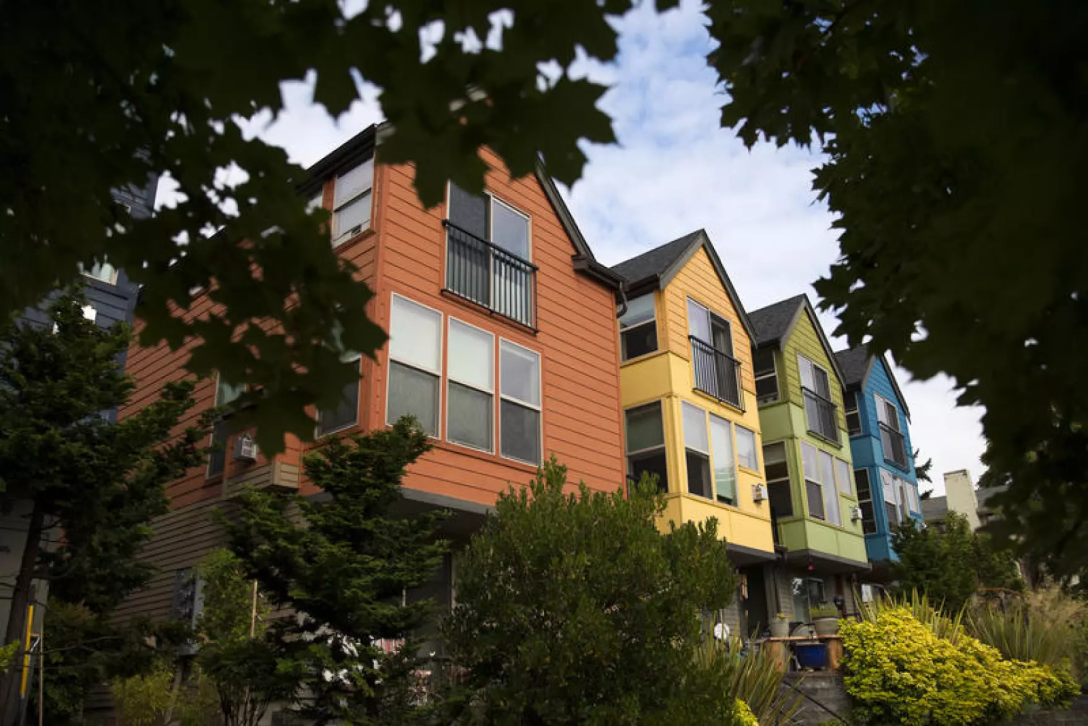
Other forms of appeal would remain, and individual development projects can still be challenged, according to Councilmember Eddie Lin, chair of the council’s Land Use and Sustainability Committee.
He emphasized that existing legal challenges addressing the impact of development on Orca in Puget Sound should go on.
Opponents of this week’s change said the appeals process has helped communities push back against potentially harmful city decisions.
“Remember, there are important reasons why the community values the current appeals process,” Central District resident Johanna Cullen told the council. “The process helped save the community from historic demolition and total environmental destruction.”
Francesca, a self-described artist and community organizer who gave no last name, told the council: “I understand Seattle is in a housing crisis, but we are also facing greater threats to our environmental safety than ever before.”
“Building housing or city infrastructure without environmental accountability will inevitably land hardest on communities of color,” she continued, referencing past projects such as I-90, which pushed through what was what was, at the time, a mostly Black residential neighborhood. “Marginalized communities cannot afford to pursue legal recourse like our white counterparts.”
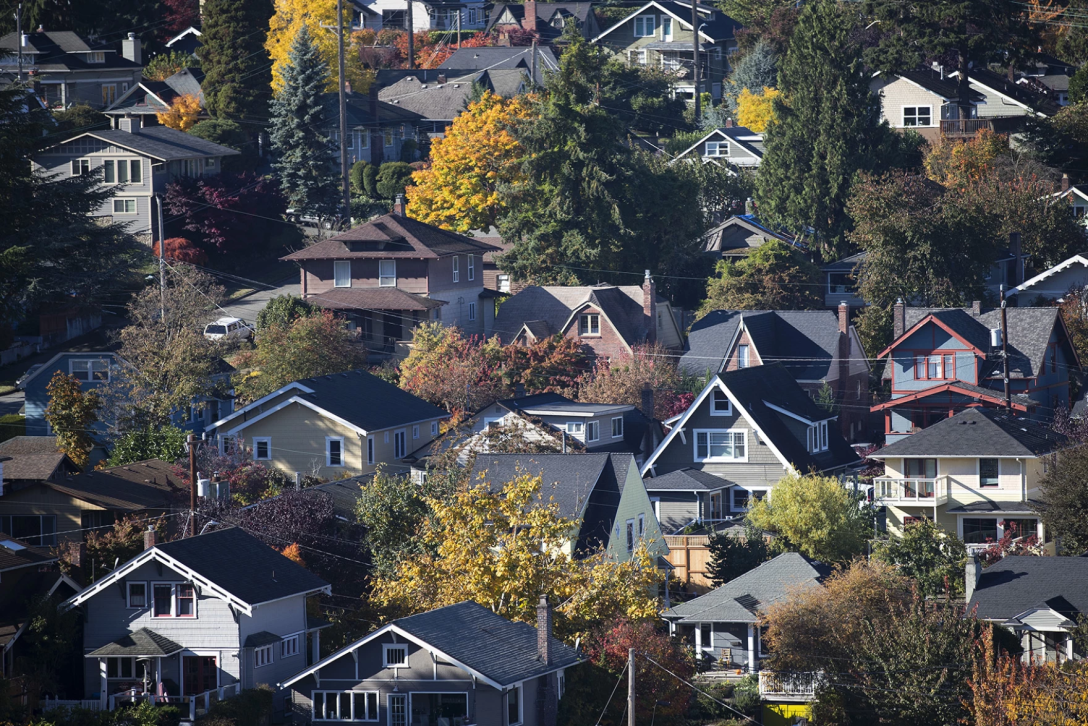
Many of the laws that slow down zoning changes today are rooted in historic frustration with cities and states that, for many decades after World War II, seemed intent on paving over historic structures, like the Pike Place Market, neighborhoods like the Chinatown-International District, and green spaces, in favor of putting more highways everywhere.
Political protests in communities eventually led to a patchwork of regulations that, today, are being overturned as the focus has shifted to building more homes.
That history is one reason why many of today’s homeowners — some with roots in that era of protest, some from communities dispersed by recent development — describe a sense of déjà vu. They argue that government is being given a free pass to greenlight development without restraint at the expense of historic homes, trees, and open space.
While eliminating one form of appeal does not equal a reversal of all environmental regulations, it comes on top of years of enormous growth concentrated in certain neighborhoods formerly known as urban villages. Since the early 1990s, urban village hotspots were where almost all new growth was channeled, like a magnifying glass concentrating the sun on a tiny area. In contrast, recent zoning changes spread growth out across more of the city, including areas where new development had been largely absent for decades.
Today, environmentalist scientists are less unified in their judgement of urban redevelopment. Some emphasize the need to retain large trees in cities and plant more new trees. But many argue that for every tree lost in the city due to dense urban development, dozens of trees outside the city may be saved by avoiding “suburban sprawl.”
Jeff Paul, co-executive director of House Our Neighbors and a supporter of the bill and its reforms, told the council: “I’m frustrated that people are here who claim to care about the environment, yet they’re fighting against one of the most important things we can do to address climate change and support our local ecosystems.”
A national shortage of housing across the U.S. — widely understood by scholars to stem from lack of supply, both for low-income and market-rate housing — has slowly shifted many cities in the same direction Seattle is headed: towards greater housing density.
Where cities like Seattle fail to make significant zoning reforms, states like Washington often step in to force them to. Many of Seattle’s recent zoning reforms were written just in time (if not late) to comply with deadlines imposed by the state.
Seattle has made shifts of its own, though, due in part to its high numbers of young, single renters who, as a demographic, are more likely to struggle with housing costs and more likely to elect pro-housing leaders.
Seattle Mayor Katie Wilson, once the leader of an organization called the Transit Riders Union, is closer in age to that demographic than any mayor in the past.