Habitat SKKC Fall Advocacy Update

Change doesn’t happen all at once – it’s built slowly, through the dedication of people and rooted in the conviction that there is good worth working for. 

In Washington, recent breakthroughs like passing Middle Housing (HB 1110), ADU legalization (HB 1337), and renewing the Seattle Housing Levy reflect the power of this commitment. As pandemic era funding continues to sunset in 2025, the challenge now is clear: local and state leaders must double down to sustain progress, scale proven programs, and address persistent development barriers.

This fall, Habitat for Humanity SKKC’s advocacy efforts made meaningful headway on several fronts:

  • In King County, we championed support for a revolving construction loan program as part of the County Council’s Workforce Housing Initiative. This initiative has now advanced to the County Executive, marking a big step toward faster, more efficient housing development.
  • In Seattle, our coalition played a critical role in shaping the Comprehensive Plan update to build on statewide reforms. While the updates reflect significant progress, we’re pushing to expand density bonuses beyond Neighborhood Residential zones and refining design standards to keep housing production on track. At the same time, we’re advocating for Payroll Expense Tax funds to directly address housing needs.
  • On the Eastside, our partnerships with the Bellevue Roundtable and Eastside Affordable Housing Coalition spurred important changes. Updates to Bellevue’s Wilburton neighborhood plan will unlock new housing opportunities, and the creation of a dedicated Office of Housing—secured in the latest budget—will streamline and expedite future construction projects.

Looking ahead to the 2025 legislative session, we’re laser-focused on four priorities: expanding investment in proven programs like the Housing Trust Fund and CHIP, implementing solutions to close the racial homeownership gap, establishing dedicated funding tools like revolving construction loan funds, and removing regulatory barriers that slow affordable housing development. With over 300 units in our pipeline, we’re working with legislators to create lasting solutions for affordable homeownership across Washington state.

These achievements – and the work still ahead – represent more than legislative wins; they are tangible steps toward ensuring everyone has a safe, decent, and affordable place to call home.

Please join us in our efforts by signing up for Habitat SKKC’s Advocacy Alerts here.
Habitat SKKC Strengthens Its Legislative Impact for the 2025-26 Session

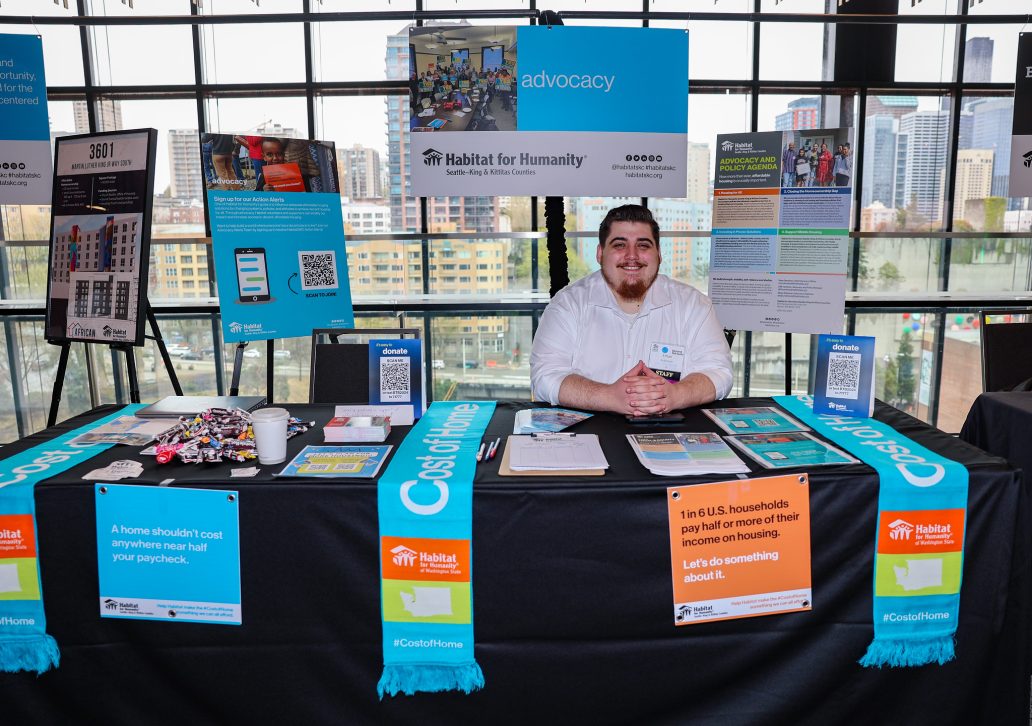
Habitat for Humanity SKKC found common ground with other Washington State Affordable Housing groups at this year’s Housing Washington conference in Spokane. And according to our Chief Advocacy Officer Ryan Donohue, the conference was sold out for the first time in its history, evidence that more individuals and organizations are ready to address the housing crisis. “The increased focus on homeownership in the housing continuum is really important and helpful for the health of the continuum overall,” said Ryan.

The annual conference hosted multiple sessions on advocacy and communications, homeownership, multifamily management and development. There were sessions addressing the intersections of housing affordability and wages; the importance of public funding; the role of Black homeownership to support equity in wealth creation, and more. 

We were encouraged to see such incredible alignment with our own Legislative Policy Agenda for 2025-26. 

For the upcoming session, Habitat SKKC will work to encourage funding for proven solutions like the Housing Trust Fund (HTF) and the Connecting Housing to Infrastructure Program (CHIP). Building a strong future for Washington requires strategic investments in these programs, because they are essential to expanding affordable housing solutions across Washington. Habitat SKKC has been able to utilize this funding to grow our construction pipeline to over 300 permanently affordable homeownership units in the next five years. Expanding these funding programs will continue to increase the availability of affordable homeownership.

To accelerate progress in affordable homeownership, Habitat will continue to work to implement bold solutions that close the racial homeownership gap. While efforts such as the Black Home Initiative (BHI) and important pieces of legislation like the Covenant Homeownership Account (CHA) represent significant steps forward, closing the racial homeownership gap demands ongoing effort and commitment. It is essential for our leaders to prioritize addressing the harm caused by discriminatory policy-making practices that have directly impacted Black and PoC communities and meet the immediate needs of these communities by tackling the systemic inequities at their core.

Housing Supply is critical to addressing the housing shortage. We will work to support policies that leverage successful solutions to scale up the availability of affordable homeownership opportunities. Elements such as construction loan funds are vital for starting and sustaining affordable housing projects, but accessing these loans remains a challenge for nonprofit developers. The creation of revolving construction loan funds can help overcome these barriers, enabling us to build vibrant, resilient communities.

The path to affordable housing production is layered with regulatory obstacles. Habitat SKKC will work during the coming legislative session to chip away at those obstacles with efforts to create a regulatory environment that actively supports and accelerates affordable housing development. Nonprofit developers face significant challenges due to the steep costs of high tax obligations and liability insurance premiums. Reducing these financial burdens on nonprofit developers like Habitat would make it more feasible to deliver crucial affordable housing solutions. We will, once again, tackle the Sales and Use Tax Exemption and Condo Liability Reform.  

Attending the Housing Washington conference in September has enriched us with connections to other groups focused on solving the State’s affordable housing crisis. Together, we will create a stronger coalition of advocates sharing our goal of assuring that everyone has a safe, decent and affordable place to live. 

To stay informed about Habitat SKKC’s Advocacy initiatives, please sign up for Advocacy Alerts here.

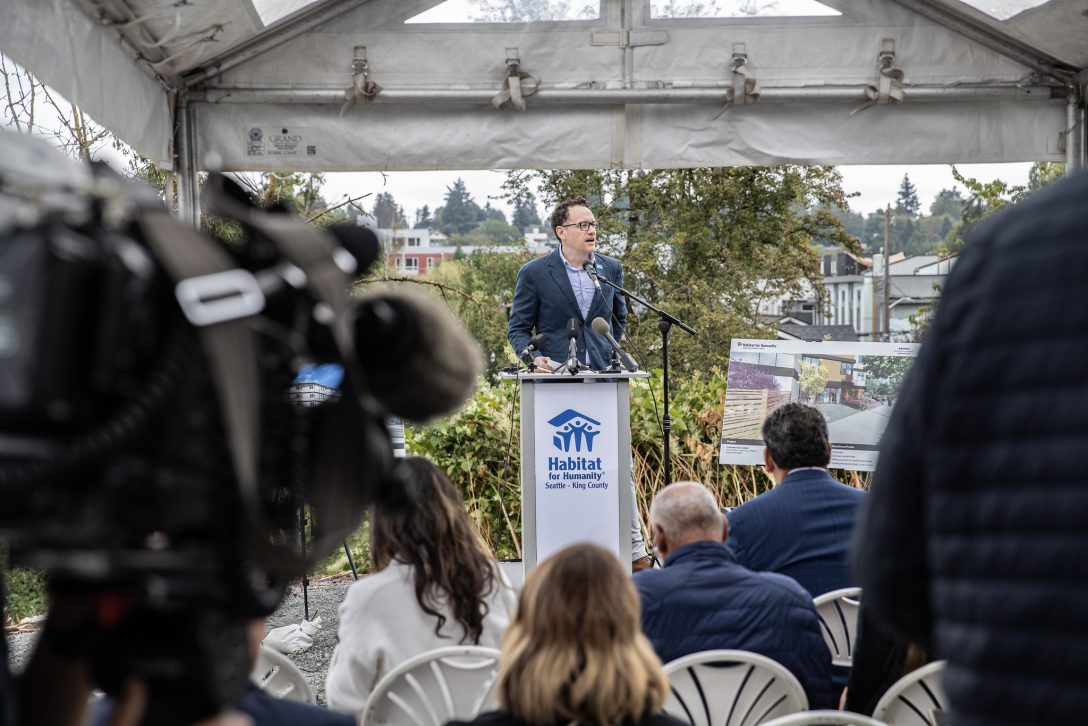
Groundbreaking at 5022 MLK Marks Largest Habitat Single Building Project in U.S.

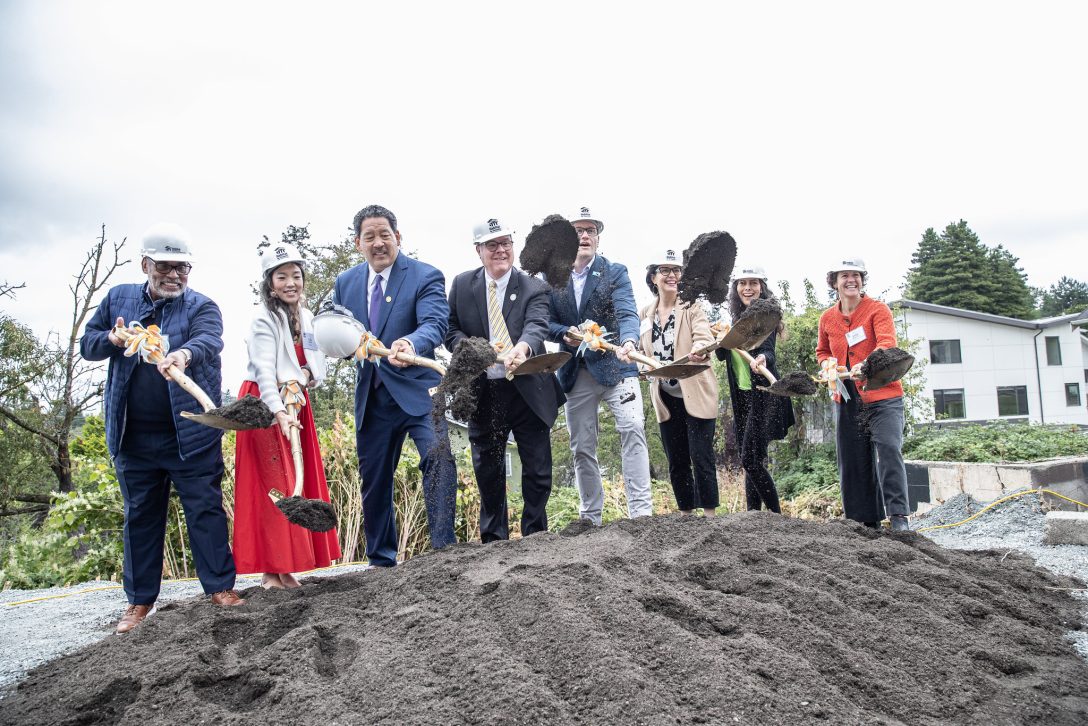
On Monday, September 16, Habitat for Humanity Seattle-King & Kittitas Counties broke ground on 5022 MLK in the Columbia City neighborhood. With 58 affordable housing units, 5022 MLK is our largest endeavor to date, surpassing the Miller’s Creek 40-home project underway in Burien, where we broke ground in August. 

Slated for completion in Spring of 2028, 5022 MLK is also the largest Habitat for Humanity single building multi-family project in the country—surpassing the previous largest single building project, the 56-unit Sydney House in the Bronx borough of New York. 

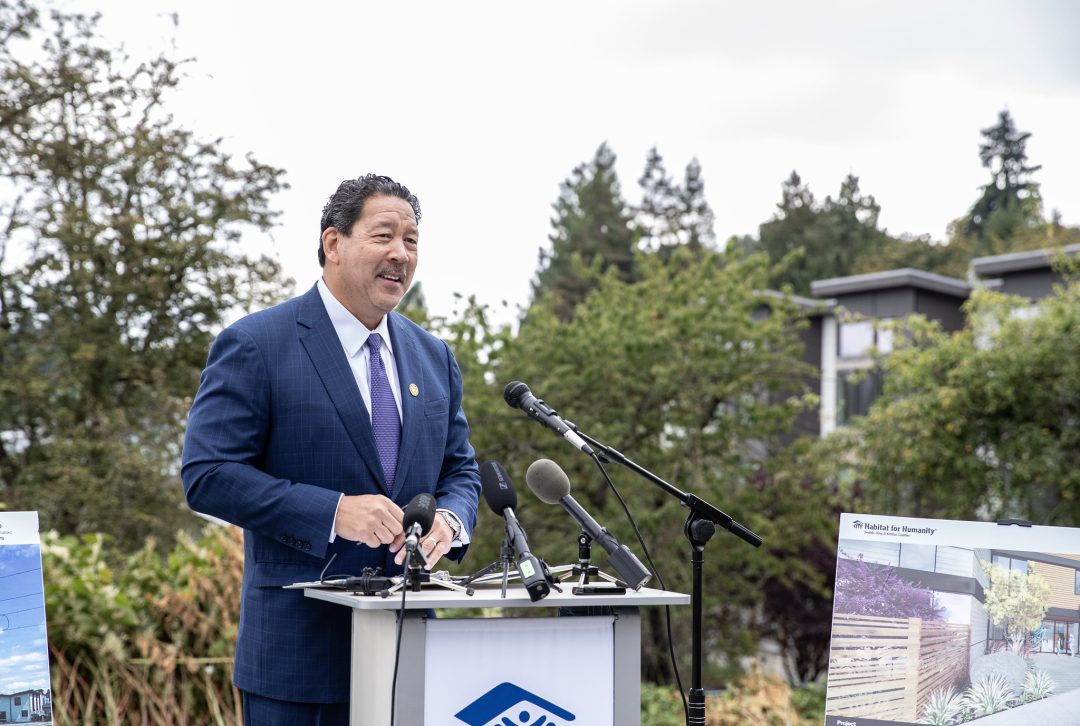
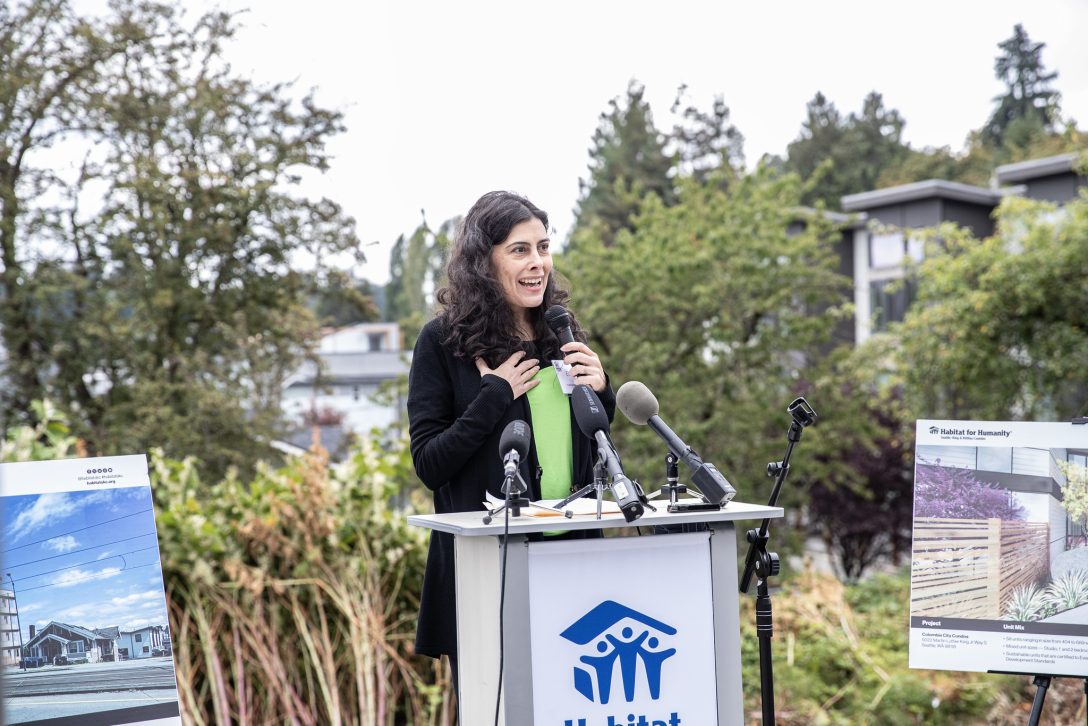
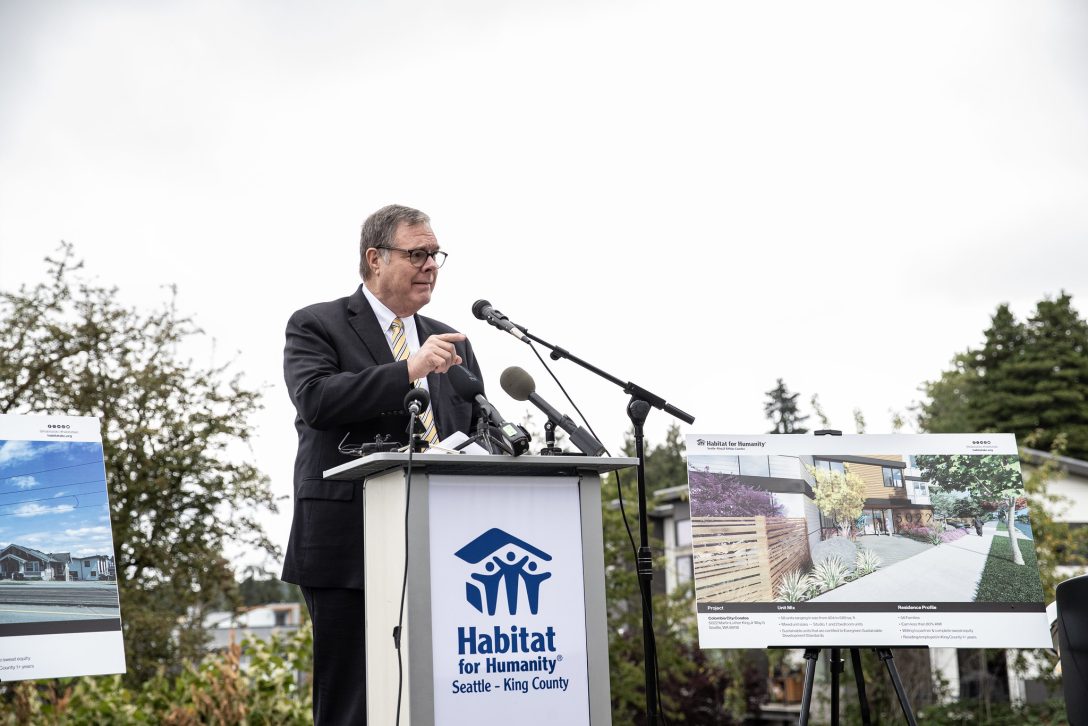
In attendance and speaking were Lt. Governor Denny Heck and Seattle Mayor Bruce Harrell, both champions of affordable housing, as well as Lily Kim with Amazon’s Housing Equity Fund and Habitat Homebuyer Elena D. 

5022 MLK capitalizes on smart density design with five stories of condominiums, including five studios, 26 one-bedroom units, and 27 two-bedroom units with homes ranging in size from 370 to 690 square-feet. The project will also include a 2,000 square-foot outdoor courtyard designed to encourage a sense of shared community within the project.

Located in Seattle’s culturally and economically diverse Columbia City neighborhood, 5022 MLK is a Transit Oriented Development (TOD). The site is located just two blocks from the Columbia City Light Rail Station for easy access to jobs, schools, restaurants, and services. Legislative work conducted by Habitat SKKC in 2023 helped to make the project possible by securing a $6 million investment from Washington State.

As with all new home projects developed by Habitat SKKC in King County, this community will offer families making less than 80% of the Area Median Income (AMI) affordable homes with mortgages set at no more than 35% of their incomes. The property will be placed in a Land Trust ensuring permanent affordability for future generations. In an area with average home prices at $850,000 and rising, these homes will ensure that families with low incomes continue to have a place to build lives in Seattle for generations to come. 

The 5022 MLK project was made possible through the support of Washington State, The City of Seattle, Washington State Department of Commerce, Amazon and the National Housing Trust, Washington Trust Bank, and the Washington State Department of Ecology.

Celebrating National Homeownership Month in June

Recent research from Habitat International confirms the benefits of homeownership to families and society as a whole. Habitat for Humanity Seattle-King & Kittitas Counties is celebrating those benefits with National Homeownership Month in June.

Among the findings is that social and civic engagement are essential to representation in the democratic process, and both are heavily influenced by access to — or lack of — affordable housing. Homeownership and the stability it provides to low-income families improves life satisfaction, increases civic participation and affects positive educational and health outcomes for families.

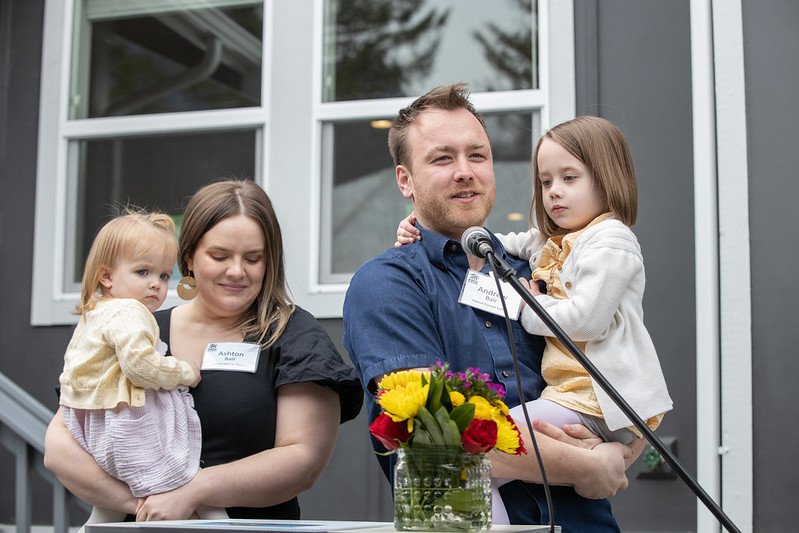
Habitat homeowner Makio Pastolero started by volunteering at Habitat’s Tyler Town North Bend community. He worked there every Saturday for a year and learned a lot in the process.  

His fellow volunteers encouraged Makio to apply for a Tyler Town home as his family grew and, in 2023, he acquired a 3-bedroom home with a yard for himself, his wife and baby girl.

“When we moved in,” he says, “it really felt more like our home, because I remember laying the floor, caulking the windows, building the deck, and painting.  I would not have done it any other way. Now, I have a passion for maintaining my home and my community.”

Habitat homeowner Iulia Zabadov credits her education to the financial stability that owning her Snoqualmie Habitat home gave her. Iulia earned a BA in Business Administration and is now employed by Bellevue College. She was able to go to school while working full time, because she had plenty of neighborhood support. Iulia says the help she received from her neighbors was a “safe haven” for herself and her children. “It is a wonderful neighborhood for them to grow up in.” Her son Nicolae is studying electrical engineering at Bellevue College, and daughter Vera is in high school.  

Habitat research also found that homeownership can mitigate some racial gaps in civic engagement. When levels of education, income and employment are equal, Black populations are equally civically engaged compared with their white counterparts. 

Habitat SKKC is an active member of the Black Homeowners Initiative (BHI) with its mission to create more Black homeowners in our region, and a partnership with African Community Housing & Development (ACHD) to build and steward 65 new, permanently affordable homes across three sites on Martin Luther King Way S. in Seattle’s Rainier Valley.

Habitat homeowner Treaous Florence-Moreland (Tea) feels the stability of homeownership has helped her children’s education, as well as her financial situation. With a stable location, Tea’s children were able to live close to their schools, friends, and family; a few of them have attended Seattle Central Community College. Tea herself has attended UW classes, growing her career from medical assistant to administration at the Medical Center. Now, she’s looking ahead to retirement with a sense of security. 

Habitat for Humanity affiliates share the same vision: a world where everyone has a safe, decent, and affordable place to live.  National Homeownership Month is an opportunity to support that mission and to amplify the message that homeownership is good for everybody.  

How to Celebrate Homeownership Month this June

Anyone can contribute to Habitat SKKC’s celebration of National Homeownership Month.  Here’s how: 

The Urbanist: (Op-Ed) Boost Seattle’s Growth Plan to Solve the Housing Crisis

Every evening, thousands of families in Seattle and the metro area wonder where they’ll live next year. Will they be able to renew their lease? Will they be able to afford a mortgage? Will they be able to find a home that meets their needs? The One Seattle Comprehensive Plan is important, because it will affect generations of families like this for decades to come. We must get the One Seattle plan right to create housing solutions, so more of our neighbors don’t have to worry about where they’ll be able to live and, instead, they can start living. 

As a permanently affordable housing provider, Habitat for Humanity has worked with community members in Seattle, King, and Kittitas Counties for 38 years. We’ve heard and seen families and individuals buckling under pressure from rising housing prices and very few options.  

The path forward is clear: a revised and ambitious Comprehensive Plan that should reform zoning rules and housing policies to allow more homes of all shapes and sizes; and incentivize affordable housing and homeownership. More importantly, we need to build upon our recent historic, nearly $1 billion investment in affordable housing, the Seattle Housing Levy. Systemic problems call for systemic solutions.  

Click the link to read the full op-ed.