Last week, the Seattle Seawolves visited the Habitat Southcenter Store to spend the day giving back to the community. While this was the team’s first time volunteering with Habitat SKKC, they have long been dedicated to supporting their community.
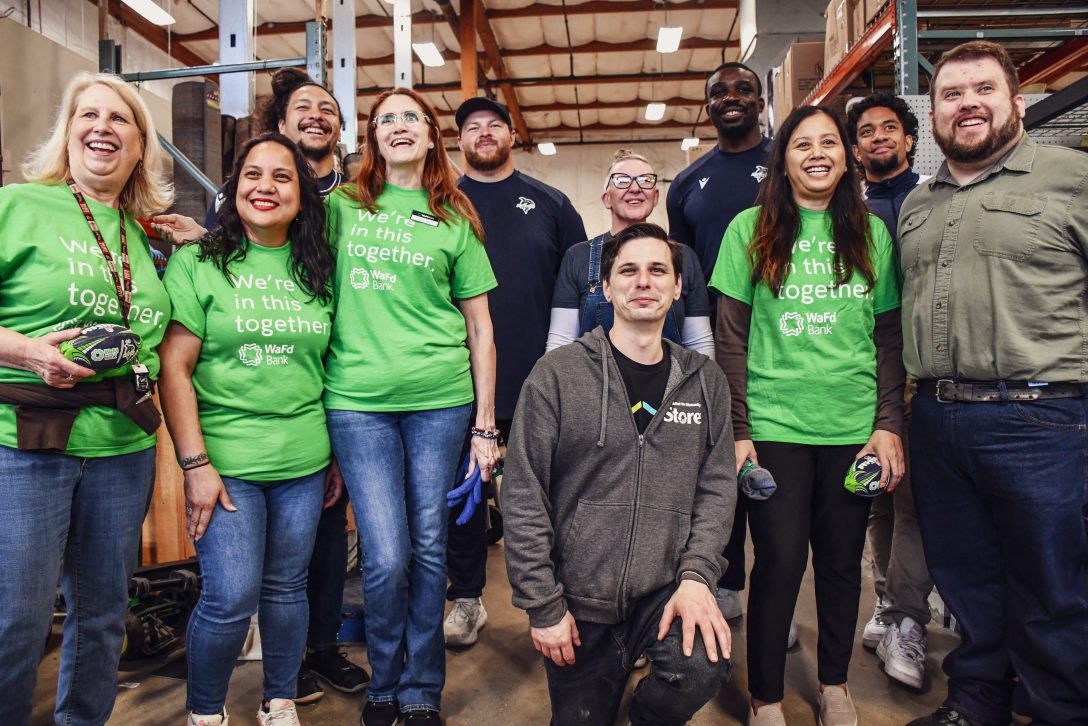
Volunteering is a major focus for the organization. Whether teaching underprivileged kids how to play rugby, taking care of marine life, or picking up litter, volunteering gives players an opportunity to share the culture of rugby. One of the key values of the sport is mutual respect: respect for each other and respect for the opposition. At the end of every match, both teams have a post-match meal together, shake hands, and exchange gifts, along with saying who they think was the best player on the opposing team.
Rugby is a team sport, and nobody wins unless everybody works together as a team. This guiding principle is why the team is called the Seawolves. A “seawolf” is a nickname for the Orca whale, which hunts together and works together as a pack, and that mentality is instilled in the name and culture of the team.
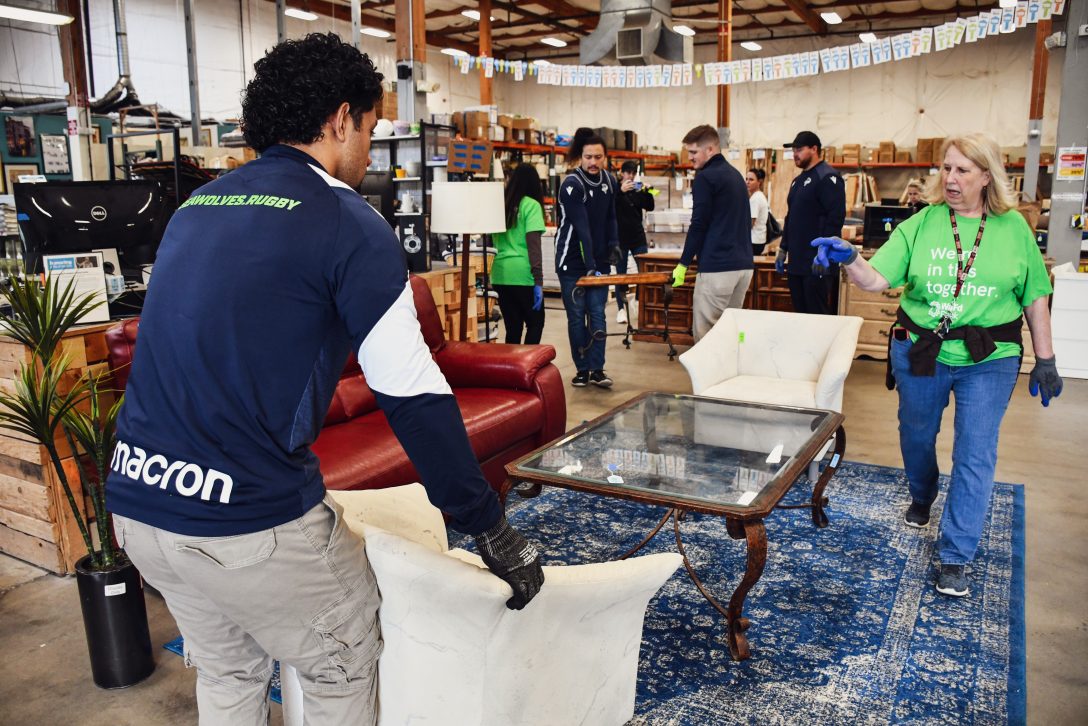
Members from the team volunteered at an important time for the Southcenter Store: Following the bustling Earth Week Sale, the store needed hands to help move the many donations that arrived and to clean up and reorganize the space.
Malembe Mpofu, who plays Lock for the Seawolves, is a recent transplant to Seattle from South Africa. His family is still there, and one way he stays connected with them is through charity work that supports rural communities in South Africa. He works with his mother, who is a judge, to help victims of gender-based violence. Together, they provide care packages that include maize, rice, beans, and other groceries to help sustain them throughout the month.
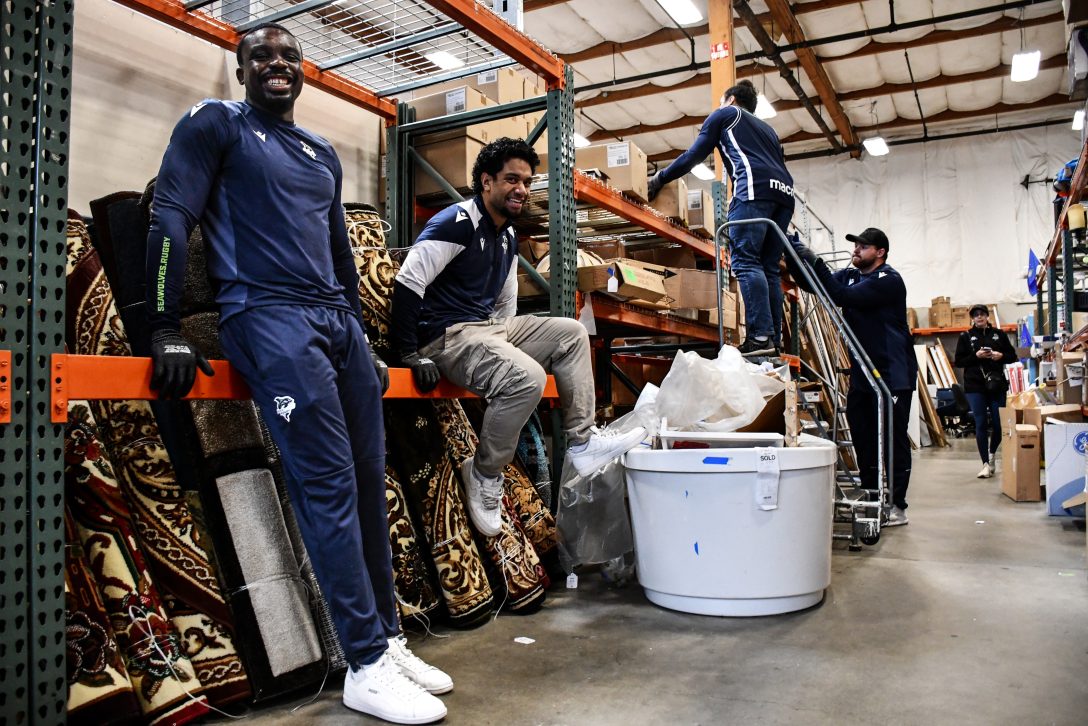
Mpofu also gathers teammates, friends, and people in the community that are willing to help, and they buy 100 school shoes in different sizes for girls and boys, to send to the rural communities back home.
“It’s nice once you have something to give, to give it back to the community. I know what someone who’s struggling looks like. It’s not a nice place to be in, especially if there’s no one trying to help,” Mpofu explains.
Calvin Liulamaga, who started on the team this year as a Center, was excited to volunteer at the Habitat Store, a familiar sight for him. Having grown up in Auburn, he has already visited that store location, and, having recently moved, was excited to check out the goods at the Southcenter store when he finished volunteering.
“We’re doing some interior designing today, and that has helped me a lot. Because in my new apartment I’m trying to figure out where to put things,” Liulamaga adds.
Not only is volunteering a great way for the team to give back (and pick up interior design tips), but it’s also another opportunity for them to bond with their teammates. Being a young league (Major League Rugby has been around for less than 10 years in the United States), the Seawolves see it as their duty to get out into the public and meet their supporters and to give back to people who have given to the team.
Liulamaga says, “There are a bunch of volunteering opportunities that we get, and it’s huge for us. The Seawolves have a very supportive fan base, and they’re always coming out every home game to watch us and support us. It’s important to give back to our community.”