Linda M., who works in healthcare, has found herself in the important role of caregiver for both her mom and daughter in recent years. She relocated to Bellevue in 2012 to care for her mom, who was showing early signs of dementia, and she stayed to take care of her for three years. Then her daughter developed a severe health condition, and Linda had to stay home from work to care for her as well. Because of this, she lost about five years of income, so she didn’t have that much money left in savings.
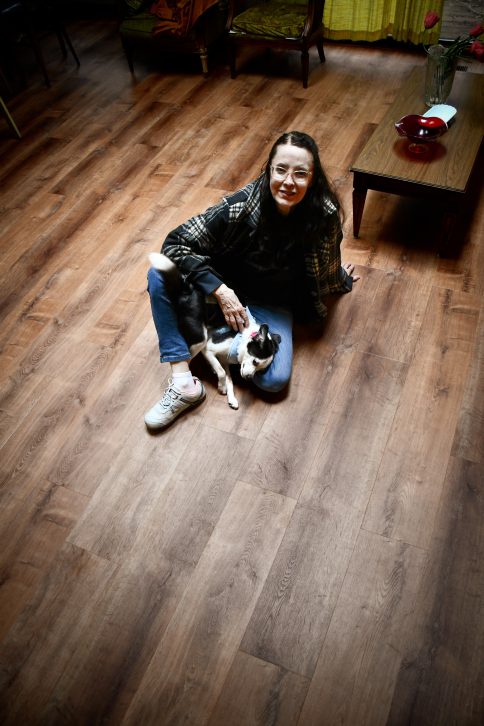
One of the main signs of wear in her home was the floors. The carpet was 40 years old and coming up in places, plus the smell from their service animals emanated throughout the space. Linda didn’t want to relocate because of the community of care she had established in her neighborhood and the health benefits it provided to her daughter. Now 25, her daughter can’t drive because of her condition, and having access to healthcare professionals, shopping, and safe walking spaces in their neighborhood is key to her health.
“I’m 69-years-old, and I hope to stay here. I’ve been here since 2012 and I know a lot of the neighbors, and I go to church nearby,” Linda says.
In looking for a way to replace her home’s flooring that was cost-effective, she found her way to Habitat SKKC via the City of Bellevue’s Home Repair Program. Once Habitat SKKC was brought in, the Repair Team fully replaced the carpet with vinyl plank flooring.
“The carpet was old and worn, with lingering pet damage that went down to the subfloor. Our site staff also hauled a good amount of furniture to get access. I imagine that would have been quite a physical burden for Linda if she had to coordinate on her own,” explains Repair Program Manager Mae Amorin.
Now that the project is complete, Linda and her daughter are enjoying their improved quality of life.
Linda explains of the home improvement, “The work they did was so meticulous and amazing. It’s much easier to keep clean, and we can take pride in keeping it clean. It’s like a whole new life for us.”
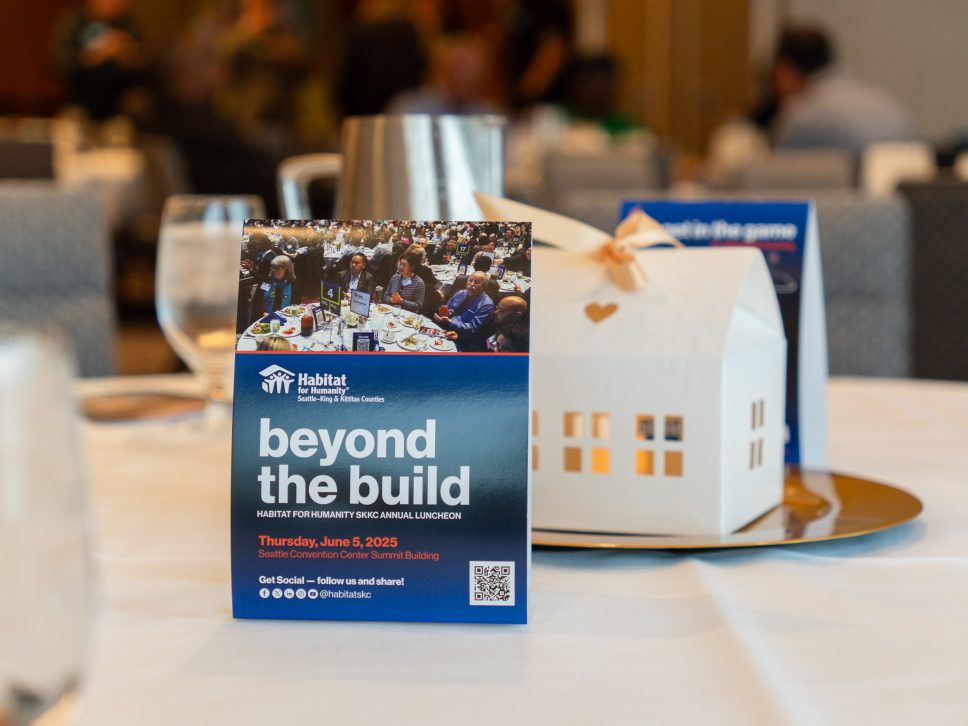
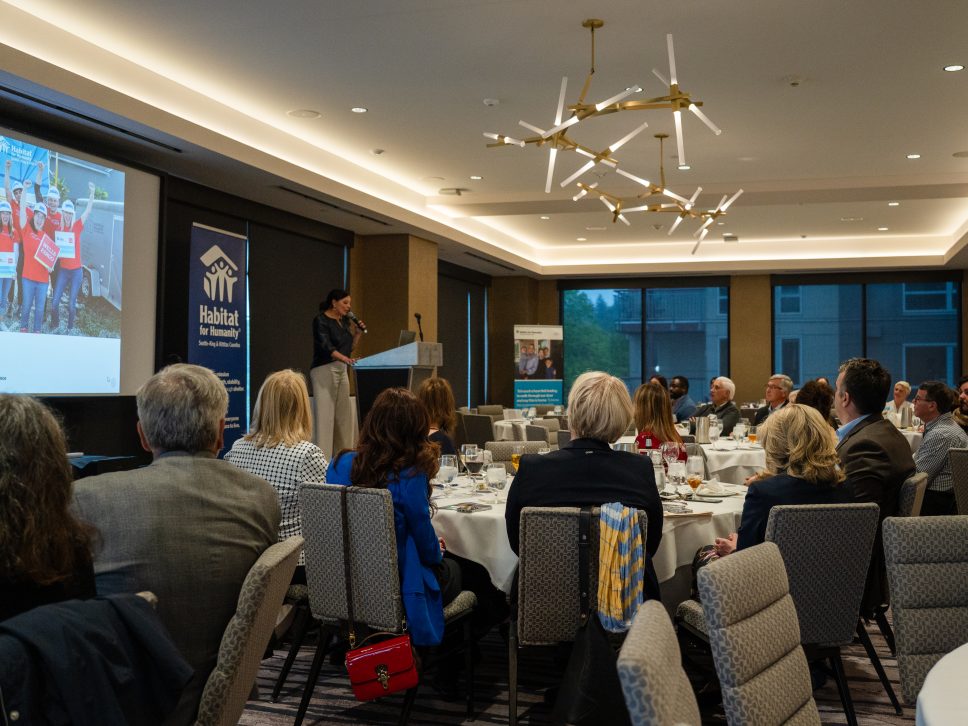
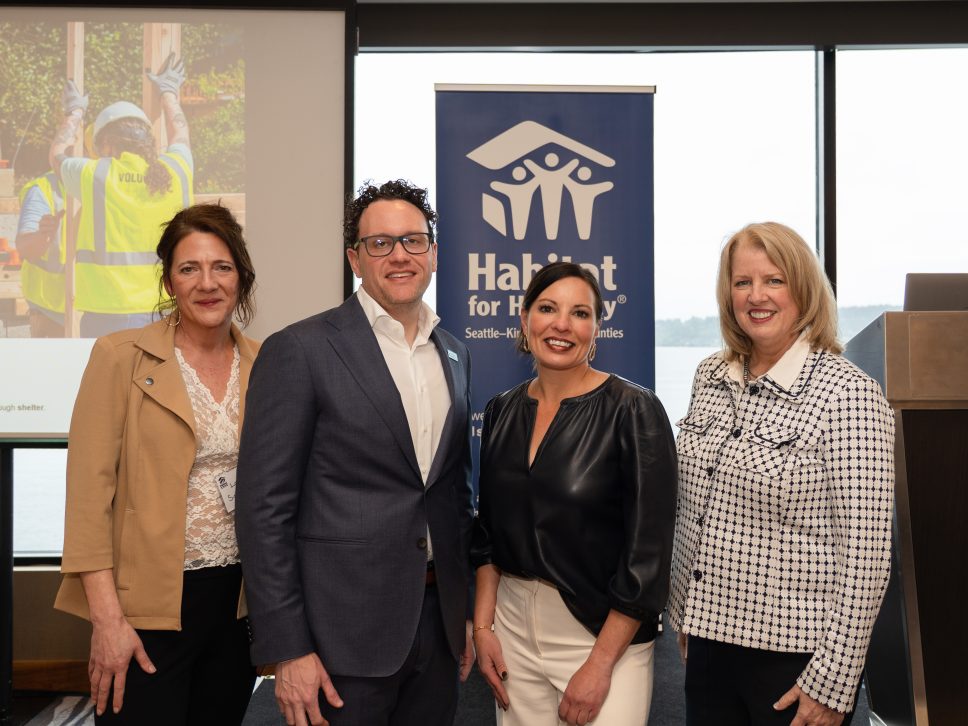
This year’s Legacy & Leadership Reception welcomed Habitat SKKC volunteers, homeowners, and community members to celebrate a year of making big strides for affordable housing and homeownership and to look excitedly ahead to next month’s Beyond the Build Luncheon.
Emcee Jen Mueller, local sports broadcaster, opened the night’s program by discussing the importance of homeownership and how Habitat for Humanity is a critical pathway to it. She thanked our donors and reminded them, “Your passion is what makes Habitat’s work possible.”
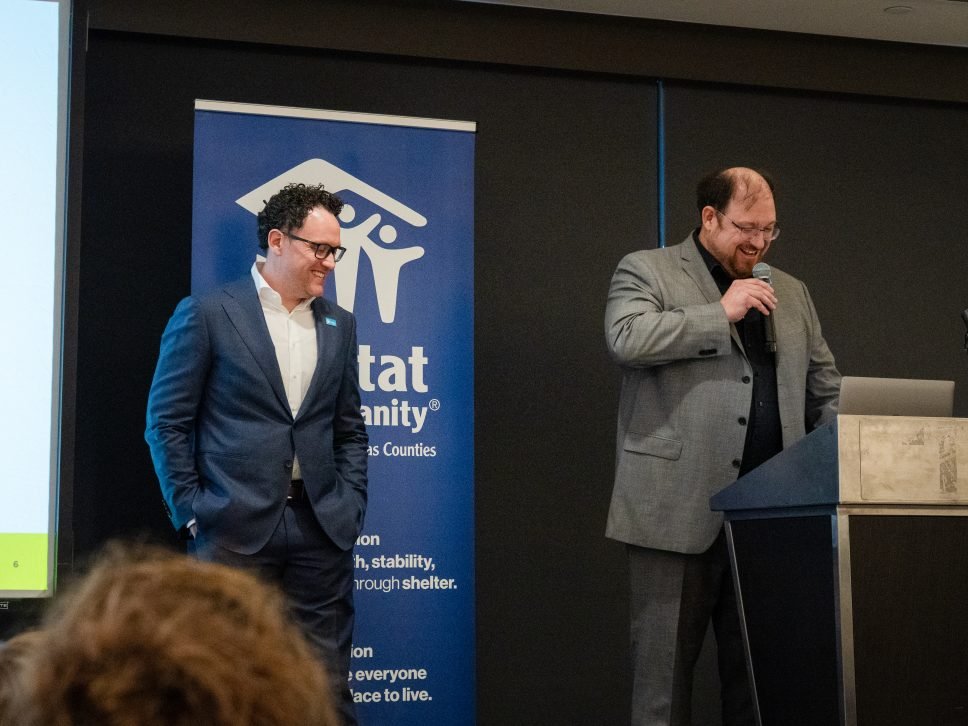
CEO Brett D’Antonio’s speech reflected on the name of the event and how it takes powerful leadership to build upon our legacy: “To continue to expand our impact and serve even more individuals and families, it takes the dedication of the leaders right here in this room to encourage those outside of it to envision a world where everyone has a safe, decent, and affordable place to call home.”
Before honoring the night’s Affordable Homeownership Champions, Chief Advocacy Officer Ryan Donohue paused the festivities to pay tribute to two champions of our work who recently passed: Speaker Emeritus Frank Chopp and Senator Bill Ramos. Calling them “an absolute lion for affordable housing and housing advocacy” and “a true friend of affordable housing,” respectively, Donohue detailed their dedication to affordable housing for all.
Donohue reflected on how Frank Chopp taught him to “always remember to bring the humanity into the work we do.”
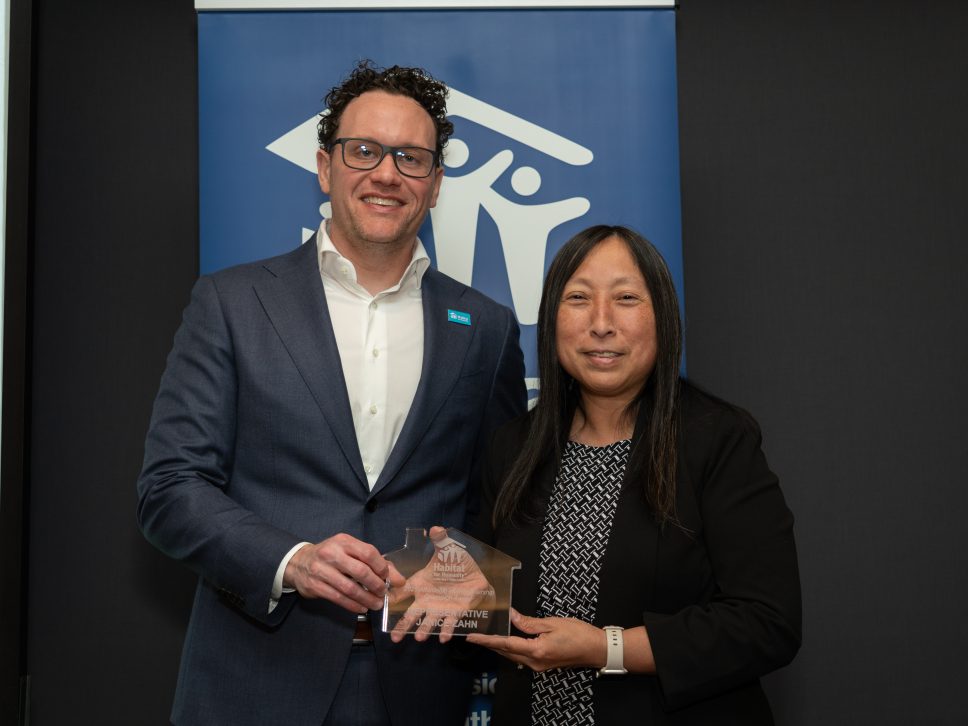
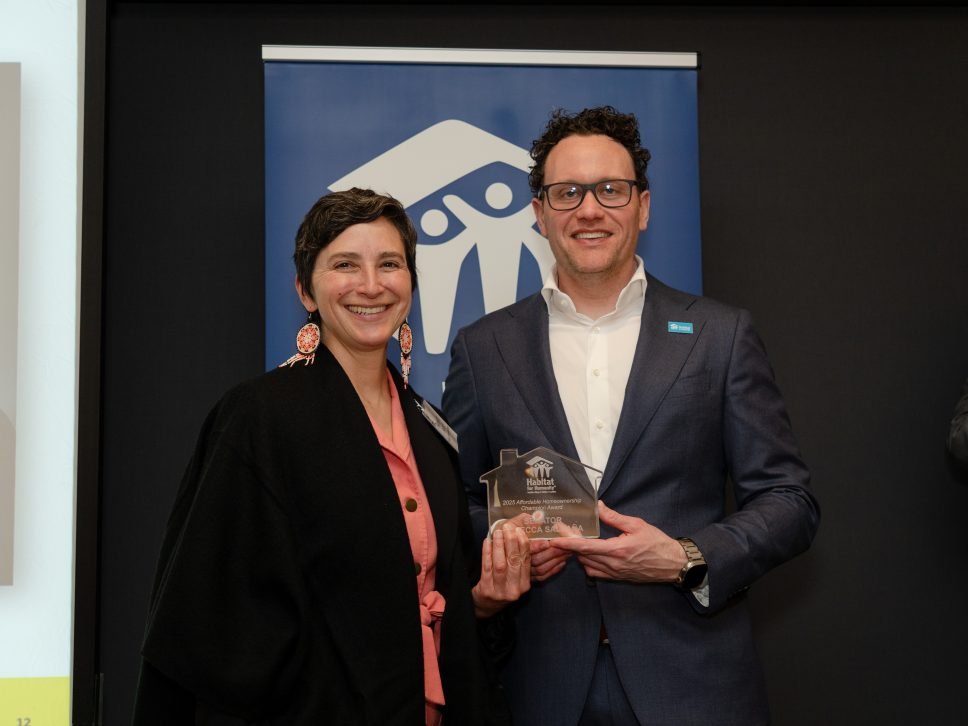
The five elected officials we honored as Affordable Homeownership Champions all demonstrated the importance of pursuing this work with humanity top of mind. The five recipients were Senator Rebecca Saldaña, Representative Mike Steele, Representative Jamila Taylor, Senator Lisa Wellman, and Representative Janice Zahn.
In a pre-recorded acceptance speech, Representative Mike Steele said, “Homeownership shouldn’t be out of reach for any of the hardworking people in this state. Everybody should be able to plant roots, raise a family, and build a future.”
When she accepted her award, Representative Janice Zahn added, “I look forward to continuing to be a champion because we know that housing is a human right.”
This was the third time we honored affordable homeownership champions: Iin 2022, we honored state lawmakers, and, in 2023, we focused on city and county representatives.
After the presentation of awards, the audience was treated to a talk by Habitat homeowner Lori S., who spoke of the resilience it took to buy a home as a single parent working for a nonprofit: “I wasn’t able to secure my own home while serving others.”
Lori overcame obstacles and exercised great patience as she waited for a Habitat home to come available in the Renton area code where she grew up and where much of her community is based. Once she applied to Habitat, completed the program, and became a homeowner, she was able to raise her son in Renton and send him to the same schools she attended. Habitat made it possible for her to find stability and permanence and to provide the same for her son.
Guest speaker Beth Knox, President and CEO of the Seattle Sports Commission, utilizes sports to instill civic pride in the Puget Sound Region. She updated attendees on the exciting developments in Seattle sports, including hosting the 2026 FIFA World Cup. She noted that Seattle is the leader in women’s sports—with soccer and basketball teams and soon a professional hockey team, we’ll have the most women’s sports teams in the country. It was a perfect lead up to Storm legend Sue Bird’s upcoming appearance as the keynote speaker at Beyond the Build.
During her talk, homeowner Lori S. told listeners, “I’m only one story. There are thousands of people who have been impacted by Habitat.”
Lori and her son are important reminders of why we do the work we do. If you want to continue to be inspired by Habitat’s work and the homeowners we serve, consider attending the Beyond the Build Luncheon on June 5.
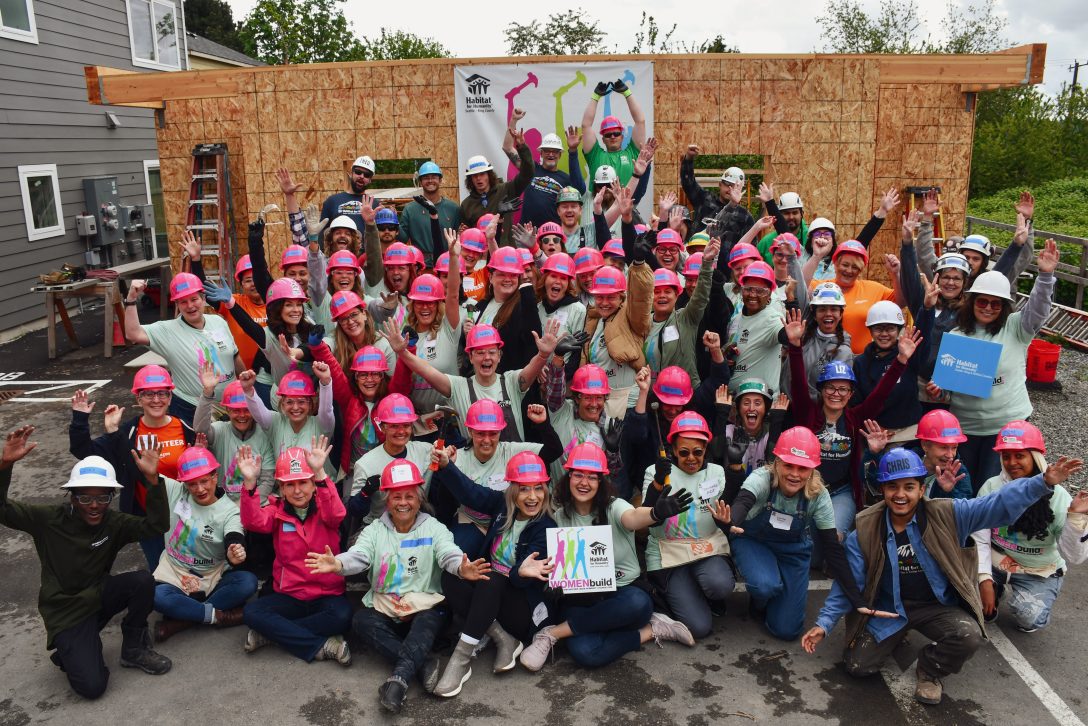
The 2025 Women Build saw nearly 300 volunteers donate their time, expertise, and energy into building homes and inspiring other women to participate on construction sites. This year’s build took place at Yarrow Cottages over three weeks. This site is especially meaningful because two years ago, it was Women Build that kicked off construction at Yarrow Cottages. Now in our 18th year, Women Build continues to be Habitat SKKC’s most popular volunteer opportunity, and it keeps getting bigger every year.
Volunteers had the opportunity to participate as individuals or as part of sponsor groups, including Amazon, US Bank, and Prime Electric. Women of Impact, the premiere event of Women Build, saw over 50 volunteers participate in one action-packed day.
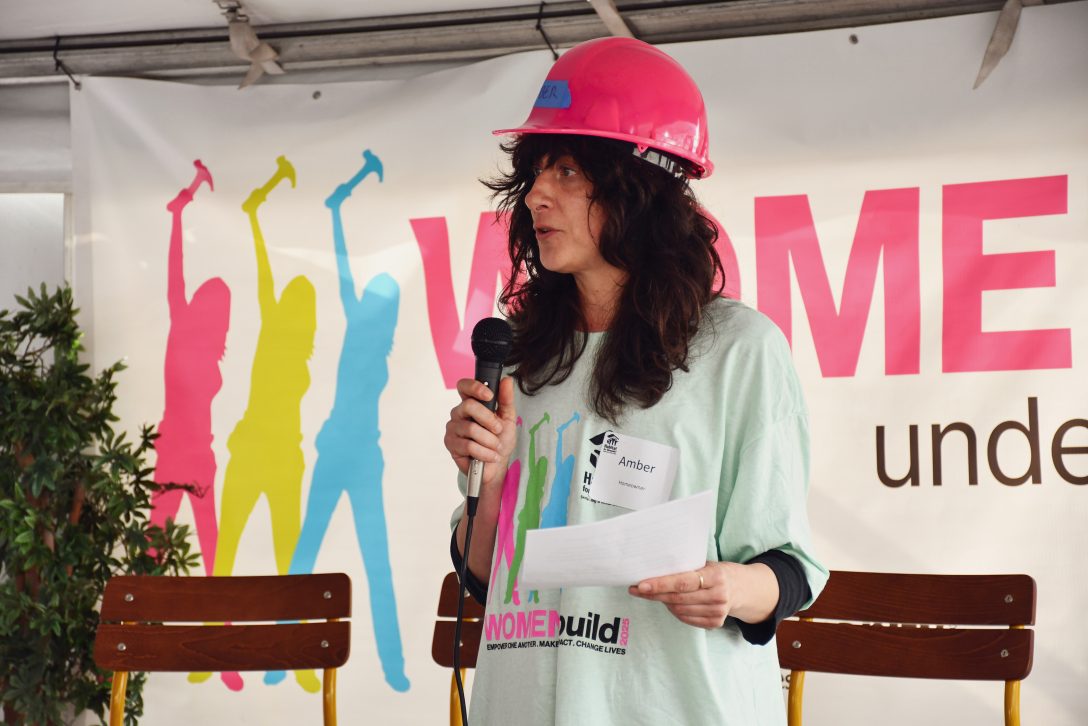
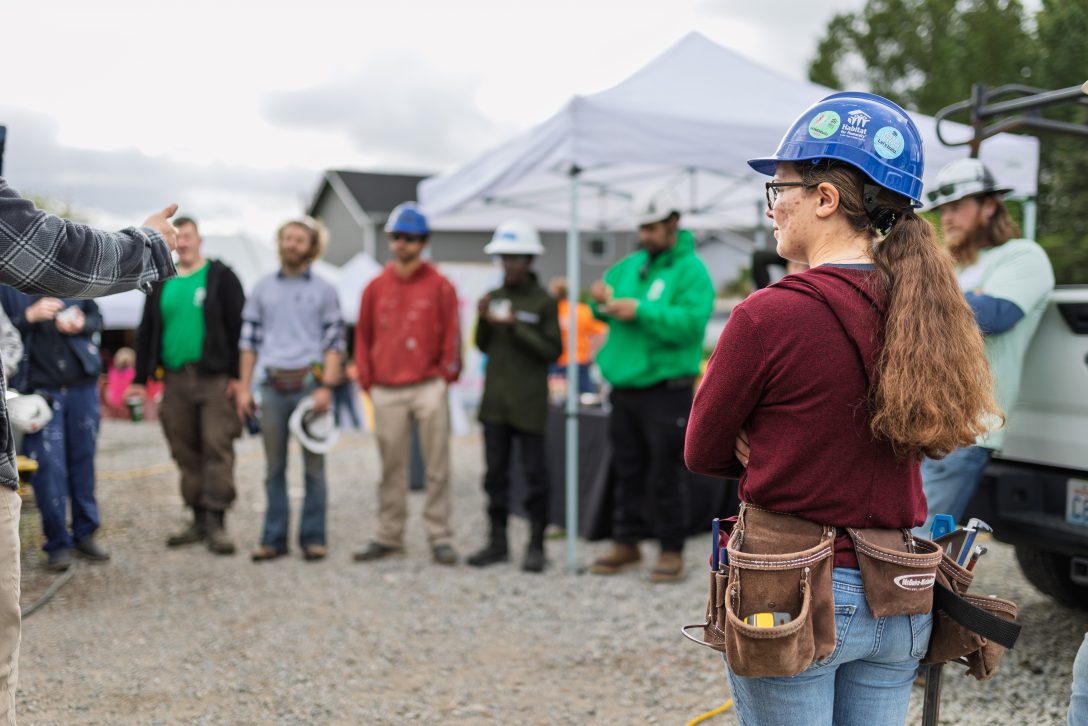
The morning kicked off with an orientation, words of encouragement from Habitat SKKC’s CEO Brett D’Antonio, and safety instructions. Participants also heard from Amber C., one of Habitat’s homeowners, who perfectly captured what being a first-time homeowner has meant to her.
Amber shared her story with the captivated audience: “I’m a writer and storyteller by profession, and one of my favorite essays by one of my favorite writers is ‘A Room of One’s Own’ by Virginia Woolf. She wisely recognized that creative freedom and artistic expression for women, for anyone, is almost impossible without financial independence and personal space. And I could not have achieved these two very important dreams without my Habitat home.”
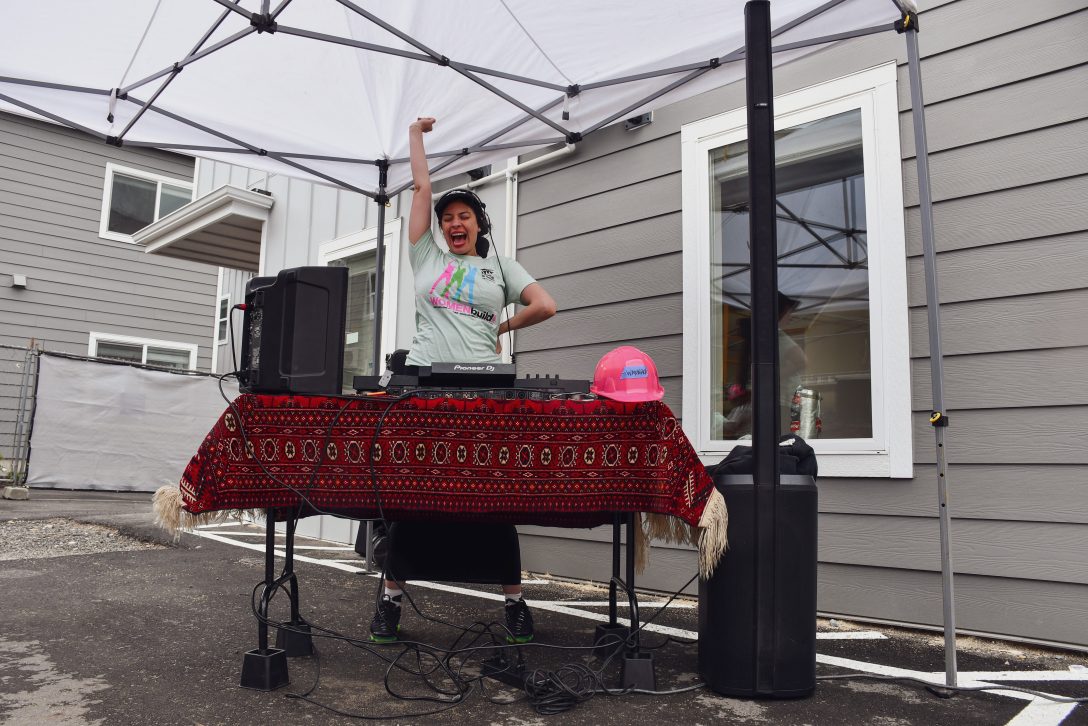
The day was full of fun surprises and treats, including an all-day set by local DJ Wax Witch, raffle prizes given away during lunch, and the announcement that the pink hard hats volunteers wore that day were theirs to keep. When Volunteer Program Manager Caroline Keck announced this news, there was an audible gasp from the crowd. This was clearly a crowd that wanted to return next year with their hard hats in hand.
Led by Habitat SKKC staff and AmeriCorps, volunteers at Women of Impact had a variety of projects to work on at the build site, from putting up cedar siding on one home’s exterior to laying down the second-story floor of another home. Sponsor Home Depot donated time and expertise by leading a group of volunteers in a project making and staining planter boxes to be gifted to Yarrow Cottages homeowners.
“Home Depot loves giving back to the community,” said Home Depot volunteer Nancy W. This was her second time participating in Women Build. She remembered the last time she volunteered on this site when there were only foundations. Upon returning, she, like so many other repeat volunteers, was able to see the fruit of her labor in the form of completed and nearly completed homes. Returning to a build site allows volunteers to see firsthand the entire process of turning a plot of land into a community.
Jolene Robinson, Habitat Board Vice Chairperson & Treasurer, has been on the Board for six years and has volunteered at Women Build for four of them. She explained her reason for coming back year-after-year: “It’s so empowering to see the Habitat staff out there, especially the female staff, showing how inclusive the job sites can be. The construction industry is not something that a lot of women feel is a career path for them. When you can get out there and roll up your sleeves alongside some of the women on our teams who have made this a career, I think it really opens eyes. You get people like me, who now think, ‘I can absolutely volunteer on a construction site.’ And I think that uplifts not just the homeowners, but also the people that are out there volunteering. You’re gaining a lot by being there.”
Liz Mathieson, the only female AmeriCorps staffer working with Habitat SKKC this year, is one of those people onsite who inspired Jolene. “It’s not rare for me to be the only woman here. Today is super special because I’m surrounded by so many people like me, and it’s inspiring to see them do this work. It makes me feel like I’m even more a part of the team,” she said.
Another Board member and repeat volunteer, Mercedes Gamor, has participated four times. She believes that Women Build is “more than just a volunteer event; it’s a reminder that every woman deserves a foundation, a home to call her own, and a stable future that she can build for herself and her family.”
The day brought out many groups, from coworkers to friends to a couple of mother-daughter duos, including Habitat homeowner Tiruwork A. and her daughter Mihret. They spent the day cutting wood that will be placed above window openings to distribute weight.
The ability to do hands-on work is a draw for many Women Build participants, especially those working in the housing sector who focus on the policy or financial side of homeownership. Erika Malone, Homeownership Division Manager at the Seattle Office of Housing, attended for the first time because she wanted to “be a part by slinging a hammer, not just funding a project.”
The site buzzed with energy, the whir of power tools, and music from DJ Wax Witch featuring empowering female pop tunes. At one point, volunteers seemed to hammer in time with the beat of the music.
—
The symphony of construction sounds paused only when it was time for lunch and the special panel conversation, “Yes in My Backyard: Turning Advocacy into Action and the Role you Play.” Led by Women Build all-star volunteer Linda Hoffner from Wright Runstad, the panel focused on how to inspire “NIMBYs” (Not in My Backyard) to say yes to affordable housing projects. The panel was made up of Claire Vanessa Goodwin, Executive Manager South King Housing and Homeless Partners (SKHHP); Bianca Siegl, Director of the Bellevue Office of Housing; and Maiko Winkler-Chen, Director of the Seattle Office of Housing.
Their wide-ranging conversation included sharing updates from their affordable housing initiatives to combatting common misconceptions about who qualifies for affordable housing. A single person making around $65,000 annually qualifies for affordable housing in King County. Some of the panelists shared their personal relationship to affordable housing because their kids are about to graduate from college and will likely fall into that category. Maiko talked about the retirees living on a fixed income who need it. She also reminded attendees that the people who delivered the day’s catered lunch need it.
“In this country, we don’t view housing as a right. We have to start that at the local level,” Maiko said.
—
After the panel, Linda, who has participated in six builds, reflected on the experience of seeing these homes over the years: “Every time I come to one of these builds, the project is at a different phase. I’ve done everything from scraping the foundations to boxing out windows to painting. It’s powerful knowing that the work we’re doing here is helping someone get a home.”
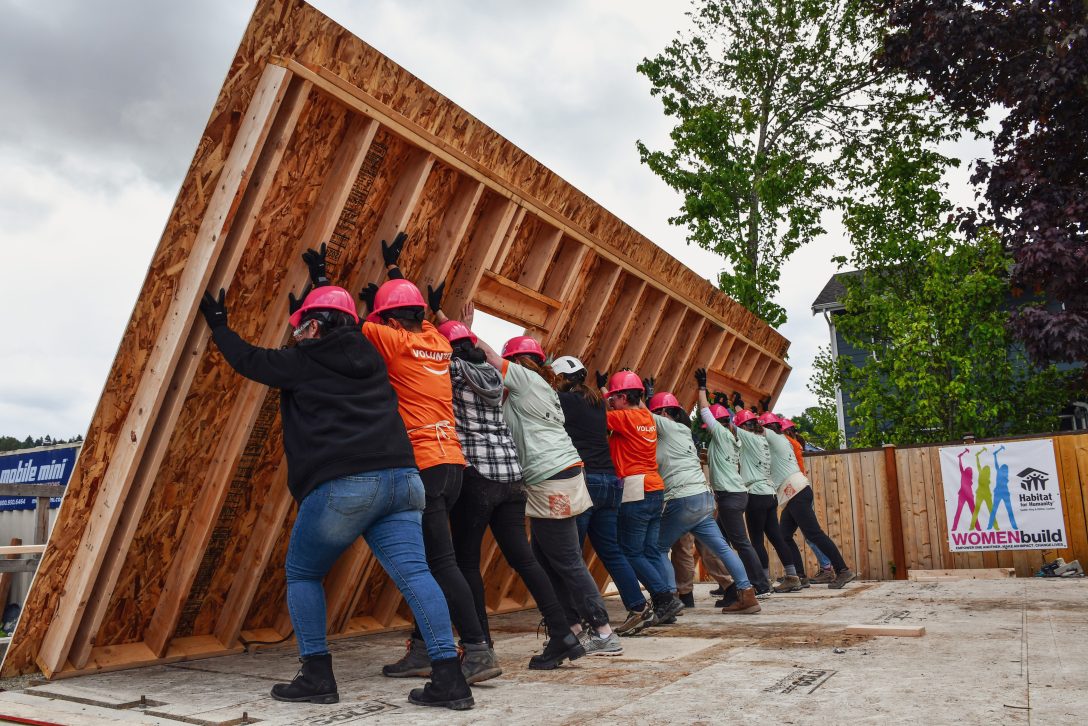
Women of Impact Day ended with one final, important task: all the volunteers gathered to put up two walls in what will become Building 12. This group effort, like the rest of the day, was a reminder that while construction may seem like an intimidating job, it feels much more accessible when surrounded by a support system.
The women and allies who participated in this year’s Women Build gained skills through hands-on learning and left their mark on the Yarrow Cottages neighborhood. They are now part of a legacy of volunteerism, meaningful work, and a shifting view of who belongs on a construction site.
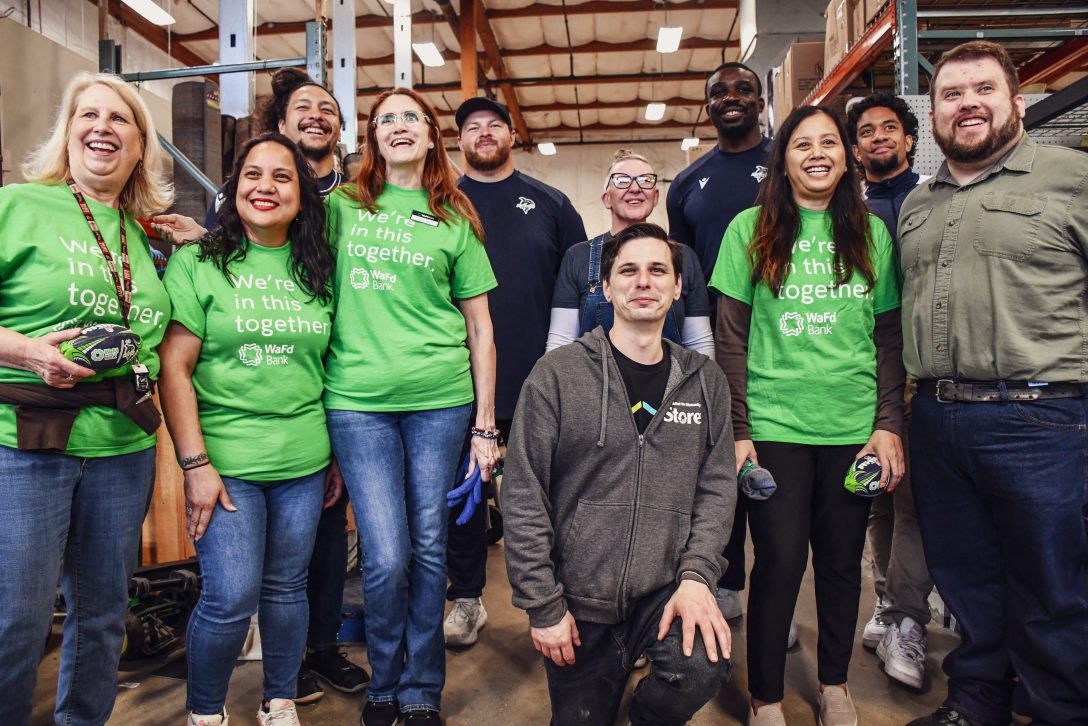
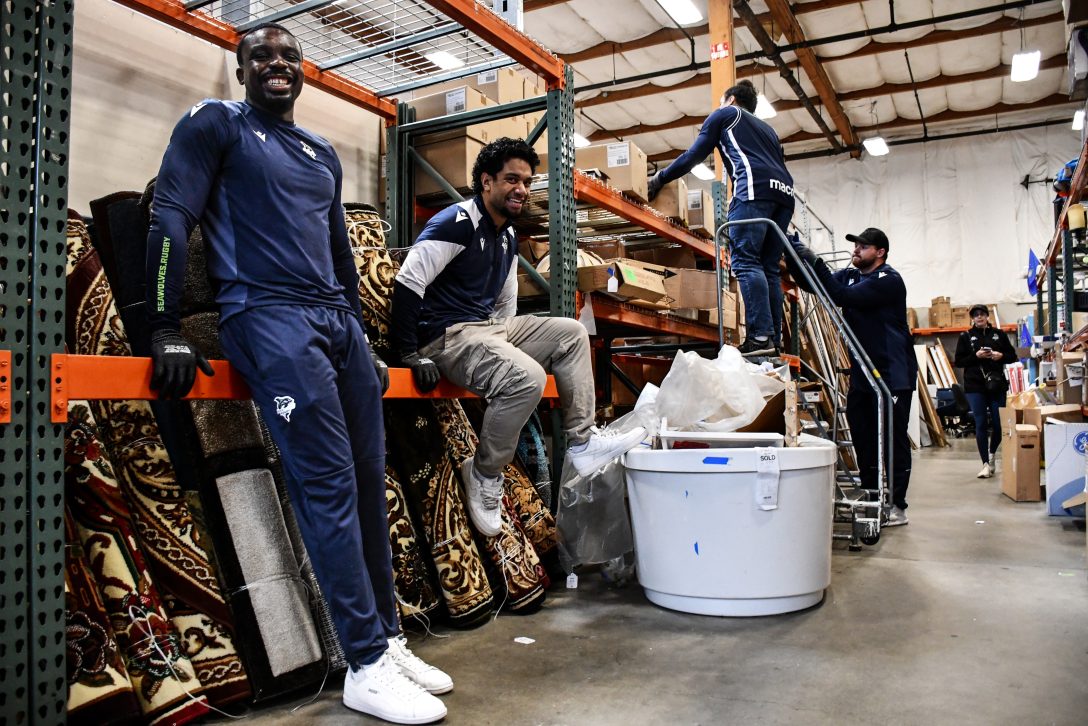
Last week, the Seattle Seawolves visited the Habitat Southcenter Store to spend the day giving back to the community. While this was the team’s first time volunteering with Habitat SKKC, they have long been dedicated to supporting their community.
Volunteering is a major focus for the organization. Whether teaching underprivileged kids how to play rugby, taking care of marine life, or picking up litter, volunteering gives players an opportunity to share the culture of rugby. One of the key values of the sport is mutual respect: respect for each other and respect for the opposition. At the end of every match, both teams have a post-match meal together, shake hands, and exchange gifts, along with saying who they think was the best player on the opposing team.
Rugby is a team sport, and nobody wins unless everybody works together as a team. This guiding principle is why the team is called the Seawolves. A “seawolf” is a nickname for the Orca whale, which hunts together and works together as a pack, and that mentality is instilled in the name and culture of the team.
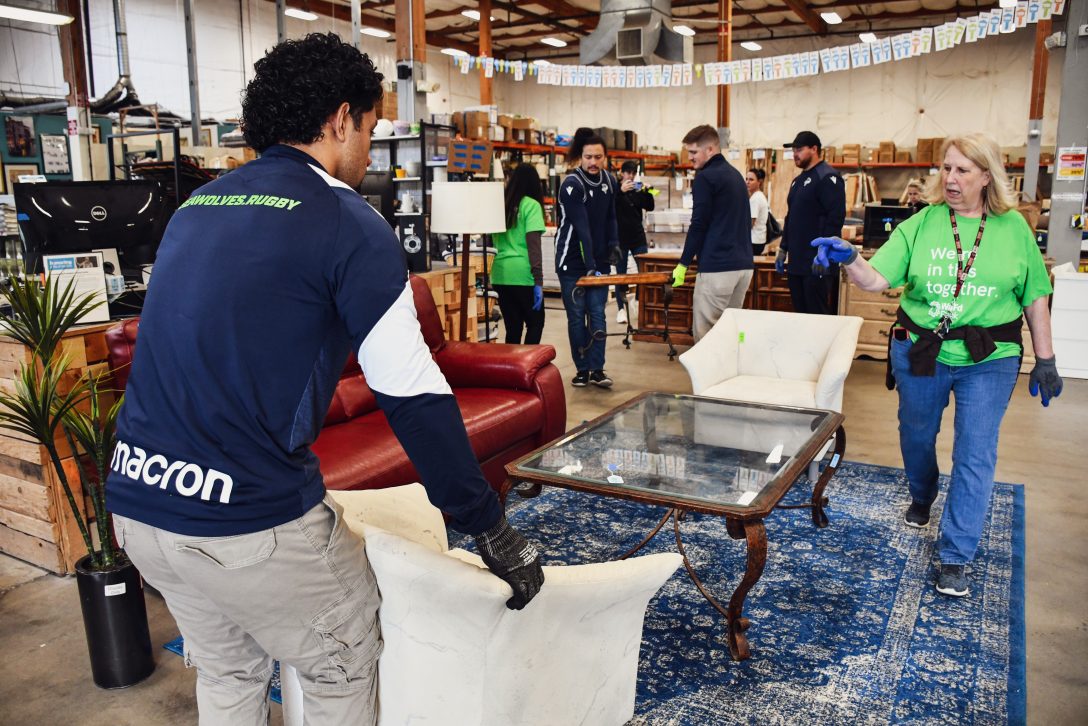
Members from the team volunteered at an important time for the Southcenter Store: Following the bustling Earth Week Sale, the store needed hands to help move the many donations that arrived and to clean up and reorganize the space.
Malembe Mpofu, who plays Lock for the Seawolves, is a recent transplant to Seattle from South Africa. His family is still there, and one way he stays connected with them is through charity work that supports rural communities in South Africa. He works with his mother, who is a judge, to help victims of gender-based violence. Together, they provide care packages that include maize, rice, beans, and other groceries to help sustain them throughout the month.
Mpofu also gathers teammates, friends, and people in the community that are willing to help, and they buy 100 school shoes in different sizes for girls and boys, to send to the rural communities back home.
“It’s nice once you have something to give, to give it back to the community. I know what someone who’s struggling looks like. It’s not a nice place to be in, especially if there’s no one trying to help,” Mpofu explains.
Calvin Liulamaga, who started on the team this year as a Center, was excited to volunteer at the Habitat Store, a familiar sight for him. Having grown up in Auburn, he has already visited that store location, and, having recently moved, was excited to check out the goods at the Southcenter store when he finished volunteering.
“We’re doing some interior designing today, and that has helped me a lot. Because in my new apartment I’m trying to figure out where to put things,” Liulamaga adds.
Not only is volunteering a great way for the team to give back (and pick up interior design tips), but it’s also another opportunity for them to bond with their teammates. Being a young league (Major League Rugby has been around for less than 10 years in the United States), the Seawolves see it as their duty to get out into the public and meet their supporters and to give back to people who have given to the team.
Liulamaga says, “There are a bunch of volunteering opportunities that we get, and it’s huge for us. The Seawolves have a very supportive fan base, and they’re always coming out every home game to watch us and support us. It’s important to give back to our community.”
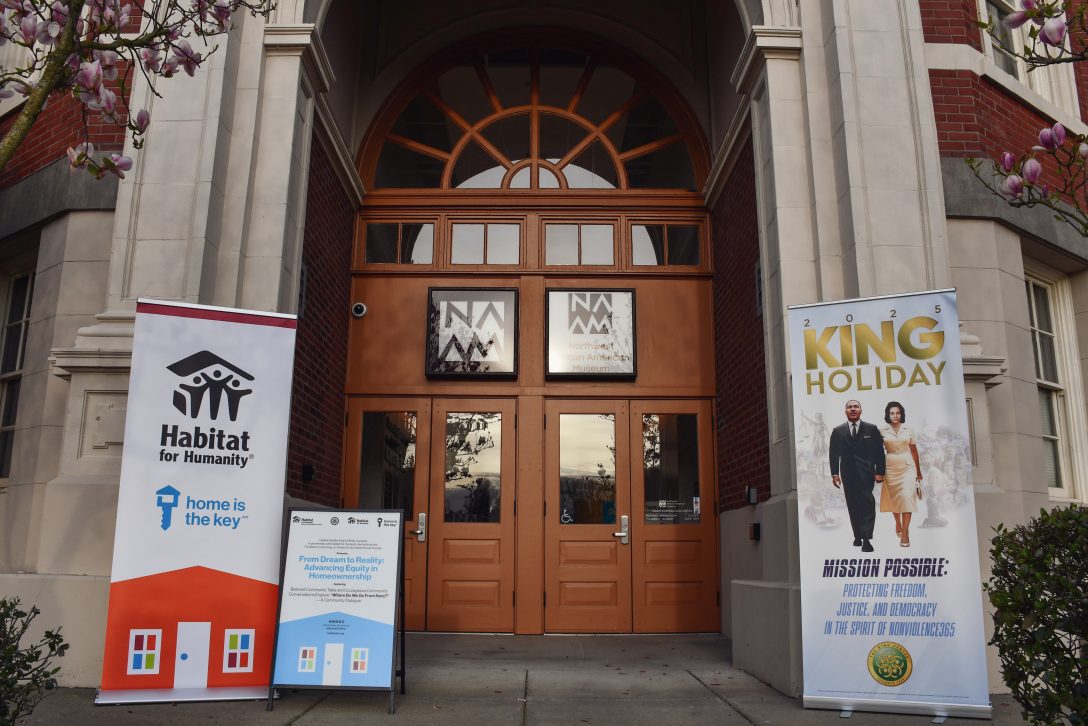
This past April, National Fair Housing Month, Habitat for Humanity International (HFHI) and local Habitat affiliates from rural, suburban, and urban regions across the country put housing center stage via the ninth annual Home is the Key campaign. The national awareness and fundraising effort called attention to the need for affordable housing and homeownership. Habitat SKKC inspired our local community via in-store donations across our four retail locations; a Community Build Day; and our premiere event, From Dream to Reality: Advancing Equity in Homeownership.
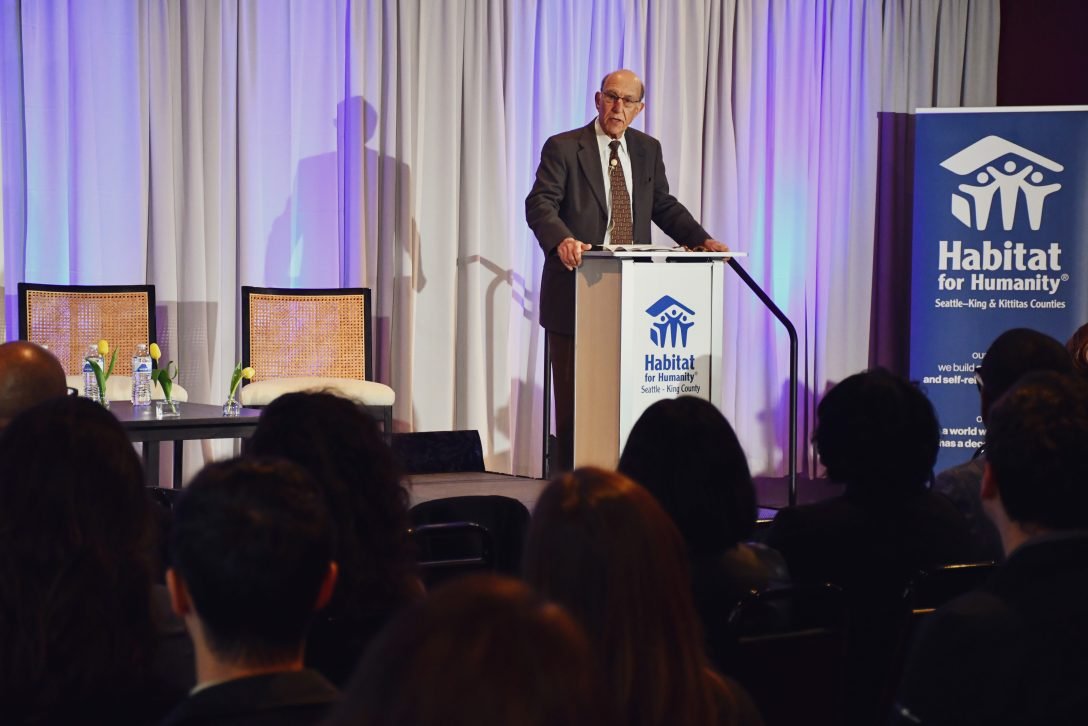
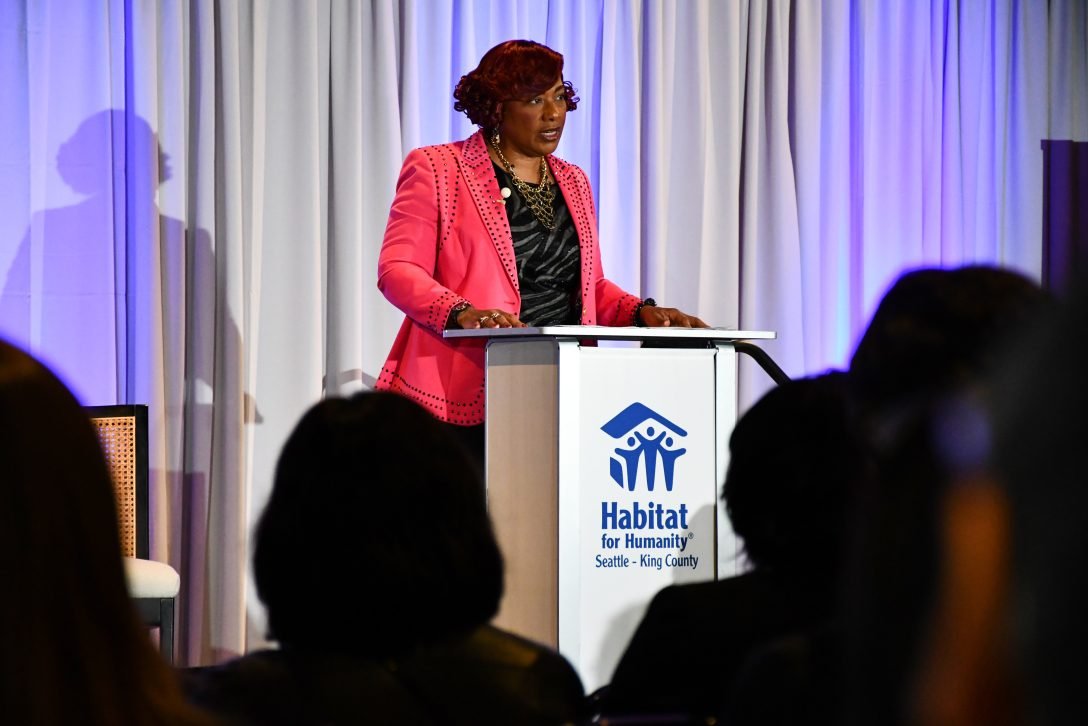
On April 10, 2025, one day before the 57th anniversary of the passage of the landmark Fair Housing Act, Habitat SKKC partnered with HFHI and The Martin Luther King, Jr. Center for Nonviolent Social Change (The King Center) to host the inspiring event From Dream to Reality. Together, we welcomed key voices in housing justice: Dr. Bernice A. King, daughter of Dr. Martin Luther King Jr. and CEO of The King Center; academic and bestselling author Richard Rothstein; and Nicole Bascomb-Green, a member of the core leadership team for the Black Home Initiative.
Habitat SKKC CEO Brett D’Antonio began the morning’s festivities by sharing his hope that the day’s speakers would inspire attendees to become changemakers in affordable homeownership. He shared with the audience of the positive impact Habitat SKKC has: “Through our work, we create communities that connect individuals and families with positive ripple effects that include improved financial stability, better educational outcomes for children, and renewed hope for the future.”
Natosha Reid Rice, Vice President of Housing Opportunities & Mission Engagement for HFHI, served as the event emcee and brought energy, historical context, and curiosity to the stage. Explaining HFHI’s annual Home is the Key campaign, she reminded the audience that the US housing crisis affects every region in the country; it’s no less prevalent in small towns than it is in urban areas like Seattle. Home is the Key serves to emphasize that shelter is not a privilege but a human need.
Nicole Bascomb-Green took the stage for the first keynote. Representing the BHI, Bascomb-Green shared the coalition’s goal of helping Black Washingtonians in realizing the dream of homeownership, specifically by creating 1,500 new Black homeownership opportunities in South Seattle, South King County, and North Pierce County in the next five years. This goal necessitates the roughly 120 partners in the BHI network (of which Habitat SKKC is a member) to collaborate and share resources.
“[We’re] supporting each other when it may seem counterintuitive to do so, or uncomfortable because we live in a society with a scarcity mindset. But we have a gift and an opportunity to do history-making work, and I for one hope we all are ready to embrace our part in elevating this work,” Bascomb-Green said.
Richard Rothstein, author of the bestselling book The Color of Law, detailed how the biggest problem facing children is segregated schools. Schools are segregated because the neighborhoods where they are located are segregated. He explained how he once believed that schools were this way because of de facto segregation: natural, by accident. Once he began to research and found that this was a myth, Rothstein realized the U.S. has segregation because of racially discriminant housing policies in our government. Had the government followed their constitutional responsibility, then private bigotry wouldn’t have flourished in our neighborhoods.
Rothstein argued, “The enormous disparity in housing that the Black Home Initiative is addressing is the result of unconstitutional government policy that has never been remedied … We need to have a new Civil Rights movement with Black and white people joined in a common enterprise to address local problems that reinforce unconstitutional segregation.”
Dr. Bernice A. King, who took to the stage as the final keynote, noted the significance of the moment: “I am honored to participate in this momentous occasion, which includes the naming of a single-building, multi-family home development in the only county named for my father.”
King County, Washington’s largest county, adopted the name as a tribute to Dr. Martin Luther King Jr. in 1986 to honor his life and legacy as a civil rights activist. Dr. Bernice A. King detailed the historical legacy of the 1968 Fair Housing Act, a landmark law that was passed a mere seven days after Martin Luther King Jr. was assassinated on April 4, 1968. The law was a direct response to the moral urgency of his work of championing the cause of fair and equitable housing for all Americans.
Dr. Bernice A. King added, “While many remember his pivotal role in advancing civil rights and economic justice, my father understood that civil rights were not just about the right to vote, the right to sit at a lunch counter, or the right to ride at the front of the bus. It’s crucial to recognize its profound commitment to ensure that every individual, regardless of race or socioeconomic status, has access to safe and affordable housing.”
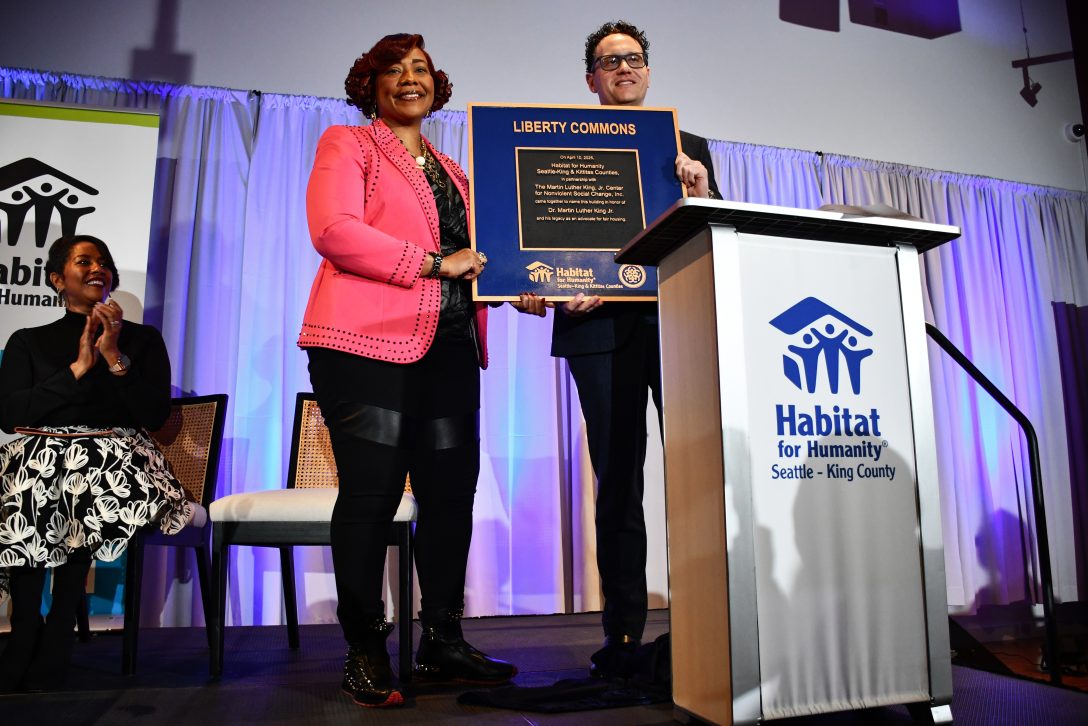
The keynote speeches and panel conversation left attendees energized and committed to advancing housing equity. Habitat SKKC closed the event by paying tribute to Dr. Martin Luther King Jr. and revealed the name of the largest single-building, multi-family building in Habitat’s history: Liberty Commons.
“The name ‘Liberty Commons’ honors Dr. Martin Luther King Jr.’s vision of the freedom promised in our constitution to all people,” D’Antonio explained of the meaning behind the name. The building will stand as a testament to the King family’s legacy and will inspire the next generation of fair housing advocates.
From Dream to Reality was livestreamed to viewers across the U.S., and multiple Habitat affiliates hosted staff watch parties. A recording of the event is available for viewing here.
—
In his final sermon, Dr. Martin Luther King Jr. surveyed the landscape of the Civil Rights Movement and observed, “What we are facing today is the fact that through our scientific and technological genius we’ve made of this world a neighborhood. And now through our moral and ethical commitment we must make of it a brotherhood … This is the great issue facing us today. No individual can live alone; no nation can live alone. We are tied together.”
Events like From Dream to Reality remind us of the why of what we do. Habitat SKKC builds homes, and through that work, we create communities. In other words, building neighborhoods is the process, creating brotherhoods is the impact.
Building on the event’s momentum, Habitat SKKC hosted a Community Build Day at Yarrow Cottages two days later. Over 20 volunteers from our community and sponsor group Lowe’s built scaffolding, attached house wrap, and helped build walls, making a lasting impact on the Yarrow Cottages neighborhood.
The month wrapped up with a total of $8,800 in donations via our in-store activations. The money raised at Habitat Stores will go directly toward building and preserving safe, stable homes for individuals and families in our region.
This was our most ambitious Home is the Key campaign to date, in its activities, goals, and impact. We’re thankful to everyone who participated this month in Home is the Key as volunteers, donors, and supporters of our programs.
At our event, Dr. Bernice A. King reiterated her father’s vision of the Beloved Community, which she added is “within our reach, but only if we build it together.” This past month, we made huge strides in our effort to build the Beloved Community at Liberty Commons.