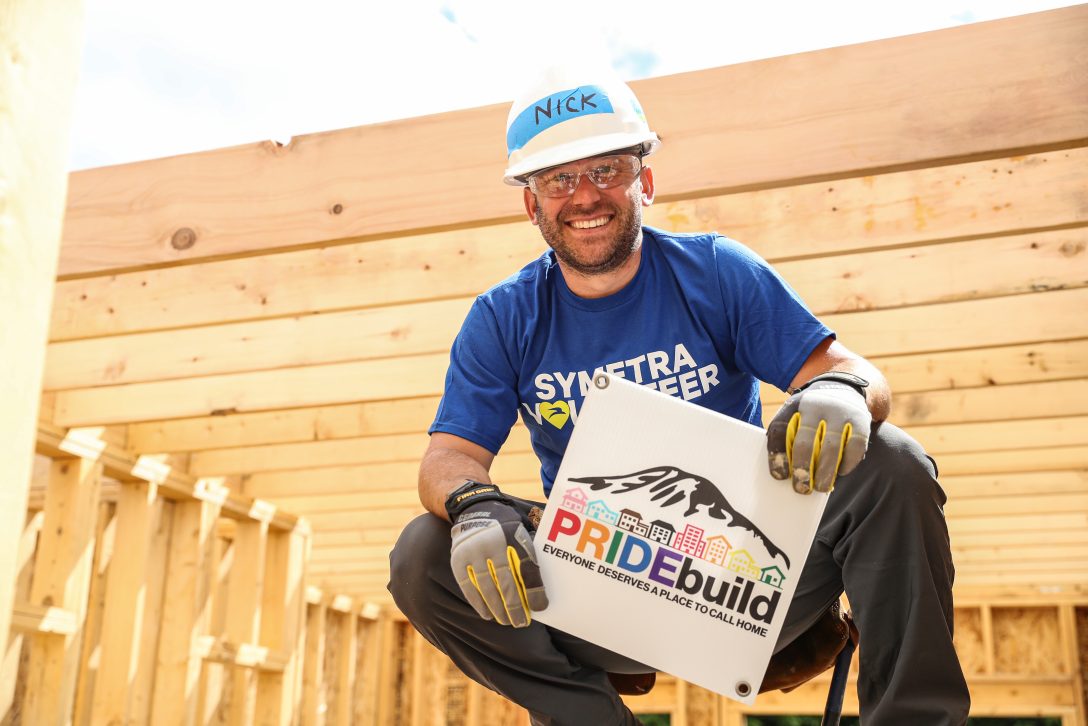
During this year’s Pride Build, Habitat SKKC invited local members of the LGBTQ+ community and allies to donate time and resources to our affordable homeownership programs and support our LGBTQ+ homeowners.
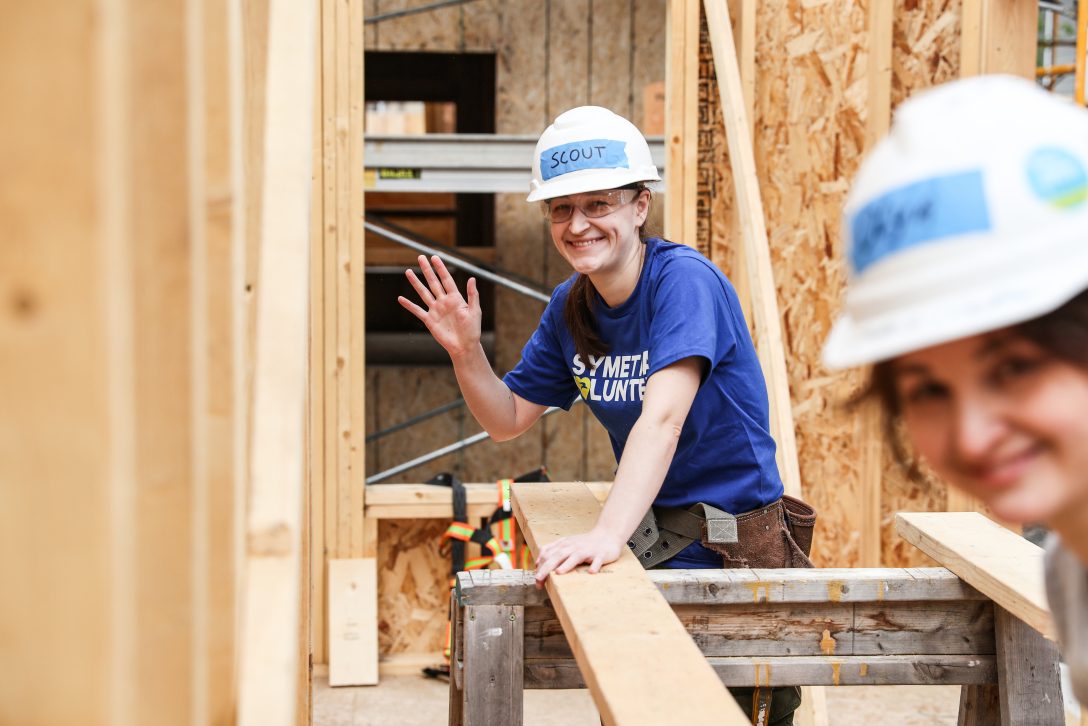
During this year’s Pride Build, which ran from June 17-27, 94 individual and corporate volunteers worked onsite at our Riverbend Comunidad and Yarrow Townhomes construction sites, both in the South Park neighborhood of Seattle, as well as at our Habitat Workshop space in Kent. Volunteers donated over 650 hours of service.
In addition to individual build days, we welcomed three sponsor groups: Amazon, Gen Cap, and Redfin/Rocket.
“We want to support the community at any point in time, but especially right now, it’s a pretty scary time to be queer out in the world. And I think it’s important for those of us who have a certain amount of privilege to give back and make sure that we’re passing it on and helping those in the community that might not have as many resources as we do. As corporate Amazon employees, we can take this time off to come and do this,” said Roxanne Grantham, HCLS Global Account Manager at Amazon.
Roxanne organizes volunteer participation for Glamazon, the LGBTQ+ affinity group for Amazon and AWS. They participate in volunteer opportunities like Pride Build. They also host happy hours and networking events and provide general support and community for anyone at Amazon that is a part of the LGBTQ+ community or wants to support the community.
For their second year volunteering with Pride Build, the Glamazons visited the Habitat Workshop to build and paint special Pride flag planter boxes. As for whether she learned any new skills at this year’s Pride Build, Roxanne joked, “I’ve learned that I’m really bad at taping in a straight line, which is maybe not ironic for today.” Standing in a sea of rainbow-painted planter boxes in various states of finish, she added, “It’s really fun to do something a little bit more whimsical.”
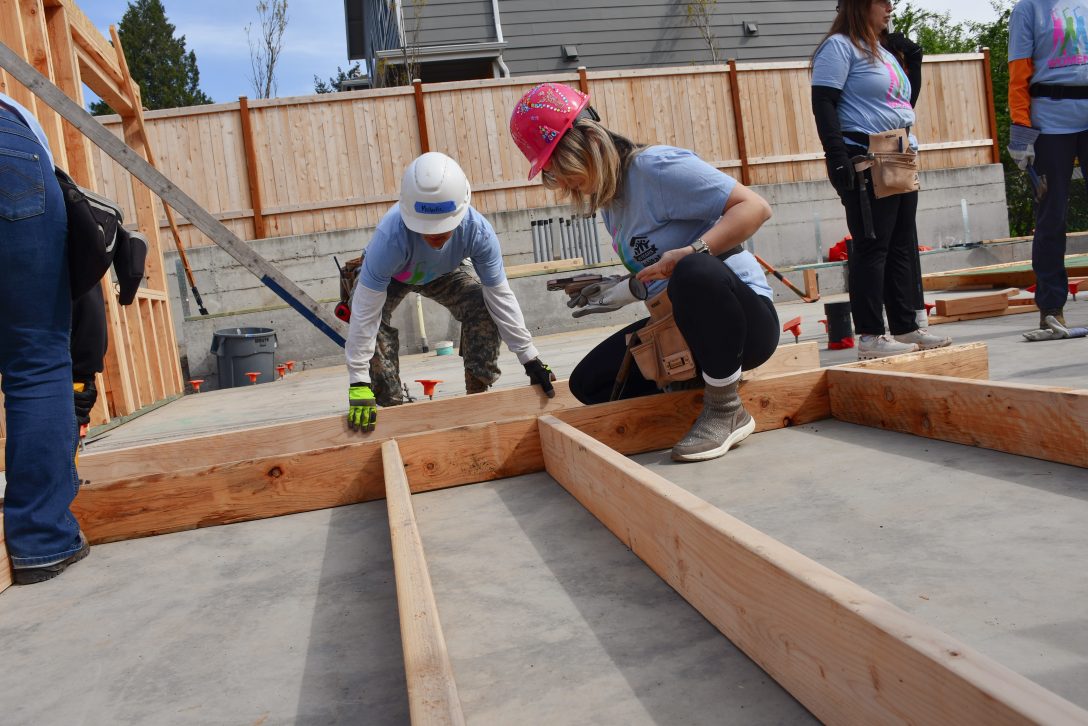
Over at the Yarrow Townhomes construction site, the team from Redfin and Rocket took on tasks ranging from installing subfloors, joists, and beams to framing exterior and interior walls.
“Our team members at Rocket and Redfin are always excited and proud to volunteer with organizations like Habitat for Humanity,” said Bryan Beran-Miceli, Senior Director of Volunteer Engagement and Giving at Rocket Community Fund. “Our company’s mission is to ‘Help Everyone Home’ and this Pride Build was a wonderful reminder of how important that mission is.”
The two-week affinity build ended with a celebratory flare as Habitat SKKC marched in the annual Seattle Pride Parade on Sunday, June 28. Habitat SKKC staff members, volunteers, and community members joined another 250+ organizations to show support for LGBTQ+ rights.
Throughout Pride Build, Habitat SKKC raised awareness of affordable homeownership’s role in building better communities where everyone feels included.
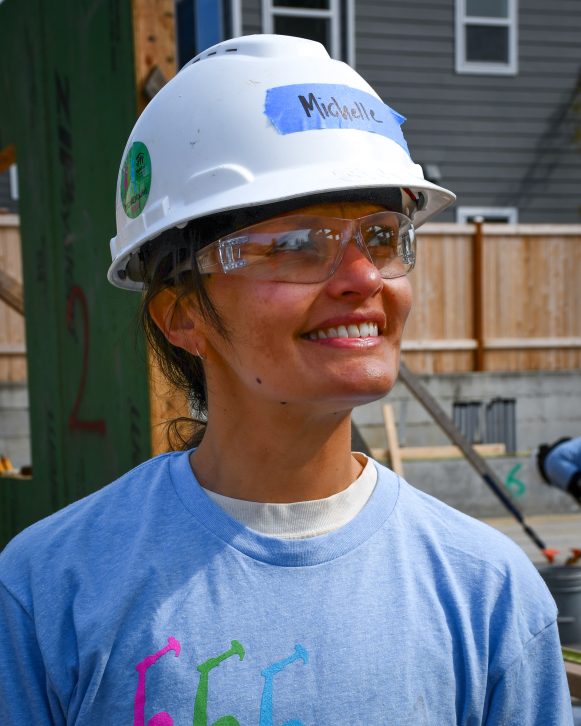
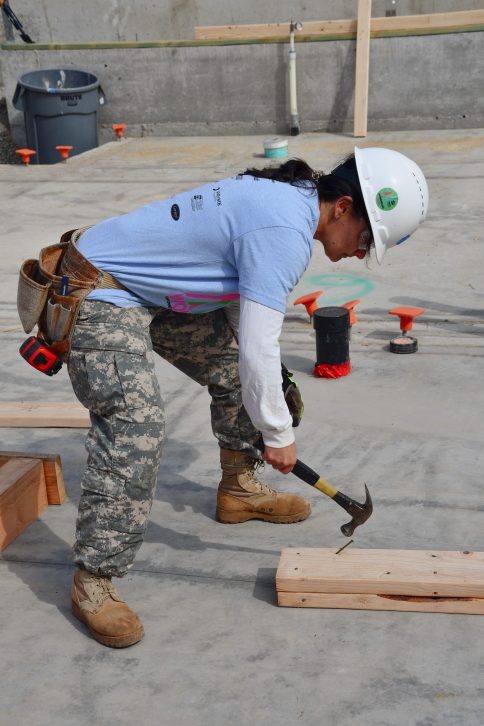
Michelle V. always wanted to be an engineer and has long been drawn to building infrastructure for communities. Because of that interest, she attended the United States Military Academy and became a construction officer in the U.S. Army. She had hoped to be stationed in Hawaii and imagined working on humanitarian construction projects in Southeast Asia, but after September 11, she was deployed to Iraq.
During her first deployment, she built wooden frame structures to move soldiers out of tents, which became a significant part of her work. During that time, she estimates she helped build between 40 and 50 structures over the course of about a year and a half. From the military, she gained not only construction skills but also problem-solving skills: how to step back, assess constraints, and use available materials creatively. That experience reinforced her belief in engineering, adding, “I think my profession is a beautiful one. We build things for others.”
After leaving active duty, she worked in the Midwest and New Jersey before moving to Washington state, where she initially worked for Seattle City Light. Later, Michelle began working for Puget Sound Energy on the operations side, supporting electricians, gas workers, and engineers who build and maintain energy systems. Around that same time, she started a family and now has a seven‑year‑old and a nine‑year‑old. She lives in Kirkland with her husband and children and stays busy with family life.
While working for the City of Seattle, she became acutely aware of the affordability challenges in the community. While participating in the City Leadership Academy, she was required to select a nonprofit leader to interview for a project. Having volunteered with Habitat for Humanity in New York years earlier, she chose Habitat SKKC and interviewed the organization’s CEO at the time.
That connection led her to begin volunteering with Habitat again, and she has made it a priority to volunteer every year around Mother’s Day. Her first Habitat build was Women Build. She appreciated opportunities to connect with homeowners during lunch, realizing she had been working alongside them all morning. She also enjoys working with AmeriCorps members and feels a strong connection to volunteers, which she attributes to her Army background. As a veteran, she also makes an effort to participate in Veterans Build whenever possible. “I cannot imagine anybody attending one of those events and not walking away feeling so inspired,” Michelle says.
Because of her professional construction background, she said volunteering has not necessarily taught her new technical skills, but it has reinforced patience. Unlike production-driven environments in the military, Habitat sites emphasize moving at the pace needed for volunteers and the community. That patience, and appreciation for the collaborative environment among volunteers and Habitat staff, has been meaningful for her.
Balancing volunteering with work and parenting requires coordination, but her husband supports her passion for community-based work. She rarely volunteers alone, usually inviting friends, colleagues, and acquaintances to join her. She has even organized workplace participation in Women Build with other female engineers. She finds that many engineers enjoy the opportunity to work with their hands rather than staying behind a desk.
Reflecting on the significance of this work, Michelle says, “I’ve known from a young age that I have a calling to do this kind of work, whether it’s volunteering or in my professional life. It’s important to stay in touch with the affordability challenges that so many of our community members face, and I have a great appreciation for what Habitat does for our community. It’s a great marriage in the sense that my passions are there, and it’s a great need in the community. I’m grateful for the work that you do.”
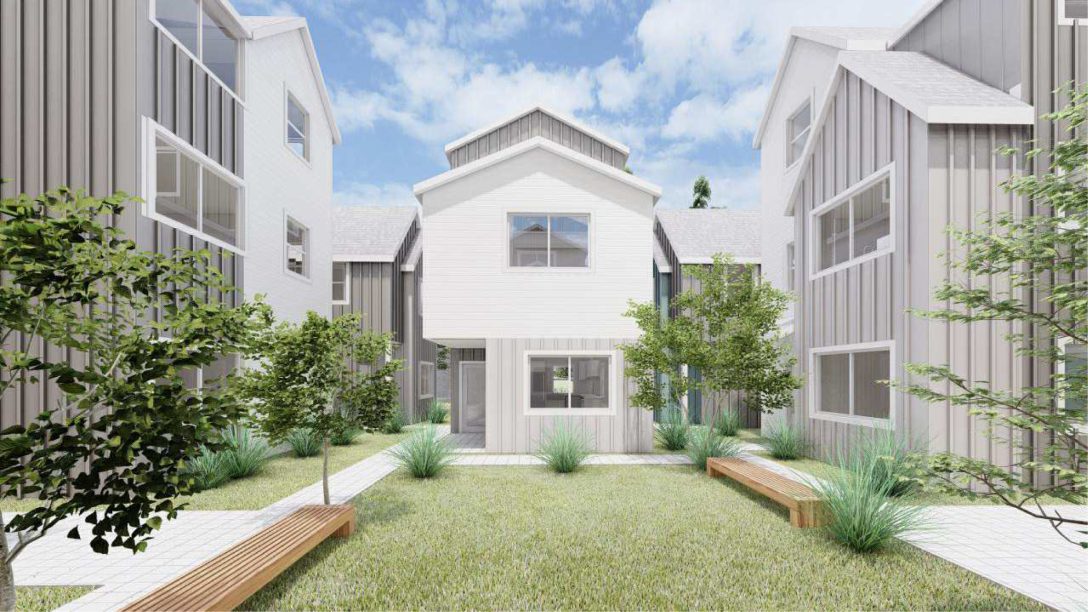
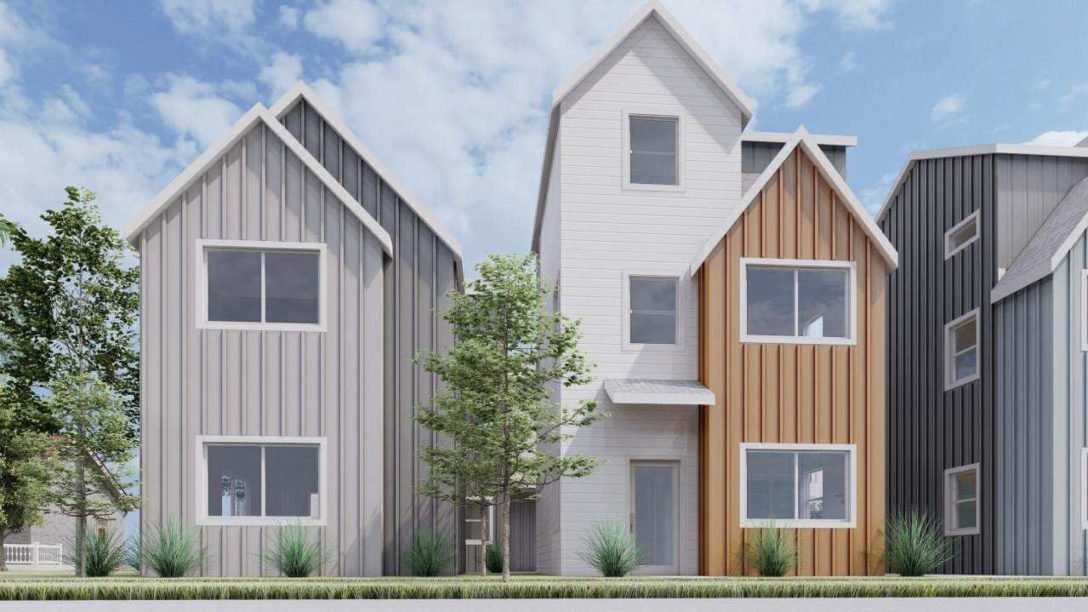
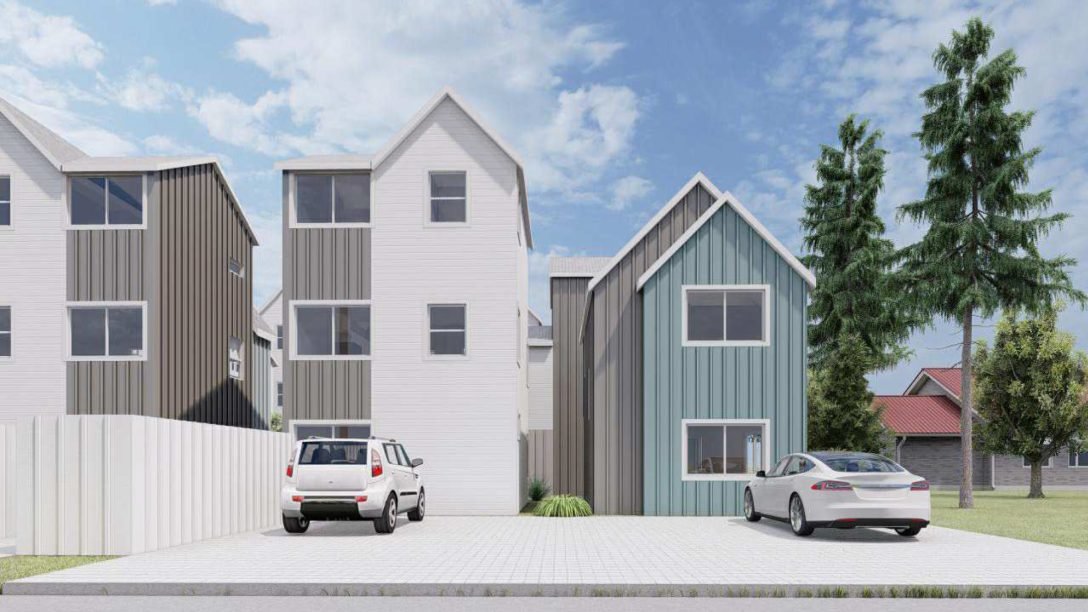
As part of Habitat SKKC’s effort to better include the community surrounding our developments in our work, we extended an invitation for South Park residents to submit name ideas for our development on South Cloverdale Street.
The 22 homes currently being built (slated for completion in spring 2029) will add to the vibrant neighborhood with an active community and a growing local business scene. In just minutes, residents will be able to reach great restaurants, shopping, entertainment, and I-5 to take them to downtown Seattle. Ongoing urban renewal contributes to this diverse neighborhood’s revitalization.
We asked for name suggestions and the meaning behind the submission, and we shared this with South Park Community Capacity, which is made up of South Park community organizations/non-profits, community leaders, local businesses, and community members. We encouraged them to share it with others in the community as well.
Contributions included many mentions of the Spanish-speaking population in South Park and of the Duwamish River. We chose “Riverbend Comunidad” as a name that honors the Hispanic roots and the Duwamish River a few blocks away from this site.
Incorporating South Park residents into the neighborhood naming process is a small but powerful way to connect our work to the communities where we build.
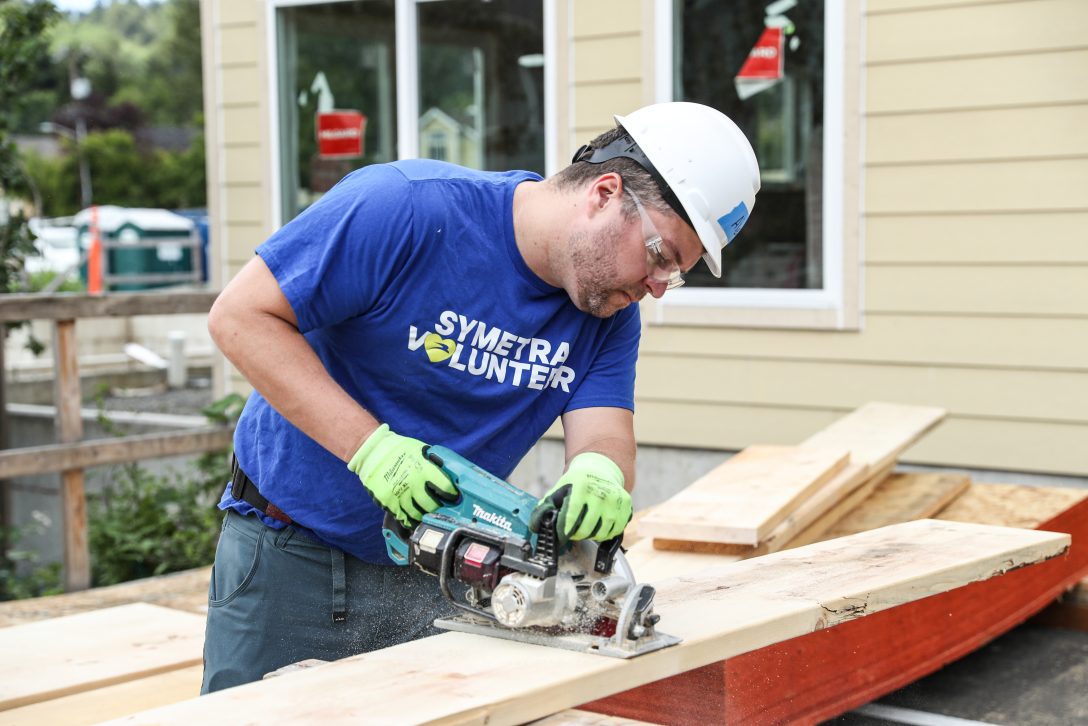
At Symetra, doing good in the world is part of who the organization is, not just what it does. The company views itself as a corporate citizen with a responsibility to help build communities that are healthy, resilient, and equitable. Through its Symetra Empowers Communities program, the organization focuses its giving, volunteerism, and advocacy on housing, education, and reducing barriers for underserved communities — elements that are the foundation of economic opportunity.
“We know that we can’t make meaningful change when we’re acting alone. So, we partner with nonprofits, business coalitions, civic leaders, and, most importantly, our employees. Their passion and commitment really amplify our impact,” explains Beth Osborne, Director, Public Affairs & Strategic Community Partnerships at Symetra.
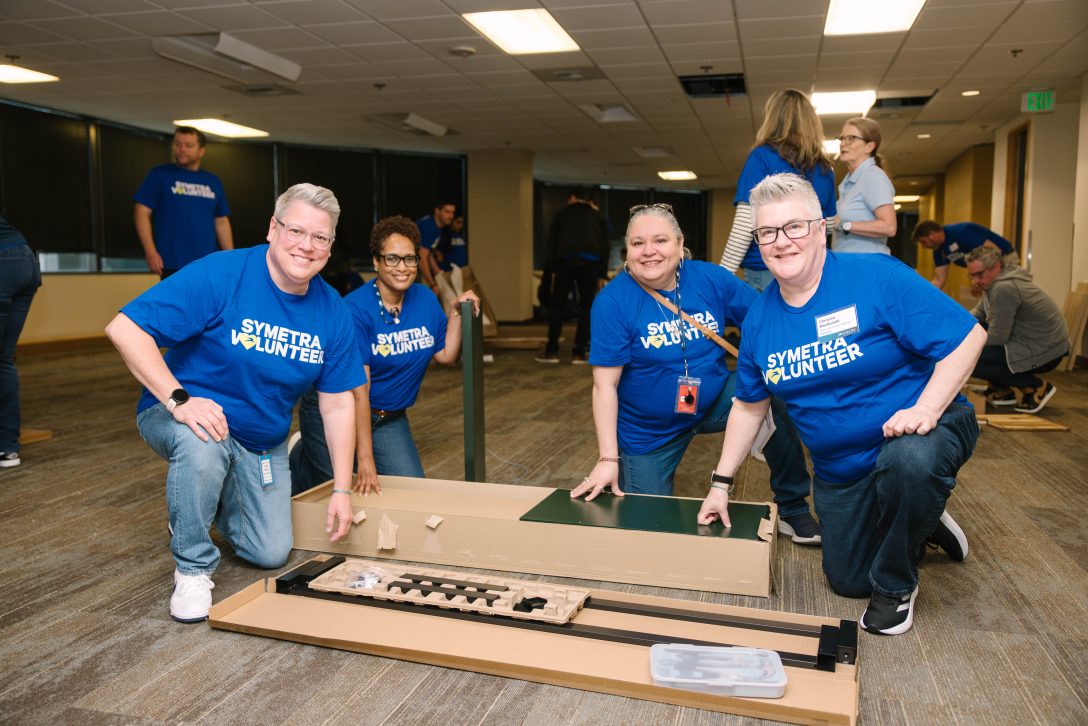
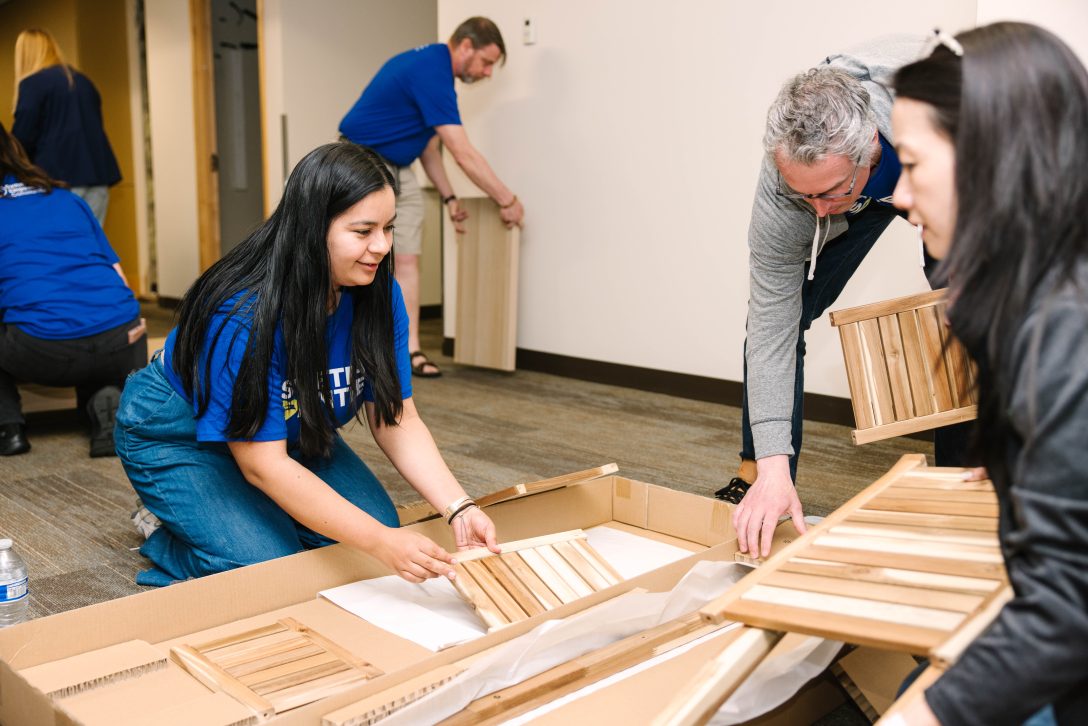
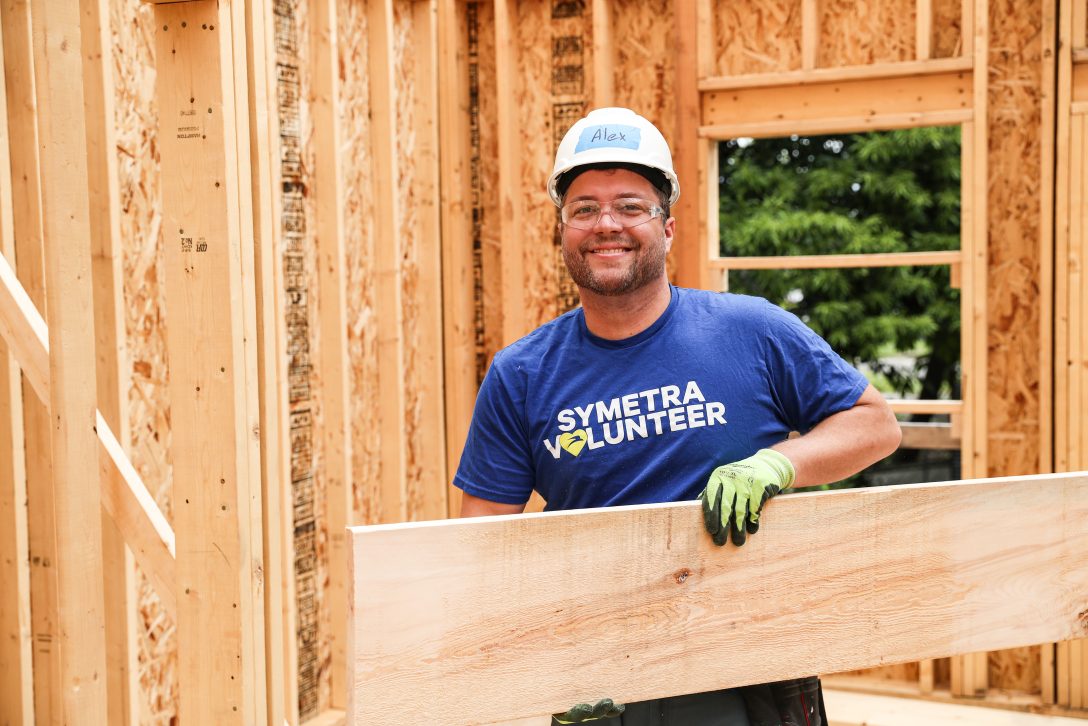
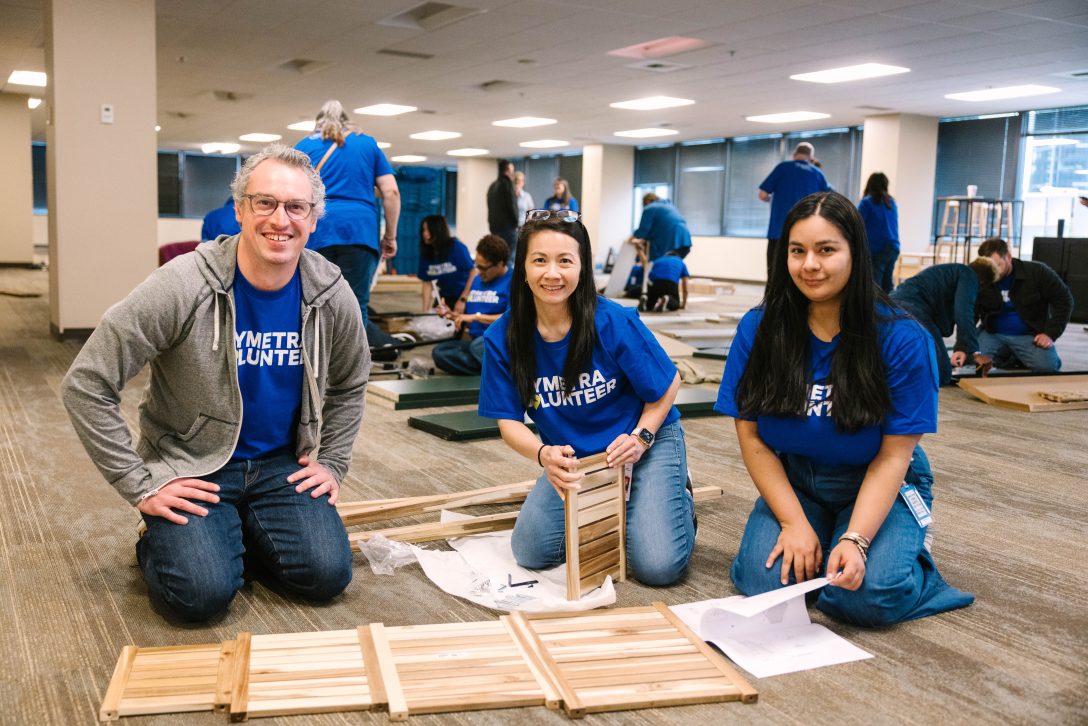
Symetra first became involved with Habitat SKKC in 2021 through a volunteer build event tied to employee engagement. That experience demonstrated how impactful and scalable the partnership could be, leading to expanded involvement. Since then, employees have given over 500 hours of service, participating in home builds, furniture builds, and projects like playground construction at our recently completed Miller’s Creek neighborhood in Burien.
Beth noted that Habitat’s mission aligns closely with Symetra’s focus of financial freedom. She adds, “We are in the business of creating financial freedom for our customers, so it’s natural for our community engagement to lean into organizations that are working towards removing barriers to financial opportunities in underserved communities. Affordable homeownership is about more than a place to live; it’s a transformational step that provides people with stability and opportunity and supports the whole community’s long-term well-being. We partner with organizations that are data driven and knowing that every county in the United States, and particularly here in the Puget Sound region, faces a shortage of affordable housing, we remain committed to helping our communities address this need.”
Participation in Habitat SKKC’s 40th anniversary is meaningful for the team at Symetra. They feel proud to be part of an effort that has brought together individuals, nonprofits, businesses, and communities to address the affordable housing crisis and create lasting change through homebuilding.
Looking ahead, there is excitement at Symetra over continuing to work together to address different aspects of financial stability and housing. Symetra’s work through life insurance, employee benefits, and retirement solutions supports financial security for individuals and families and connects to housing stability. These elements are interconnected parts of a larger system that contributes to healthier communities, where people with stable housing can build stronger futures and reinvest in their families and neighborhoods.
As Symetra has added employees across the country, they have leaned into their partnership with Habitat for Humanity International in new locations. They are supporting employees volunteering in affordable housing efforts in their own communities, while continuing to support the organization’s longstanding commitment to the Puget Sound region.
Every home has a story, and as Habitat SKKC celebrates our 40th anniversary in 2026, we’re excited to share the stories that have shaped the past four decades. Throughout the year, we’ll be highlighting legacy family stories from across our history — stories of partnership, resilience, and hope that remind us why this work matters.
When Iulia Z. and her family arrived in Seattle in February 2005, she wore a homemade fur coat and hat her mother had created especially for her move from eastern Europe. At the airport, where she was overheating in the crowds, Iulia saw people wearing far fewer clothes and was struck with the feeling that she had no idea where she was or what she was doing. The culture shock she experienced as a new immigrant to the United States took time to overcome, but Iulia’s persistence and strong will helped her to not only acclimate to a new city, but to make it feel like home.
Iulia was born and raised in Moldova, a small country between Romania and Ukraine. She had a very happy childhood with a large extended family, including lots of aunts, uncles, and cousins. However, things took an unprecedented turn when the Soviet Union collapsed. In the early 1990s, her parents, who were engineers, ended up out of work for an extended amount of time and then got sick. With her parents spending months at the hospital, Iulia had to grow up abruptly. There were times of extreme poverty while her parents were in the hospital, to the point of not knowing when the next meal would come.
While she is not deeply attached to her homeland, she cherishes childhood memories and stays in touch with dear friends and family. Given an opportunity to leave after winning the diversity visa, she immigrated to Seattle with her ex-husband and son Nicolae. They were granted the visa on her son’s first birthday. They were allowed four suitcases, two of which got lost in the move.
It was just the three of them seeking a fresh start with very limited resources. Iulia felt lucky to connect with a kind local family who picked them up from the airport, fed them, gave them beds, and guided them through the process of settling in. By day three, they had a car. By day six, her ex-husband was employed full time. Friends co-signed for their apartment, which she now understands was a big commitment. She feels grateful to the community who supported them through this major life transition.
—
Despite their quick acclimation to a new country, there were hurdles that prevented them from achieving their ultimate dream of homeownership. Iulia thought her family could buy a house from the open market, but the 2008 financial crisis changed everything. Their income dropped, and buying a house seemed unattainable. She learned about Habitat SKKC from friends she met through her son’s daycare. They had applied and were selected for a neighborhood in Snoqualmie. Motivated by their friends’ experience, Iulia’s family applied to Habitat in 2010 and were selected, a phone call she remembers as one of the best in her life.
The home dedication was emotional for Iulia, and after receiving the key to her new home, she went alone to clean and prepare for move-in day. Those first months in her new home were a rollercoaster of emotions and busyness as she worked full-time and cared for a new baby. When life finally slowed down, new feelings emerged. Iulia explains, “I was going around the house washing the walls, the doors, and the windows. I kissed the carpet. I was that emotional. It was a moment of disbelief, like, oh, this is all mine.”
They have now lived in the house for 16 years.
—
Today, Iulia is a higher education professional. She worked at a small technical college for years and now works at one of the largest colleges in the state. In her role, she touches every course and program and believes higher education is the most important social lift available. “I deeply care about the impact of my job. I was given an opportunity and therefore I want to pass it on,” she adds.
Nicolae is now 22, and he graduated with an associate degree and zero student loan debt. He is figuring out his next steps while working full time and living at home. He is still close with the friend he made in daycare who lives in another Habitat neighborhood; Habitat’s community often extends beyond physical boundaries. Her daughter Vera is 16 and in the 10th grade at a local high school. They also have a dachshund who has been with them for two years. The dog has a strong personality and keeps everyone on their toes.
Iulia enjoys hosting small, intimate gatherings at home, which has a view of Mount Si. Her favorite space is the kitchen, which is small but handy. Cooking puts her in a positive mindset, and she often thinks about the people who helped build her home. She explains, “When you cook, you get into a very specific mindset. You don’t want to be angry, you just want to think good thoughts about family and friends and the community. It’s been 16 years, but almost every day I remember those people who helped us build our house, who touched those walls, who donated money. Everyone has a lot of things they could do in their life, yet somehow people choose to go out and spend their time and funds to help strangers. That made such an impact on our lives. So, while I’m cooking, I think about all those people to whom we owe so much.”
During COVID lockdowns, she felt grateful for the house, which provided security and space for her work and the kids’ schooling. They rearranged furniture and adapted, finding comfort in their home and its access to nearby trails. Their home provided solace during those uncertain years, a feeling that remains with Iulia now.
She reflects, “I have a great sense of deep emotional security. This is our place, and the stability and safety that is provided to my children, to my family, is priceless. I keep thinking that if I didn’t have this house, my life would look so different. If not for Habitat, I absolutely would not be able to afford a house on my own, and who knows how my life would be? This is a sense of stability. This is a sense of peace. And I’m just so grateful we have it.”