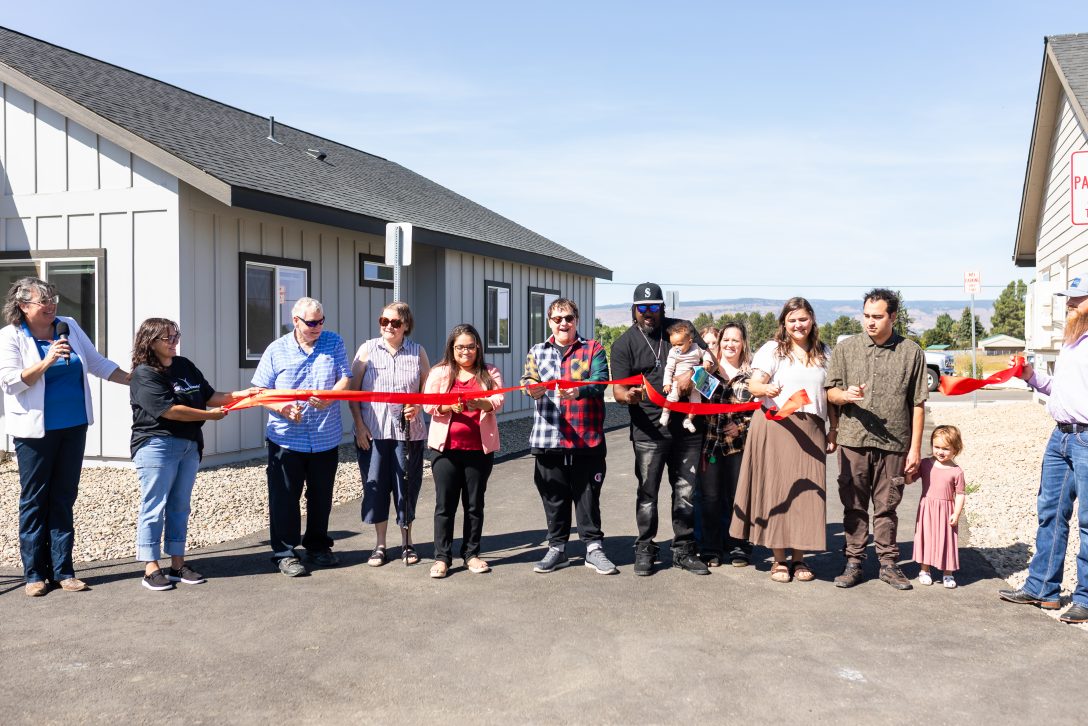
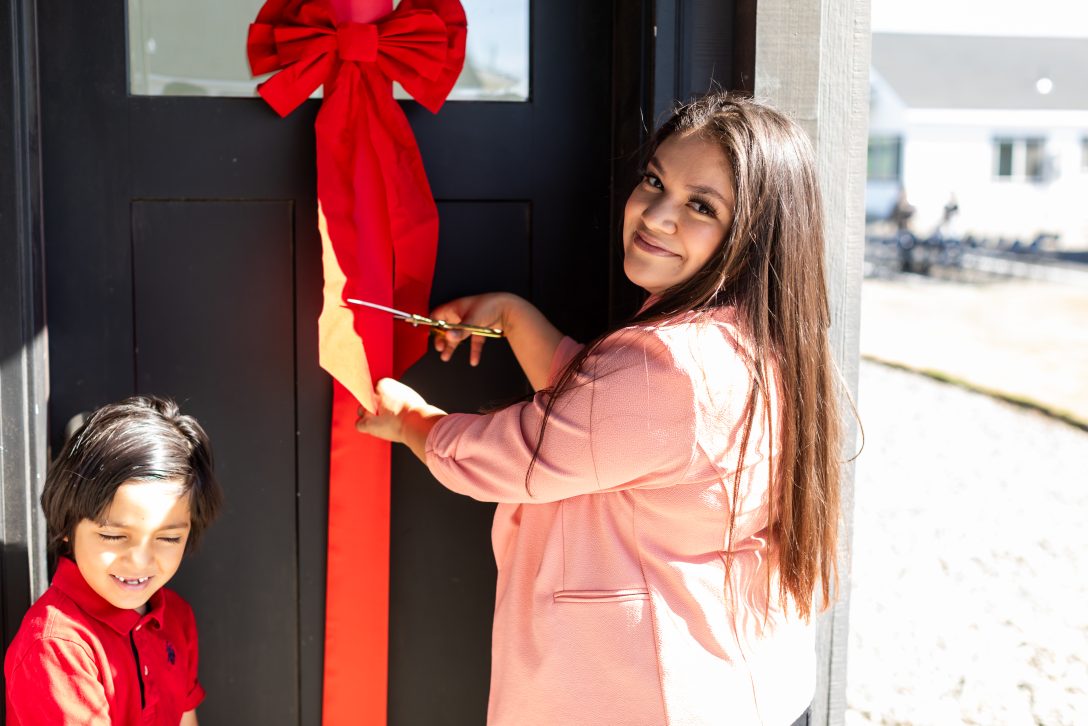
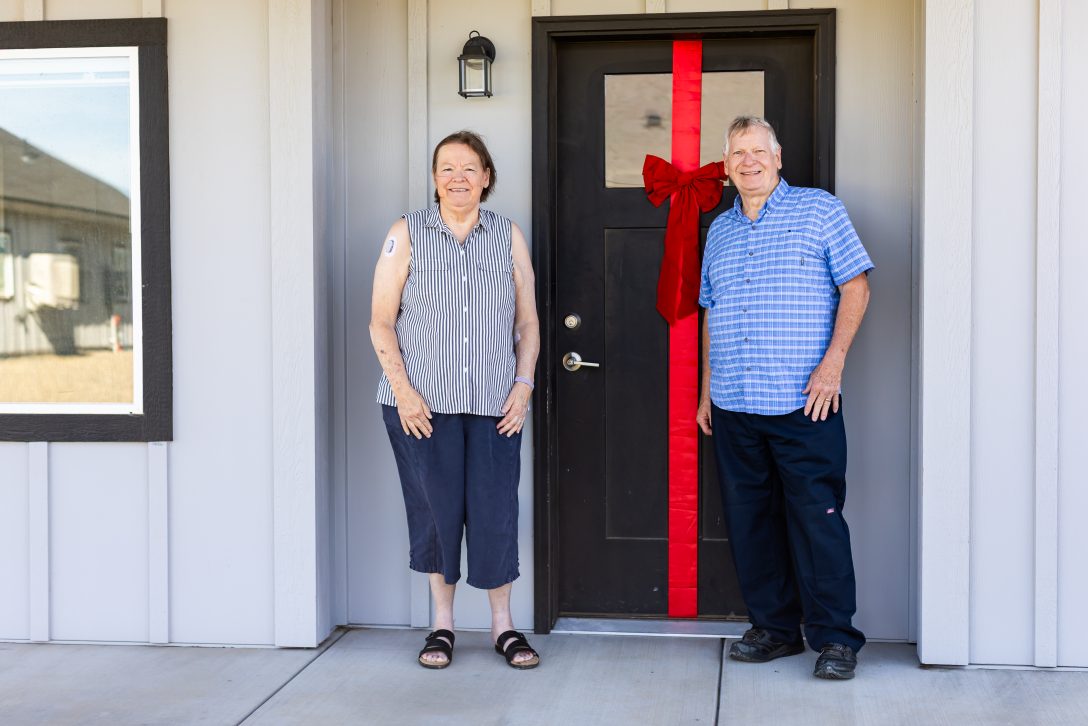
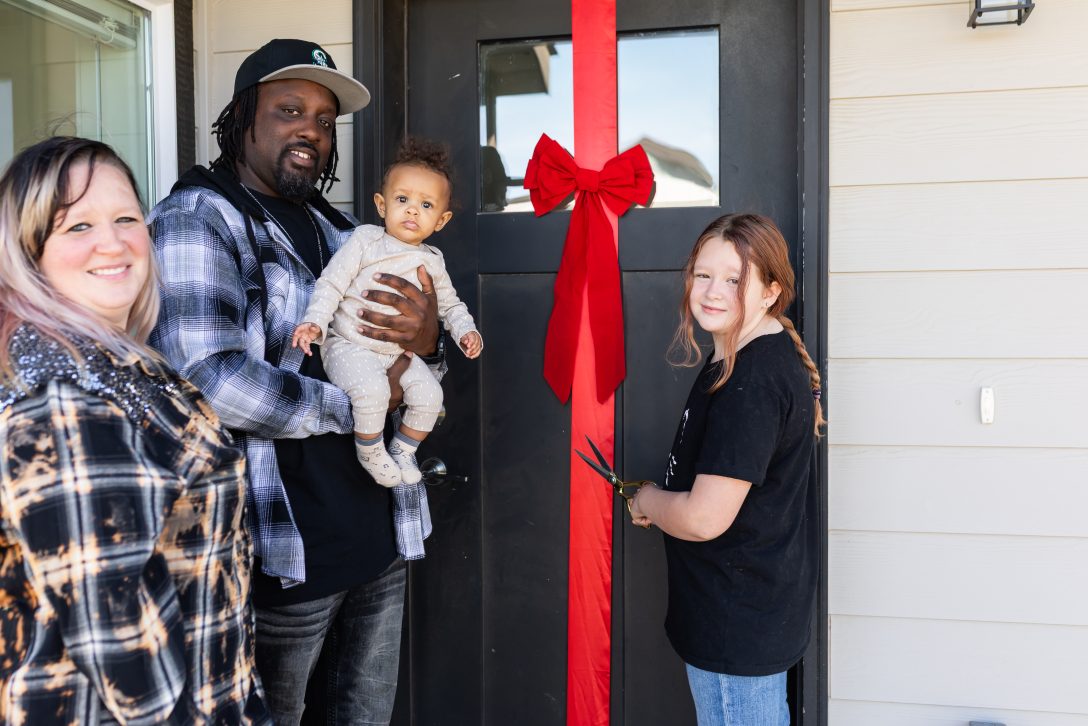
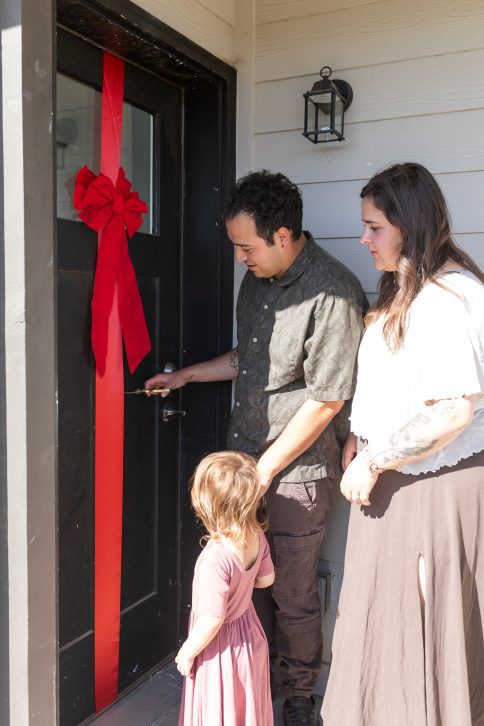
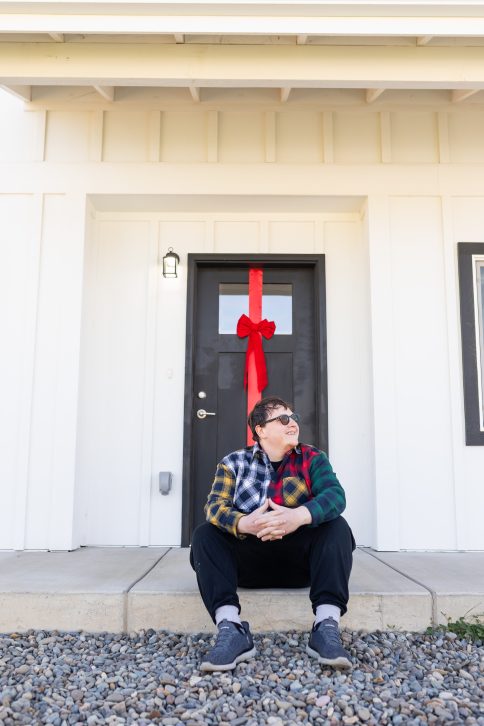
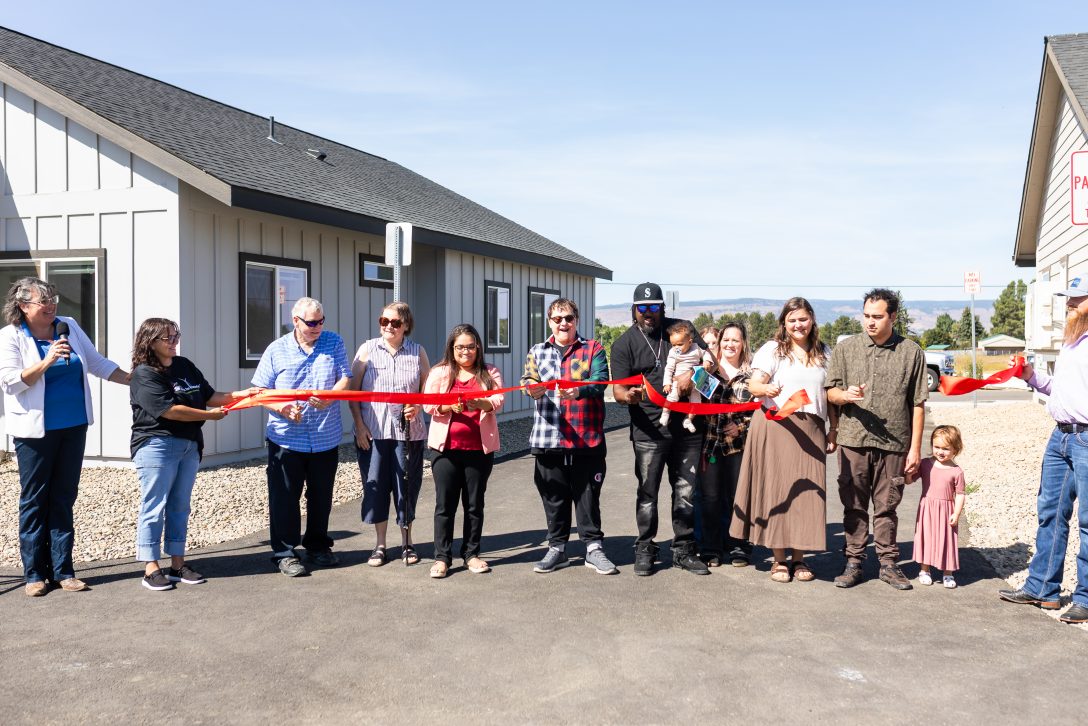
On August 9, we welcomed nine homeowners to their new neighborhood, Stuart Meadows: Michael and Debra C., Chad D., Aaron M., Maritsa R., Shilo F. and Jacob R., and Luis and Cassandra R. Located in Ellensburg, Stuart Meadows is an 18-unit project that is currently slated for completion in Summer 2026.
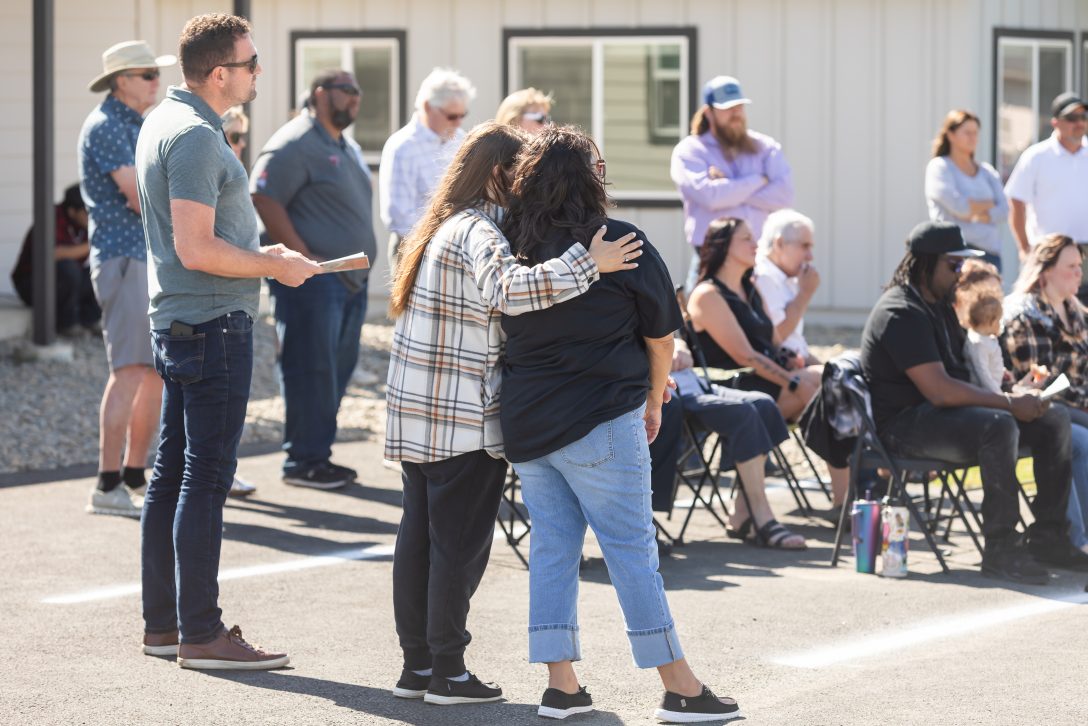
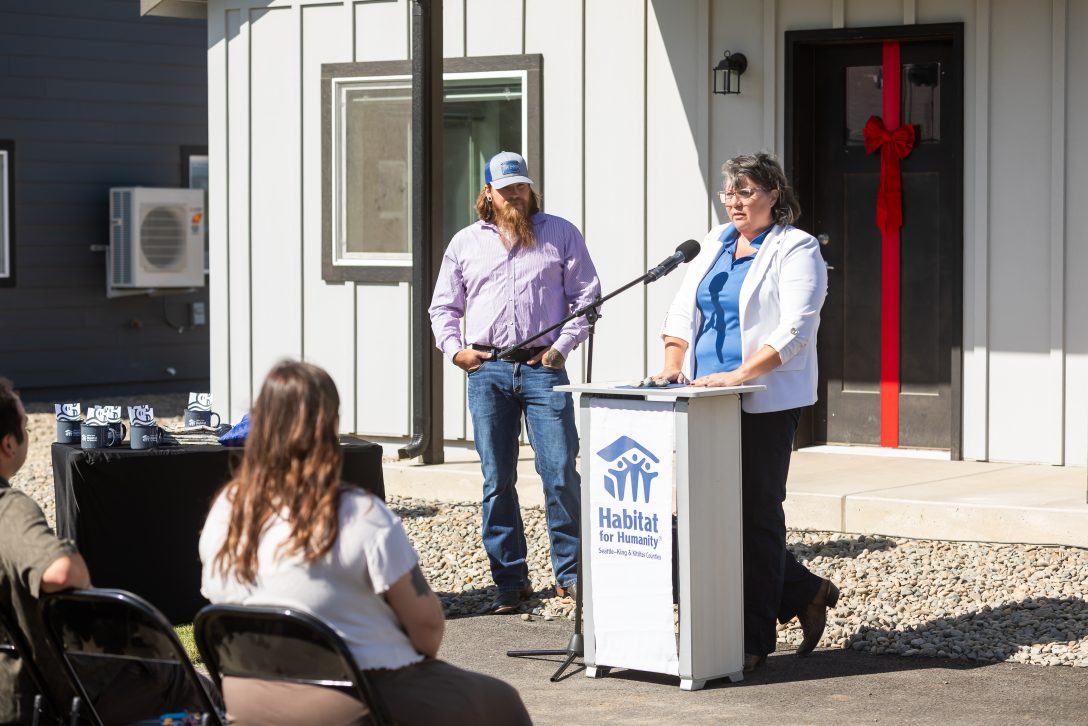
Residents of the newly completed Phase II gathered on a sunny weekend day to celebrate with their new neighbors. Ranging from solo buyers to families, they all gathered in community with Habitat staff for the dedication ceremony.
“This neighborhood—Stuart Meadows—is more than just a collection of houses. It’s a place where dreams are built, where laughter will echo, and where the strength of our community shines in every wall, every window, and every foundation,” said Stephanie Bohman, Kittitas County Area Director, during her opening remarks.
The project’s sponsors include the City of Ellensburg, Yakima Federal Savings and Loan, Kunduson Lumber, Central Washington University, and Suncadia Resort.
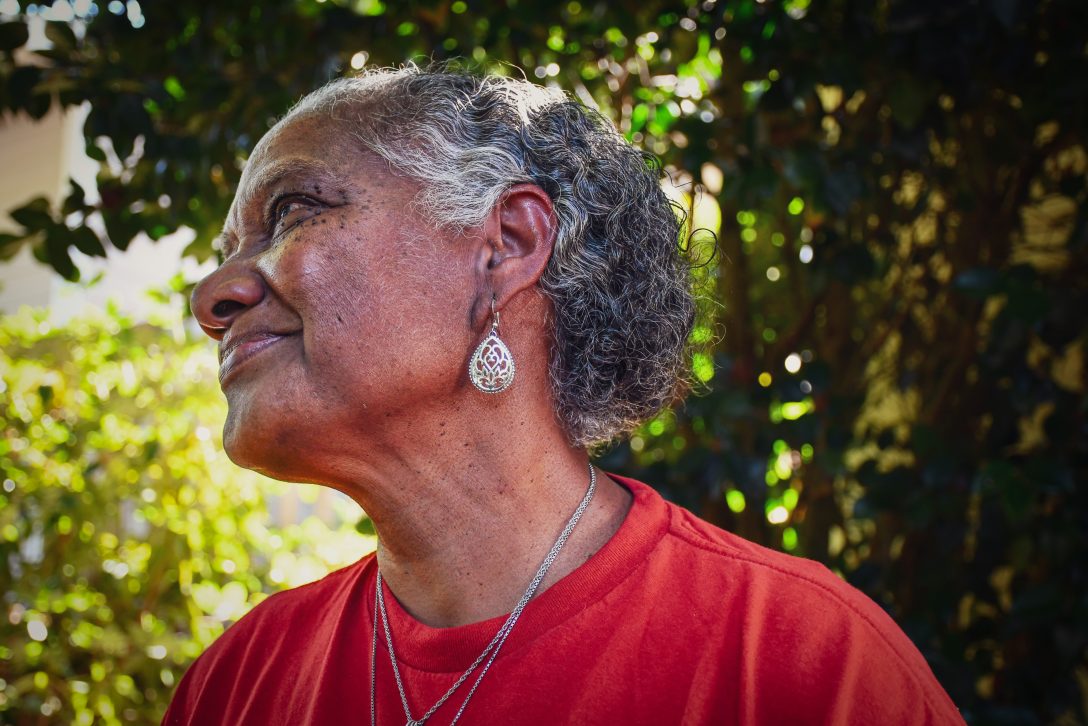
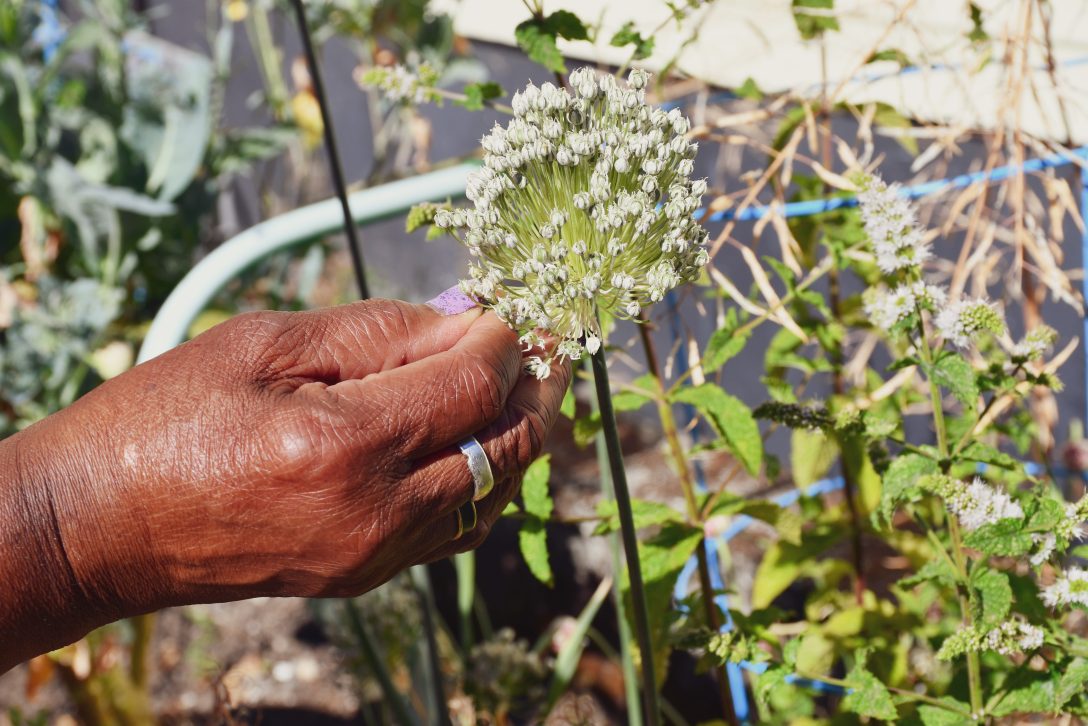
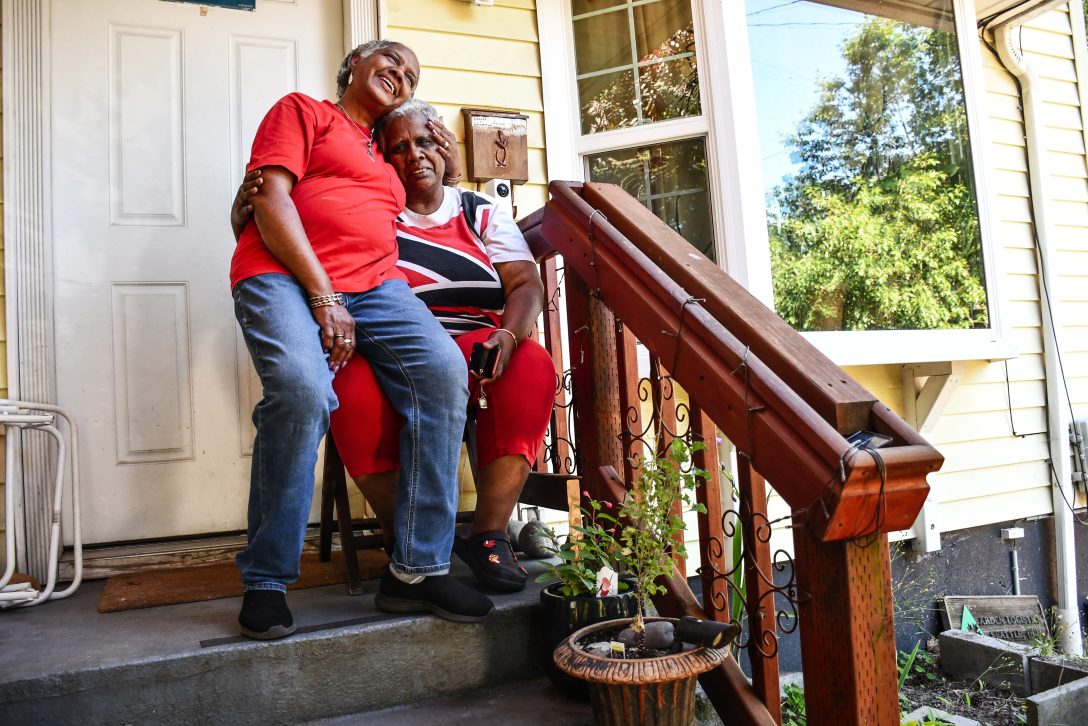
Repair client Yvonne L. and her family moved to Seattle in 1989. Her favorite aspect of the city is the greenery. It reminds her of Trinidad, where she was born. She has gone back to visit Trinidad three times since she moved to Seattle, and she finds ways to bring the feeling of it to her adopted city.
Hers is an active family that participates in cultural celebrations honoring their Trinidadians roots. Her late husband used to make costumes for the West Indian Day Parade in New York City. Yvonne’s family now makes costumes for the parade in Vancouver, BC, and they’re trying to incorporate the parade into the annual Seafair Weekend Festival.
She has four kids and five grandkids, all still living in this region. She spends a lot of time caring for them. When not working at a local preschool or caring for her family, she focuses on other caregivers: Yvonne volunteers with Women United Seattle, an organization that serves underrepresented BIPOC caregivers 55 years and older in the Skyway and West Hill communities of King County. They host multiple events throughout the year to fundraise for the organization, including an annual fish fry.
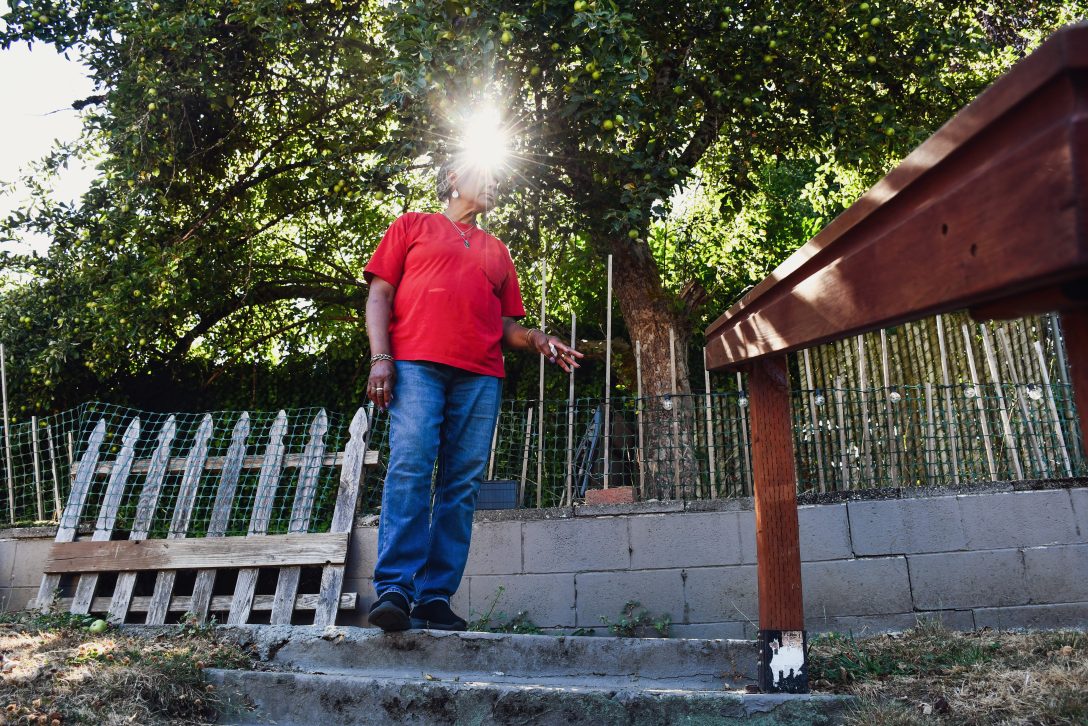
Yvonne’s home is a welcoming space for family and friends, but in order to ensure all parts of the house stayed that way, Habitat SKKC’s Repair team added handrails to four sets of exterior stairs in the front and back of the house, replaced several stair and deck treads, and added a gutter to the awning at the back porch.
“It makes it a lot easier for us to get up the steps,” Yvonne explained of the addition of the handrails, our first project at her home.
Recently, Yvonne had a ruptured side sewer and was experiencing overflows and wastewater running into her basement. Habitat SKKC stepped in again and was able to connect with one of our frequent trade partners, Brewer Sewer, to provide a larger scope of sewer repair for the same price as the cheapest estimate she had previously received (and one quarter of the price of the comprehensive bid she had received). Brewer Sewer also added a sewer lining so the repaired sewer in her backyard will last for 30-45 years. Yvonne’s repair was funded via a 0% deed of trust provided by the King County Community Development Block Grant.
With the repairs complete inside and out, Yvonne can worry less about her house and focus more on what is important to her: Caring for her family, celebrating her heritage, and giving back to her community.
When Debra M. moved to Seattle from Colorado six and a half years ago, she brought with her a deep spirit of resilience and a desire to give back. Recently, she took a powerful step to live out that value by donating her car to the Cars for Homes program. The program, which Habitat for Humanity International launched twenty years ago, accepts donated vehicles, resells or recycles them, and uses the profits to support the mission of building abundant affordable housing.
“I first heard about Habitat years ago when I was a single mom living in Montrose, Colorado,” Debra shared. “I knew about the housing programs, but I didn’t know Habitat accepted cars until I saw something on TV. I started researching and realized this was the perfect fit. I wanted to do something good with my car, something meaningful.”
Debra’s car held sentimental value. It originally belonged to her son-in-law, and after her daughter’s family relocated to Florida, Debra bought the vehicle. It had been a part of their Seattle life, and donating it was a way to pass that legacy on.
“Of course, it was a little difficult emotionally,” she admitted. “But I knew I wanted it to go somewhere that would make a difference.”
For Debra, the process was straightforward, though timing was a little stressful. She needed the car picked up before her license plates expired to avoid paying for another year.
“Luckily, they were able to pick it up just in time. Everything worked out, and I felt really good knowing it was going to a cause I believe in.”
Debra has seen the importance of affordable housing up close. After relocating to Seattle, she stayed with her daughter for a time before finding a more stable situation. That experience shaped her understanding of housing insecurity—and it’s why Habitat’s mission resonated so deeply.
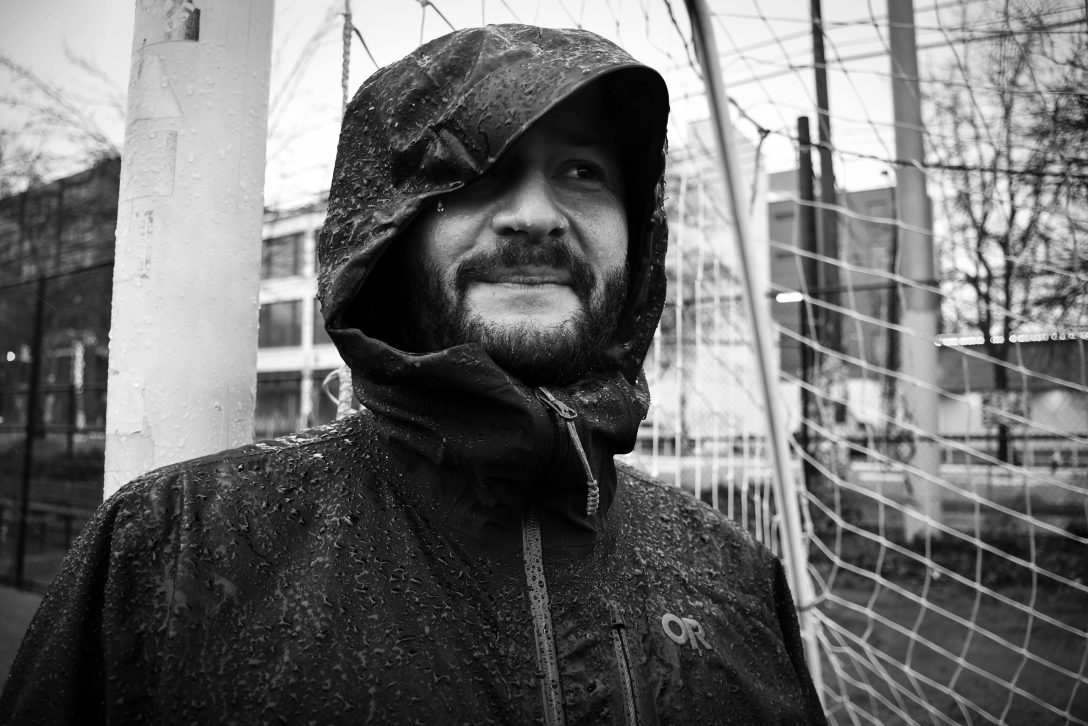
As a recent immigrant, one of Gonzalo G.’s biggest challenges was finding housing. He arrived with an amount of money that he thought was going to be enough to start looking for an apartment and then find work. What he didn’t expect was that a lot of landlords won’t rent to you if you don’t have a credit history, even if you have the money or and a job.
“When I moved here, I had no credit record or a job. My first option was renting from Airbnb, and that’s super expensive. Housing in Seattle is expensive, but if you rent an Airbnb, it’s more expensive than that. Then I found a friend who needed a roommate, so I went to that house, and for a long time I was living there, but the idea was that I was going to be there for one or two months. That was an agreement, but that extended as I was not able to find an apartment because of this credit problem,” he says of his housing journey.
He found a temporary solution in a building near the University of Washington that houses international students who also don’t have a credit history. He moved into and still lives in a room there with a private bathroom and access to a shared kitchen. His current living situation is challenging in many ways. There are Airbnb rooms within the building, which means many guests moving in and out of the space and not respecting the rules around quiet hours or kitchen cleanliness. His bicycle was stolen from the building’s garage. He is also forced to eat out more due to the lack of a reliable cooking space. These factors all added up and sent Gonzalo in search of a more stable housing option.
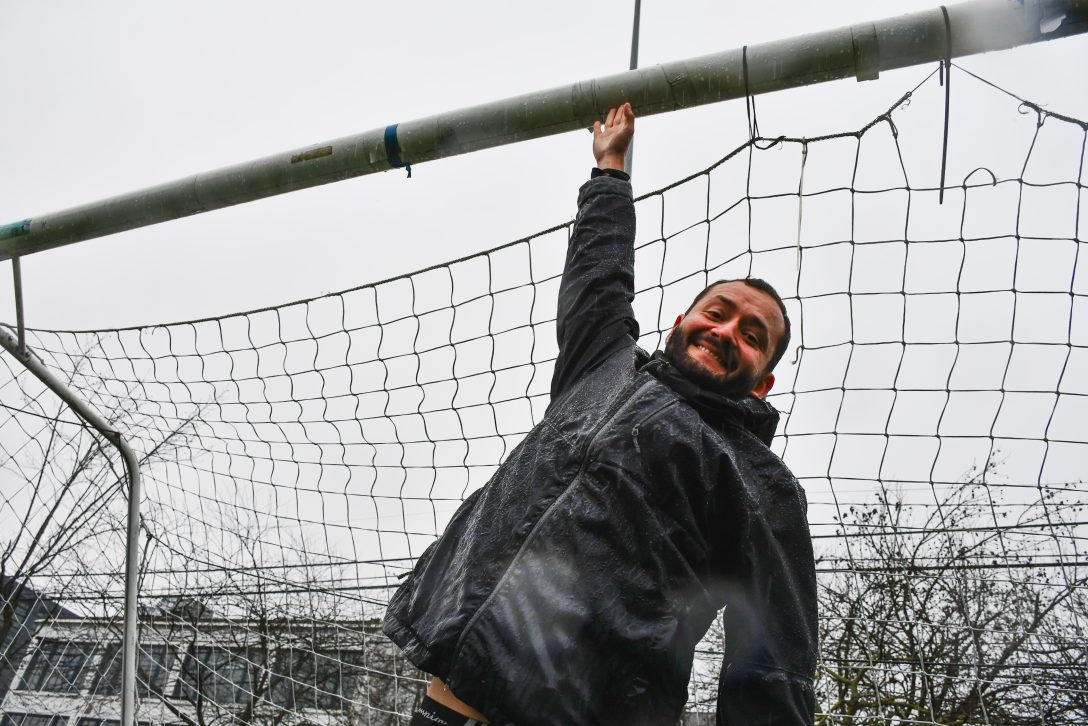
Before beginning his homebuying journey with Habitat SKKC, Gonzalo was a frequent visitor to Seattle from Mexico. He was taken by the breadth of outdoor activities, from mountain biking to paragliding, kayaking to swimming. He spends much of his free time playing soccer at Cal Anderson Park. The access to the outdoors was a new experience after spending much of his adulthood in the bustling metropolis of Mexico City.
“It’s a huge city with a lot of restaurants and museums, but we don’t have a lot of nature. There was something here that I wanted: a city with a lot of outdoor activities and no traffic, no pollution. Yes, I know people from Seattle complain about traffic, but trust me, this is nothing like the traffic in Mexico City,” he muses.
Mountain biking has quickly become his favorite new activity in nature, but in the city proper, Gonzalo enjoys going to music shows. He says, “Seattle is one of the best spots for music. It’s part of the history that the grunge culture started here. That’s something that I have always been interested in. I’m a musician, and I probably go to six shows per month here.”
Luckily for Gonzalo, he’ll move into his new home in Capitol Hill, a neighborhood known for its nightlife and plenty of options for hearing live music. When he moves into his new one-bedroom condo, he’ll bring along plenty of instruments: He plays guitar, bass, ukulele, drums, and his favorite, saxophone.
Gonzalo currently works remotely as a logistics coordinator for a company based in England. Prior to immigrating, he worked for many years in Mexico’s government, starting as a software developer before moving into a management position. Despite his impressive resume, Gonzalo faced many barriers to work as an immigrant.
“It’s really challenging to get a first job when you’re a new immigrant. That happened to a lot of my friends that hadn’t arrived with a job already. I think a lot of companies think that you’re not legally here and that you’re going to ask them to do that procedure for you, or that you’re going to give them fake documents or they’re not going to take the risk on you not being prepared with the language. I guess that a lot of companies are scared to take this first step of hiring someone, and I really appreciate that this company did it with me,” he explains.
After experiencing firsthand the challenges of life as a recent immigrant, Gonzalo began volunteering at the Northwest Immigrant Rights Project to help others who are going through a similar experience. He started volunteering because one of his friends works there, and she told him that sometimes they have trouble finding people who can interpret Spanish. By serving as a volunteer translator, Gonzalo can accompany people being aided by the Northwest Immigrant Rights Project as they meet with schools, lawyers, and medical professionals. He has enjoyed the work and getting to know people from many different countries.
In addition to work and volunteering, Gonzalo is in the middle of a master’s program studying artificial intelligence. He has a year to go and a thesis to write, but he feels he must move fast to keep up with the pace of AI’s development. He plans to explore job opportunities in the field once he completes his degree, but for now he’s happy to study it while balancing the rest of the demands of his busy life.
When he learned about Habitat for Humanity from a friend, Gonzalo saw that he needed to have worked at his current job for a year, so he turned down another offer in order to meet this requirement. He was determined to make the process work and make his dream of homeownership a reality. He has enjoyed every part of the homebuying process with Habitat SKKC, including volunteering at the Bellevue Store, where he has learned a lot about furniture materials and assembly and has fun interacting with staff and other volunteers.
Prior to moving into his Habitat home, Gonzalo lamented how everyone in Seattle, including him, moved so much. He had met a lot of people who became friends, but then they moved to New York or went back to Mexico. He adds, “Seattle is a city experiencing a lot of change, and so am I. I think having my own place is going to make me feel like, finally, Seattle is my home.”
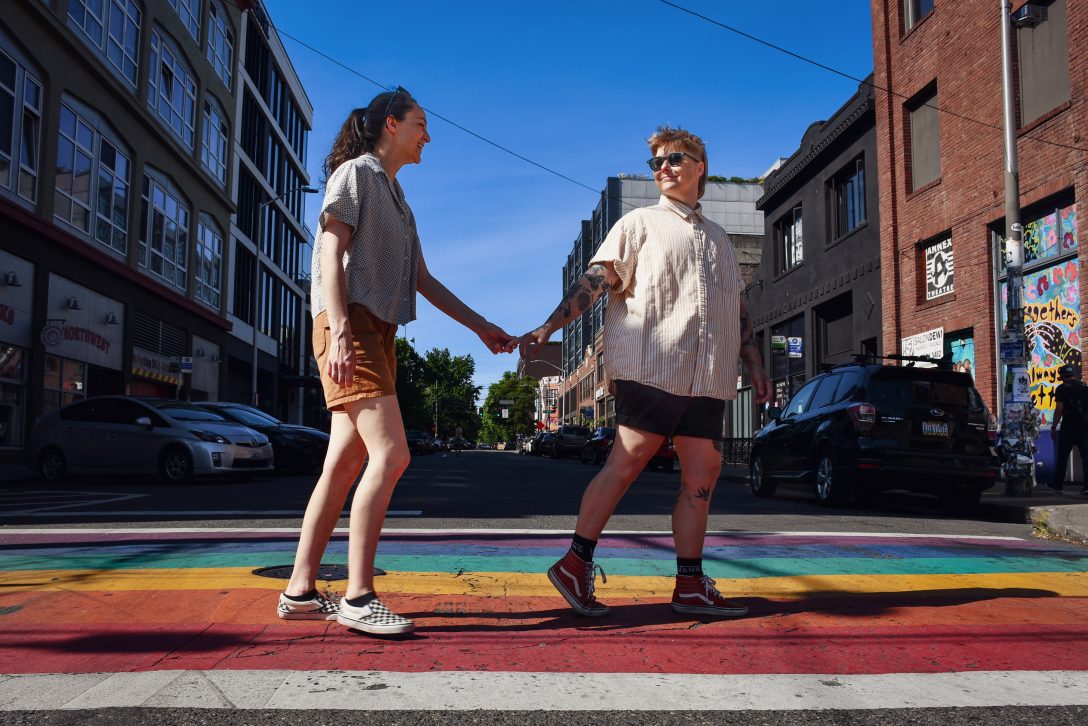
Mayan P. (they/them) and Sarah D. (she/her) traveled to Washington from different places, but both came in search of a sense of belonging that they didn’t always feel back home. Along the way to finding community and buying their first home, they found each other.
Mayan grew up in a small town in Utah, which they found culturally stifling. Mayan has visited Seattle their whole life because their mom has three sisters who live here. Growing up in a small town in Utah, Mayan didn’t have access to a major city, and they wanted something bigger with more diversity. That desire and the family support here led Mayan to apply to Seattle University, and they moved here over a decade ago to attend college.
After a career as a social worker, Mayan has recently returned to school to study law. Mayan’s area of law focuses on the LGBTQ+ community: estate planning, name changes, second parent adoptions, and elder care.
“There’s a lot you can do through estate planning for lower income folks and people of color, who oftentimes lose generational wealth,” Mayan explains.
Sarah was born in Washington and moved to California when she was a baby, and where she stayed until she was 15. When her mom passed away when Sarah was a teenager, she moved to Idaho to live with her aunt and uncle. She spent three years there for high school. When she visited Seattle over a weekend in the summer, she felt at home.
Sarah adds, “It was a weird time being 18, getting a glance of the world, and then coming back home. I was ready to get out. This is the most beautiful place. I immediately felt like myself again. I grew up in small towns, so I had never experienced anything like this.”
Now, Sarah is a preschool teacher at Head Start, which is offered through Seattle Public Schools. While Washington state is a progressive area for paying teachers, Sarah still has to supplement her income. She has summers off, which she is very grateful for, but she usually works during them. Sarah loves teaching. Every day is new, and the kids are incredible. She currently works in South Park at a primarily Spanish-speaking school, and she has found it to be her favorite community that she has worked with so far.
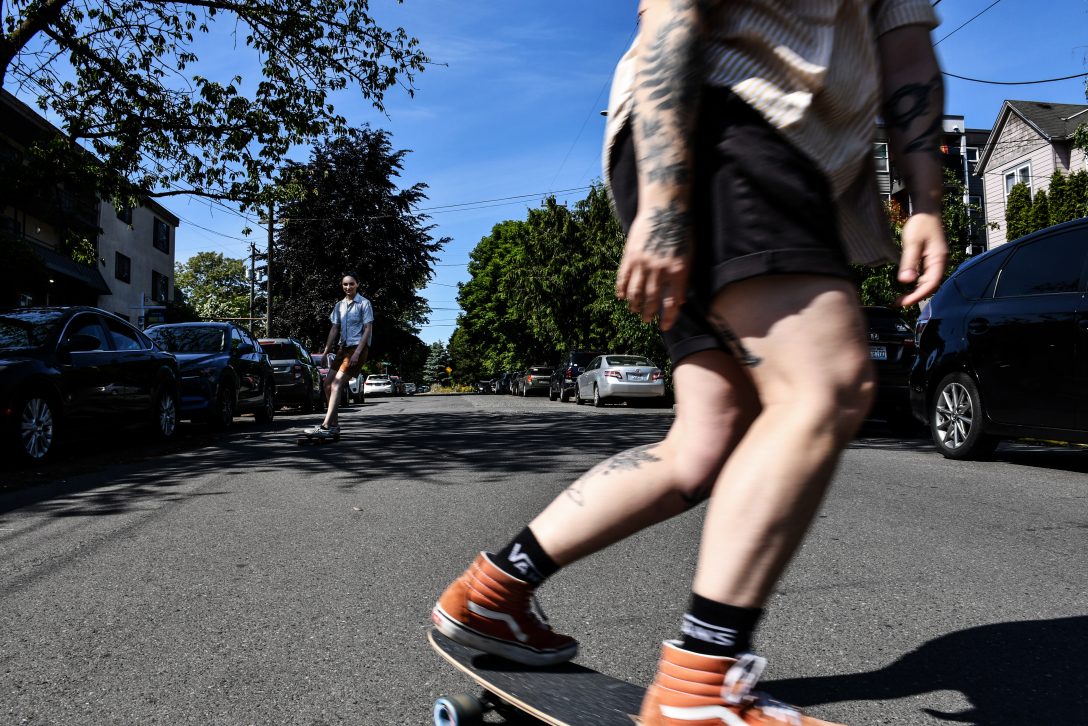
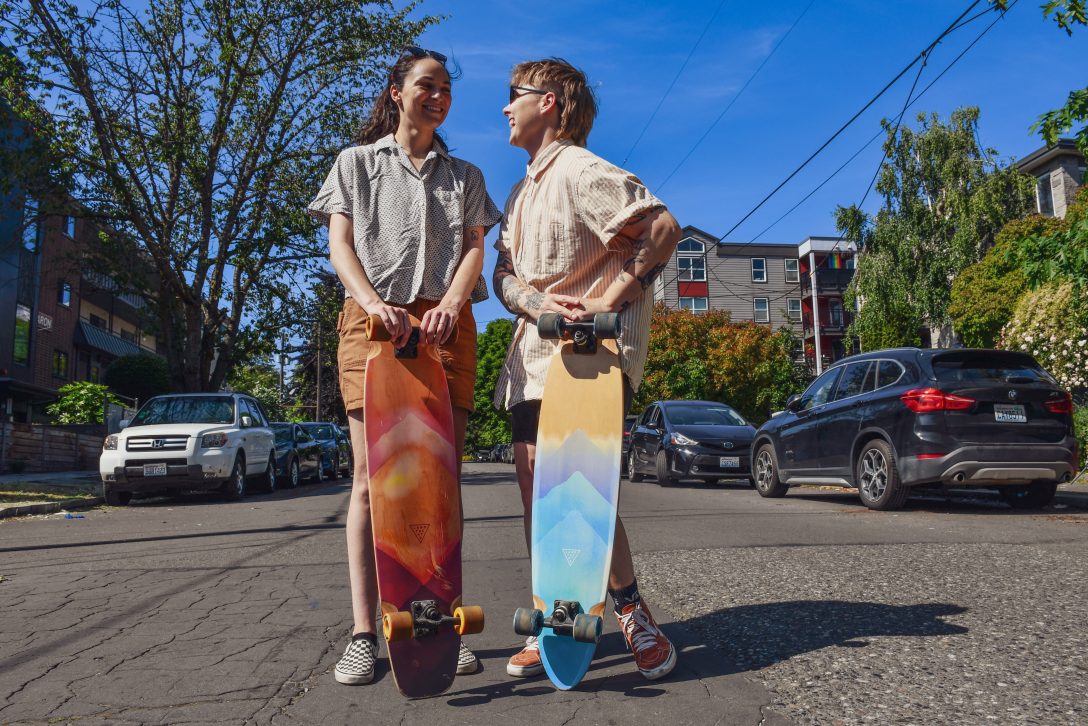
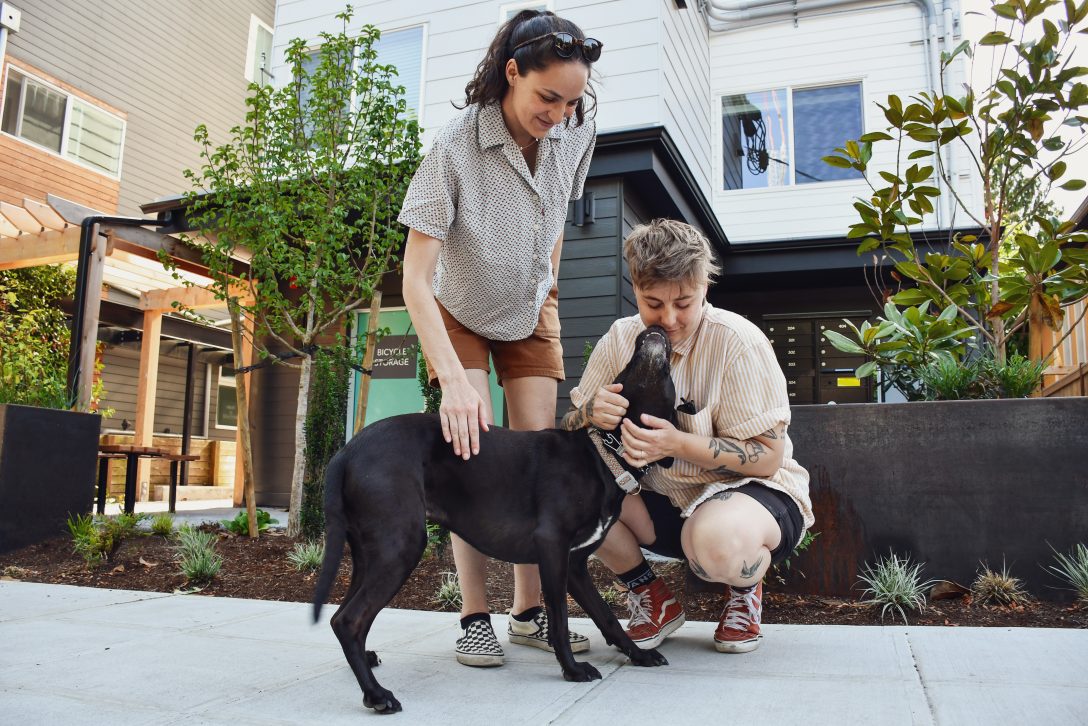
When not teaching, Sarah fills her free time with reading and woodworking. While Mayan has had to put most of their hobbies on hold during school, they do enjoy spending time with friends, walking their dog Mavis, and longboarding with Sarah in the summer. In fact, skateboarding played an important role in the couple’s relationship. They look back fondly on lessons they took together as friends through Skate Like a Girl, a non-profit that encourages those traditionally not represented in skateboarding to take lessons and build community.
During one session, Mayan took off their wrist guards before the end and when they fell during their last run, broke their wrist. Sarah accompanied Mayan to the emergency room and spent the next six hours by their side. Sarah worked at a tamale shop at the time and generally had an excess of tamales on her most days. She brought them into the hospital, and the two shared them with another family.
While Mayan was in pain at the time, they consider this night a sweet memory they can now laugh about. It was one of the many great moments during the year of friendship before they began dating.
—
While the couple liked the location of their West Seattle home before Habitat (and the sliver of water they could see out of their second-story apartment window), they struggled to keep up with the ever-increasing rent. With a median home price of $910,000, buying a house in Seattle felt completely out of reach.
Mayan describes the either-or situation the couple felt locked in, “The reality is: I have a lot of student loans, especially with law school. Basically, we could either save for a house, which probably wouldn’t be here because it’s too expensive, or we could save to potentially have a kid, which unfortunately costs a lot of money for us. It felt like we had to pick one.”
Mayan’s aunt, who works in housing, told them about an opening at Habitat SKKC’s Olympic Ridge building, and suddenly the equation changed.
“We could potentially have both things and stay in Seattle, which is really wild, and not something I think either of us ever thought was possible,” Mayan adds.
Sarah never thought she would own a home. Growing up, her family never did, and moving from food service to teaching, it didn’t feel financially possible.
She continues, “This is our place—we felt that from the first minute we got here. We knew it’s our place, and we didn’t want to move away.”
—
While moving through the Habitat program, Sarah and Mayan spent their volunteer hours working at the Southcenter Habitat Store. Volunteering at the store suited them well since they both love new experiences and meeting new people. While they felt a little nervous at first because they didn’t know what the work entailed, they went into the experience with open minds, and they found that the store staff opened their arms to them in return.
“Teresa was amazing and made us feel right at home,” Sarah explains. Assistant Store Manager Teresa Elliott gave them big tasks to do as a team since they always volunteered together. This included assembling furniture and creating vignettes throughout the store.
Now moved into their new home, the couple looks forward to movie nights in their new living room and filling their home with more books from their neighborhood bookstores.
“At the end of the day, we get to live in Capitol Hill, which is definitely more queer than West Seattle. Also, my aunt and my mom live close by, and I go to school down the street. We get to save a lot of money and still be in an environment that we feel comfortable in,” Mayan describes their rapidly changing lives.
Home can look like a lot of things, but at its core, it provides a feeling of comfort and safety. Together, the couple has felt welcome in Seattle, where Mayan feels safe holding hands with Sarah in public. With their new Habitat home, they can put down roots in this inclusive city and help invite the next wave of transplants looking for a welcoming place to call home.