Volunteer Spotlight: Jennifer T.’s Journey of Giving Back 

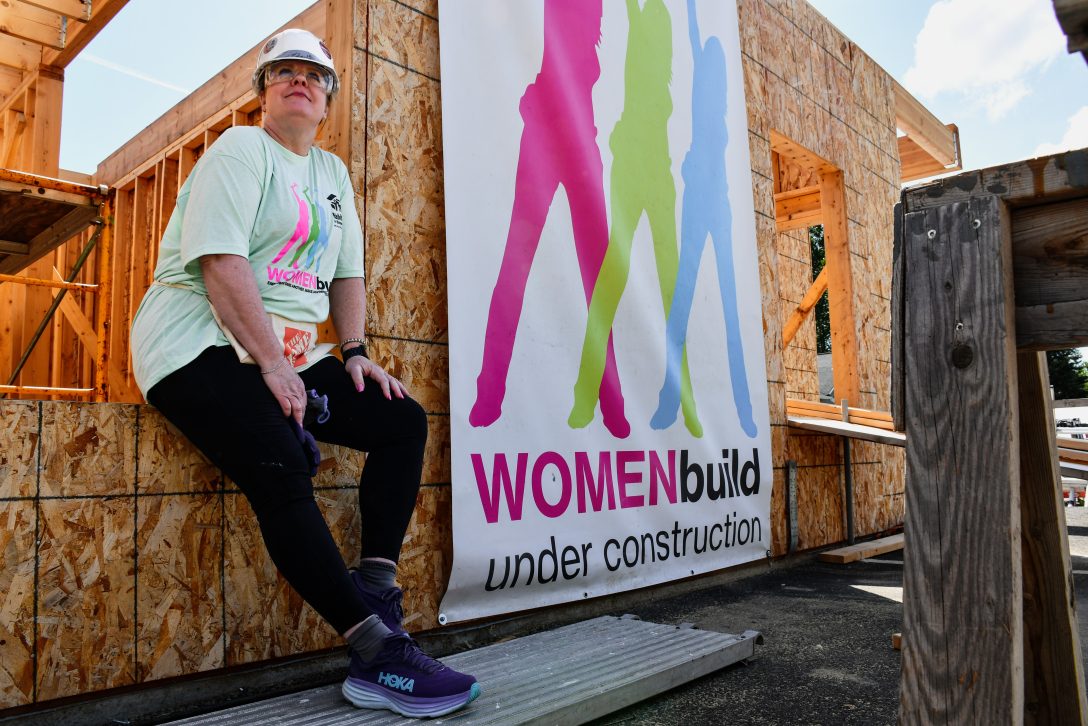
As a real estate agent, Jennifer T. has a close relationship with home buying and ownership. When she began volunteering with Habitat SKKC five years ago, she connected with the homeownership process on a different level.         

“At work, I get to hand somebody the keys to their home or help them sell their house. At Habitat, I also get to learn how to do siding, how to put a fan in, all the little things that you don’t stop and think about,” she explains. 

Her journey to the construction site—and to becoming one of our most dedicated volunteers at the annual Women Build—started in our Habitat stores. As a fan of thrifting, she discovered the Auburn Habitat Store and its excellent selection of furniture and home decor. On one of her shopping trips, she learned more about ways that she could get involved with Habitat’s work, and she jumped at the chance to participate in our affinity build that empowers women to learn construction skills. 

Jennifer is an avid volunteer, donating her time and energy as the Bingo caller at a local retirement home, picking up trash in downtown Renton, and as one of Habitat’s reliable volunteer builders. Jennifer time blocks everything on her digital calendar so it’s always with her. Volunteering is such an important part of who she is, so Jennifer intentionally puts volunteering on the calendar every month to make it a point to get it done.  

“I believe that everybody should have the opportunity to own a house, learn new skills, get their hands dirty, and give back to their community. It’s all about giving back. No matter what it is that you love to do, give back in some way. This is one of my ways,” she explains.  

This year, Jennifer brought her daughter Zoe to the construction site for the second time. Habitat SKKC’s Women Build, now in its 18th year, aims to empower women by demystifying what happens on a construction site. Noting that her daughter has “volunteering in her blood,” Jennifer wanted to instill the same love of volunteerism that drives her to come back for Women Build year after year.  
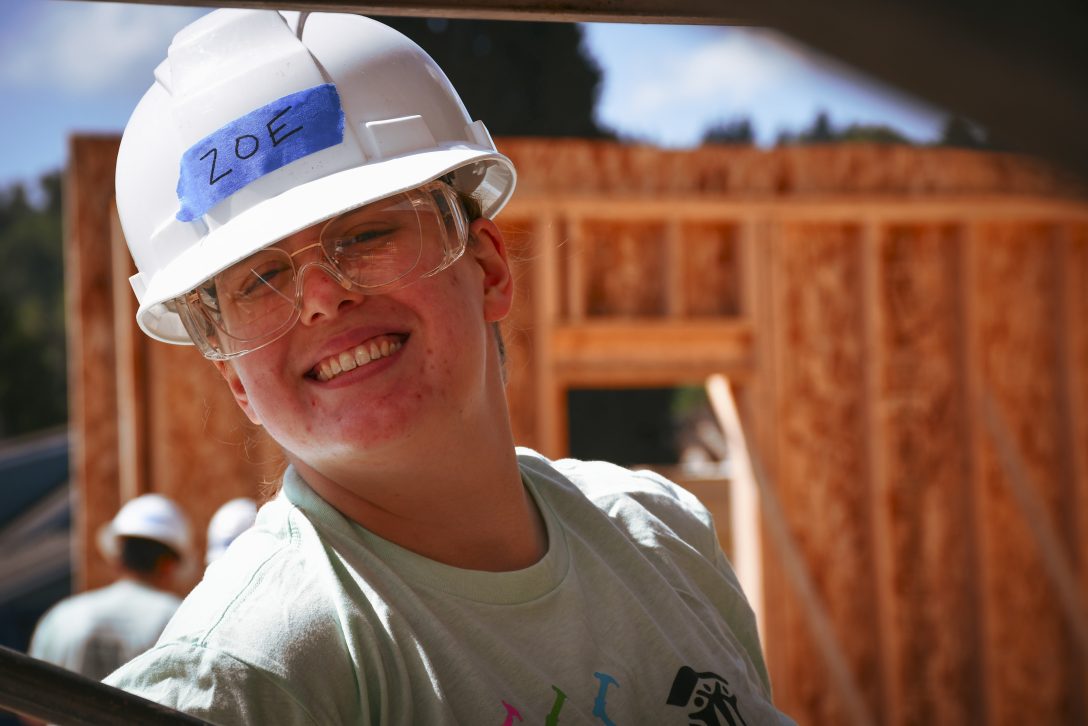
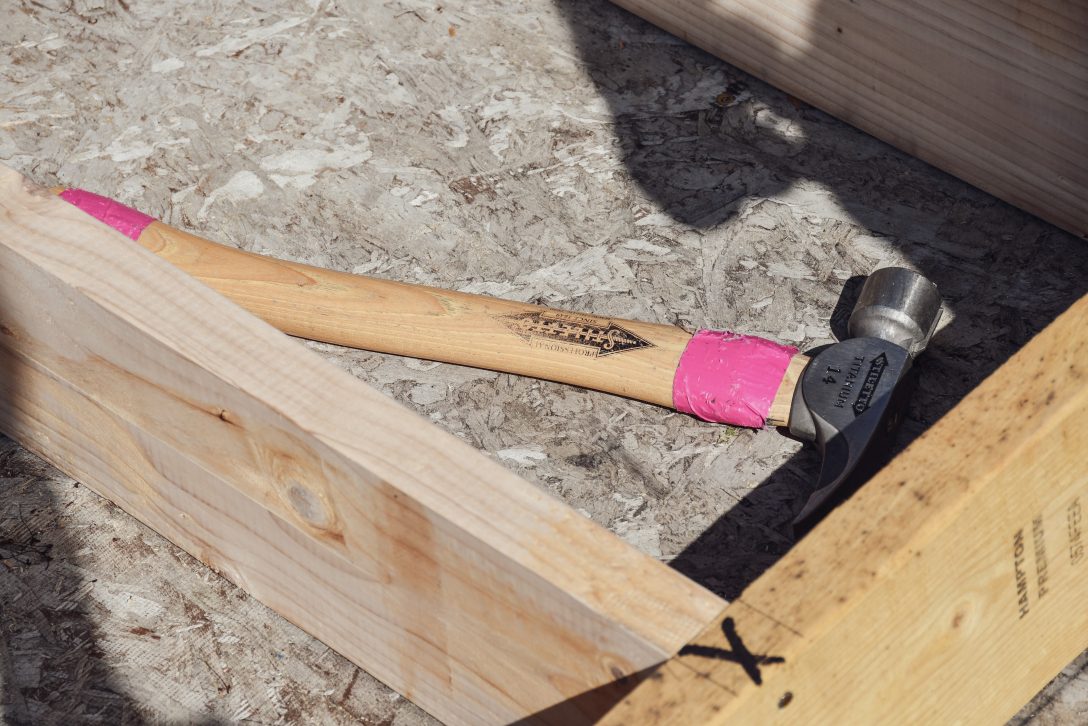
As a return volunteer, Jennifer tries to learn something different every year. This year, it was the electric shear. The first year she volunteered at Women Build, she had no idea what to expect, but she found it fun and enjoyed learning new things, and she found the crew to be incredibly patient. She adds, “I can’t hammer to save my life. I’ve tried. I’ve learned. I am not good at it. Yet, I tried.” 
Jennifer’s advice to anyone considering how they can get involved at Habitat: “Don’t stop and think, can I do it? Do I need experience? Don’t hesitate, sign up and do it. Worst case, it’s not your thing. If you don’t volunteer here, volunteer at one of the stores or shop at one of the stores. There are so many other ways you can give back to Habitat.” 
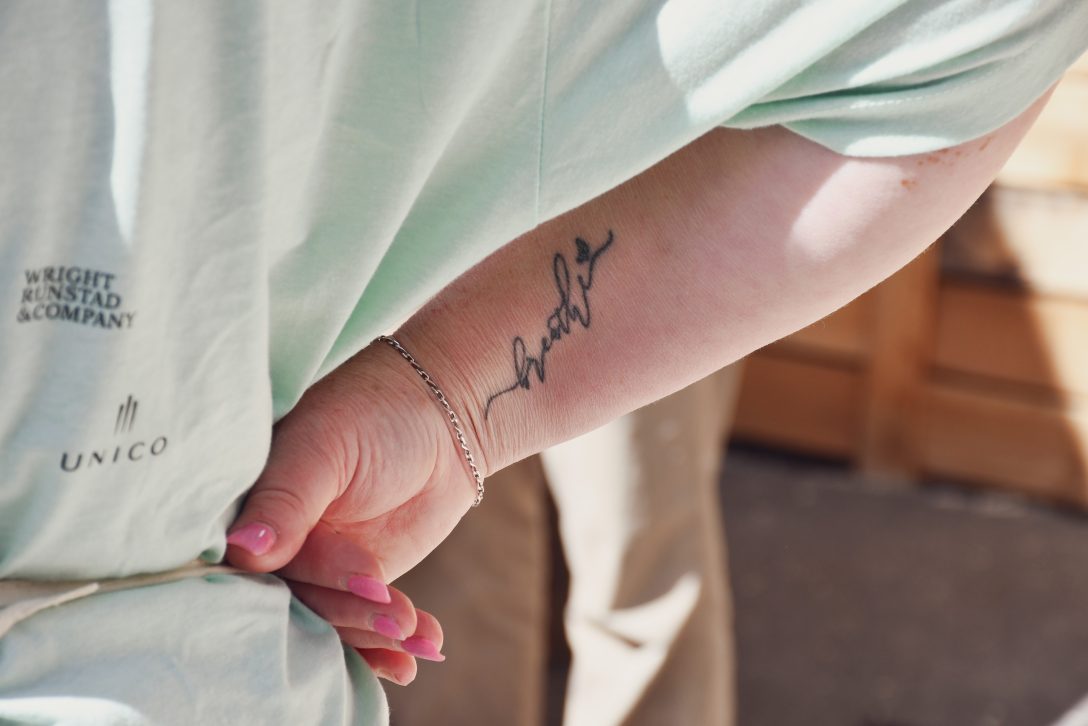
Reflecting on the last five years participating in Women Build, Jennifer feels the value of her volunteer work in her own life: “I believe that volunteering with Habitat has impacted me from the ground up. Watching the Habitat crew be so patient with us has transferred over to my life when I teach someone. I can take that patience and grace with me.”  

Habitat SKKC and ACHD Center Black Homeownership Through Bold Collaboration 

In August 2023, Habitat SKKC began a joint venture and partnership with African Community Housing & Development (ACHD), a non-profit that empowers Seattle’s African Diaspora community by building culturally rooted health and housing stability in the region.  

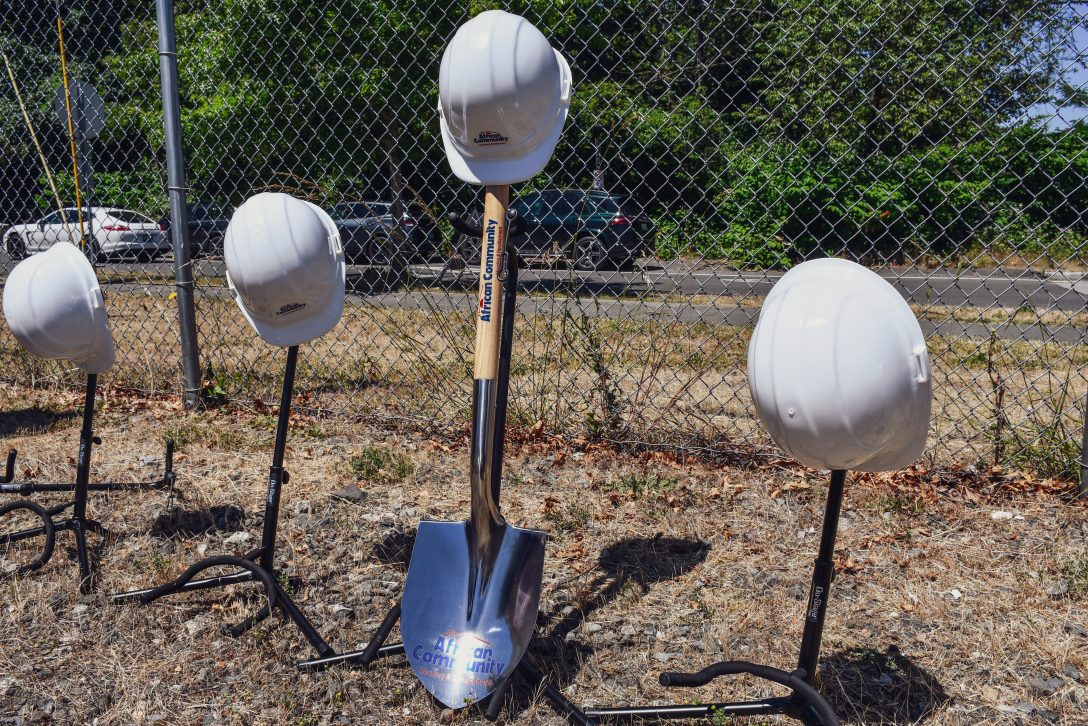
On June 9, ACHD and Habitat SKKC celebrated the historic partnership to center Black homeownership and prosperity across multiple projects throughout South King County with a groundbreaking on the site of one of the future buildings. The three projects along Martin Luther King Jr. Way South will include 65 new permanently affordable homes throughout Seattle’s Rainier Valley. Staff from both organizations, along with elected officials and other mission-aligned non-profits, came together to share in the momentous occasion. 

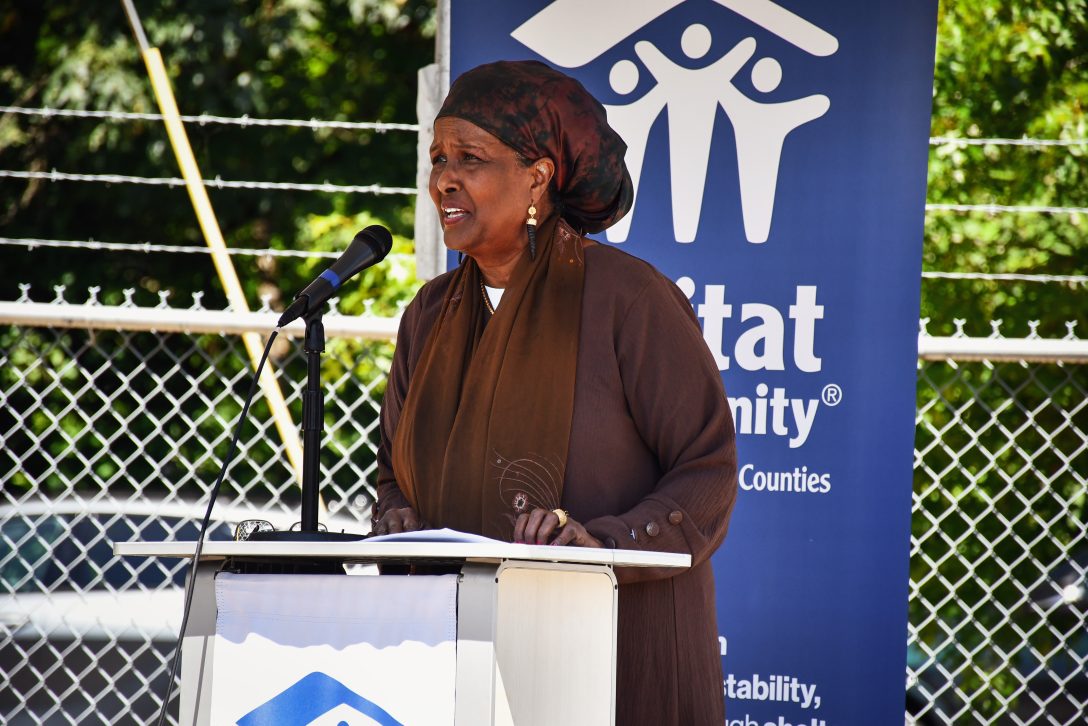
The dynamic lineup of speakers began with Hamdi Abdulle, President & CEO of ACHD. Acknowledging the significance of the collaboration between her organization and Habitat SKKC, Abdulle noted that this project is more than a development, it’s a commitment to the community that will directly feel its impact. Rainier Valley is one of the most diverse neighborhoods, and it’s also one with residents that are at the highest risk of displacement due to the rising costs caused by the neighborhood’s transit expansion. 

ACHD and Habitat SKKC are not only building shelter, Abdulle said, but laying the foundation for generational wealth and prosperity for Black and immigrant families. “This shows what happens when organizations come together to support justice and community,” Abdulle added. 

The next speaker, Bilan Aden, is not only the Vice President of ACHD, she is also Abdulle’s daughter. She started by thanking all the organizations involved in this project—what she called “The Justice League of Affordable Housing”—for their combined efforts. These organizations are giving groups of people who have been historically left out of homeownership “pathways of opportunity.” 

ACHD and Habitat SKKC are working to make affordable housing easier to build and find, and affordable homeownership easier to obtain. The history of housing in King County is marked by exclusion, redlining, and displacement. The day of the groundbreaking marked a turning point, and Aden said, “This project isn’t just a win, it’s a statement.” 

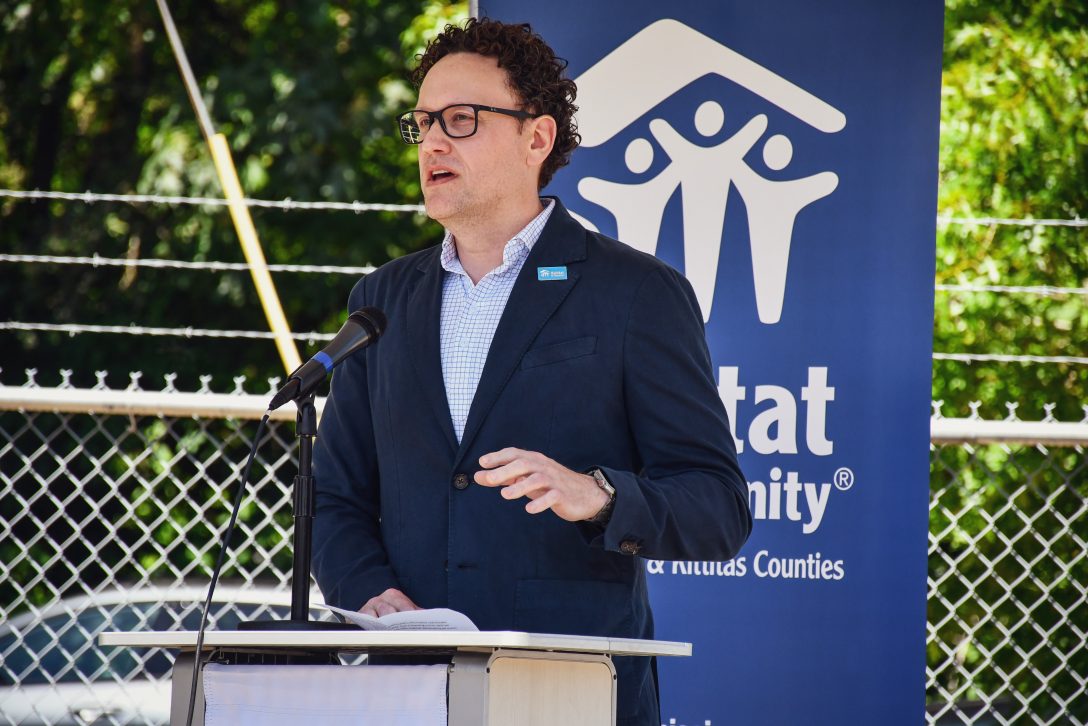
Habitat SKKC CEO Brett D’Antonio took the stage next and added some of the historical context to the day’s speeches, noting that it was Marty Kooistra, architect and member of the Black Home Initiative (BHI), who first connected D’Antonio and Abdulle on the non-profit “blind date” that led to this important partnership. “As members of the Black Home Initiative, we are committed to bold partnerships like this that will increase Black homeownership in the Rainier Valley and throughout King County,” he added.   

Following D’Antonio, special guest speakers united in their praise of the project and acknowledgement of the meaningful work ahead. King County Executive Shannon Braddock called the first-of-its-kind collaboration a response to systemic exclusionary practices in Seattle’s housing history. Braddock wants to build “places and spaces for all people,” which can happen when organizations like ours come together. She pointed out that “real community engagement can deliver results.” 

Seattle City Councilmember Alexis Mercedes Rinck, who also spoke at our Olympic Ridge dedication, is a big proponent of affordable housing and homeownership. She began her speech by recounting her early working relationship with ACHD: “It taught me how to authentically serve immigrant communities.” 

Rinck also celebrated the coalition of non-profits and government agencies, like the Seattle Office of Housing, that are partnering for “innovative funding solutions” for affordable housing. 

Erika Malone, Strategic Advisor for Homeownership at the Seattle Office of Housing, acknowledged in her speech the households who have deep roots in the Rainier Valley, and how these homes will help them to stay here. She also discussed the importance of bringing back those who have already been displaced and how these homes will mean they can return to this neighborhood as homeowners. 

“We’re doing more than construction, we’re building hope,” Malone said. 

As was a thread throughout all the day’s speeches, Patience Malaba, Executive Director of the Housing Development Consortium, recognized the power of coalitions in her speech: “No single organization can solve the region’s housing crisis on their own.” 

With a community-based partnership deeply rooted in collaboration, capacity-building, and co-learning, ACHD and Habitat SKKC will combine their strengths to deliver high-quality and permanently affordable homes that meet the critical needs of BIPOC and low/moderate income families. This includes family-sized units designed for larger, intergenerational families, multi-family buildings with a higher number of homes for seniors and growing families, and community-centric retail that features essential services from the small businesses that are the foundation of the Rainier Valley. These projects will also generate opportunities for women- and minority-owned businesses, contractors, and suppliers, including Alpha Sharp, a Black-owned real estate development firm that will serve as the general contractor for the three-townhome project at 4865 MLK Jr. Way S. 

The collaborative partnership also includes knowledge sharing between Habitat SKKC and the ACHD team so that the latter can add development of affordable housing units to their core services.  This means an impact on the region beyond our shared project. As Patience Malaba emphasized in her speech at the groundbreaking, “Today is not the finish line, it’s the start.” 

Foundations for Hope: Mayan P. and Sarah D.

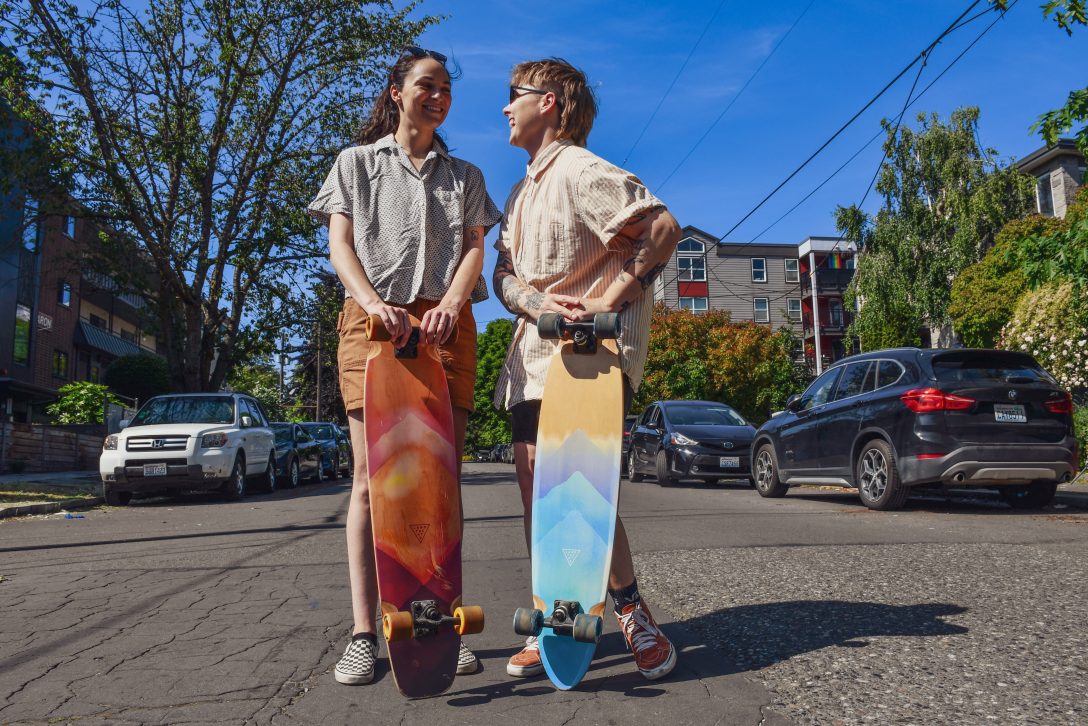
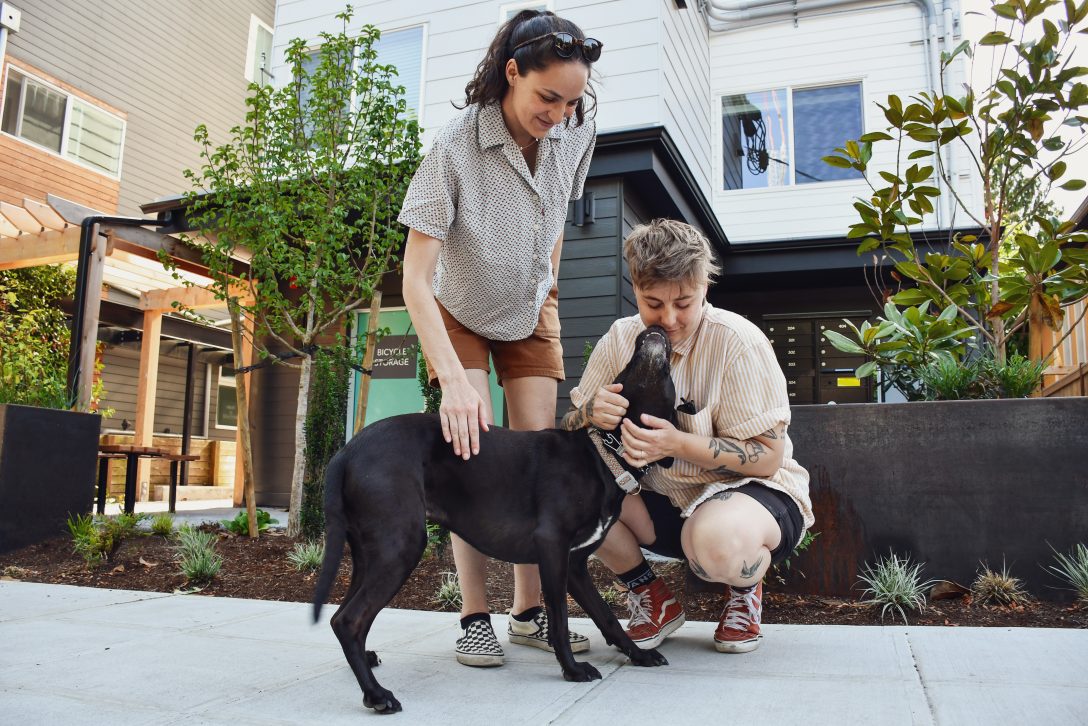
Mayan P. (they/them) and Sarah D. (she/her) traveled to Washington from different places, but both came in search of a sense of belonging that they didn’t always feel back home. Along the way to finding community and buying their first home, they found each other. 

Mayan grew up in a small town in Utah, which they found culturally stifling. Mayan has visited Seattle their whole life because their mom has three sisters who live here. Growing up in a small town in Utah, Mayan didn’t have access to a major city, and they wanted something bigger with more diversity. That desire and the family support here led Mayan to apply to Seattle University, and they moved here over a decade ago to attend college.  

After a career as a social worker, Mayan has recently returned to school to study law. Mayan’s area of law focuses on the LGBTQ+ community: estate planning, name changes, second parent adoptions, and elder care.  

“There’s a lot you can do through estate planning for lower income folks and people of color, who oftentimes lose generational wealth,” Mayan explains. 

Sarah was born in Washington and moved to California when she was a baby, and where she stayed until she was 15. When her mom passed away when Sarah was a teenager, she moved to Idaho to live with her aunt and uncle. She spent three years there for high school. When she visited Seattle over a weekend in the summer, she felt at home.  

Sarah adds, “It was a weird time being 18, getting a glance of the world, and then coming back home. I was ready to get out. This is the most beautiful place. I immediately felt like myself again. I grew up in small towns, so I had never experienced anything like this.” 

Now, Sarah is a preschool teacher at Head Start, which is offered through Seattle Public Schools. While Washington state is a progressive area for paying teachers, Sarah still has to supplement her income. She has summers off, which she is very grateful for, but she usually works during them. Sarah loves teaching. Every day is new, and the kids are incredible. She currently works in South Park at a primarily Spanish-speaking school, and she has found it to be her favorite community that she has worked with so far. 

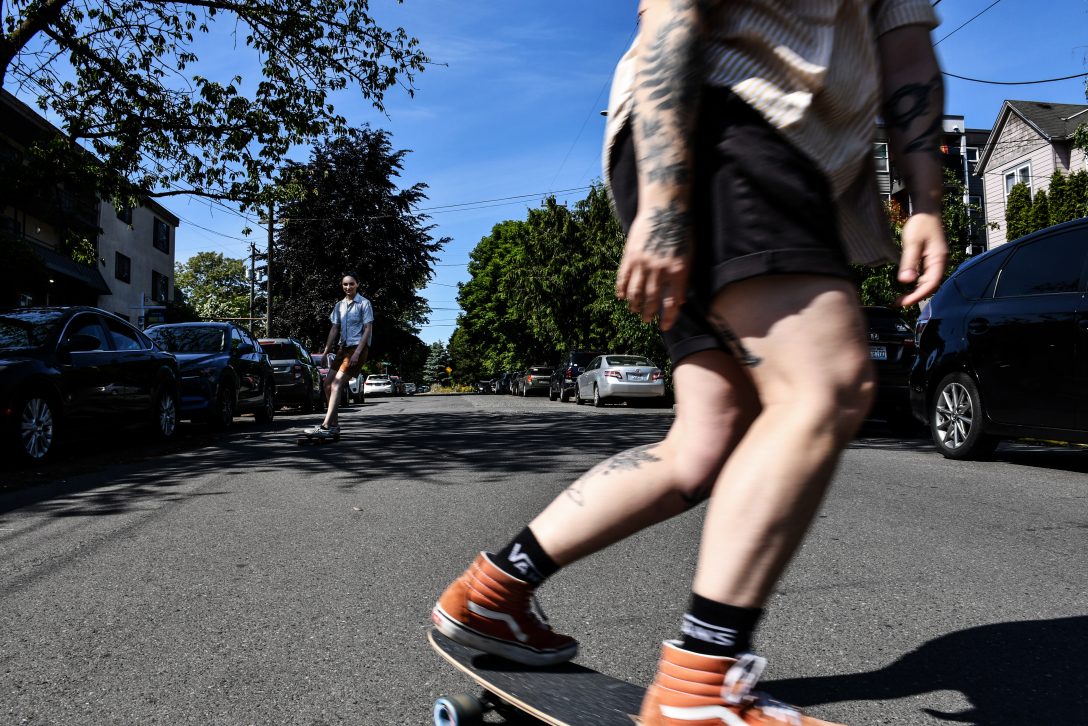
When not teaching, Sarah fills her free time with reading and woodworking. While Mayan has had to put most of their hobbies on hold during school, they do enjoy spending time with friends, walking their dog Mavis, and longboarding with Sarah in the summer. In fact, skateboarding played an important role in the couple’s relationship. They look back fondly on lessons they took together as friends through Skate Like a Girl, a non-profit that encourages those traditionally not represented in skateboarding to take lessons and build community.  

During one session, Mayan took off their wrist guards before the end and when they fell during their last run, broke their wrist. Sarah accompanied Mayan to the emergency room and spent the next six hours by their side. Sarah worked at a tamale shop at the time and generally had an excess of tamales on her most days. She brought them into the hospital, and the two shared them with another family.  

While Mayan was in pain at the time, they consider this night a sweet memory they can now laugh about. It was one of the many great moments during the year of friendship before they began dating.  

— 

While the couple liked the location of their West Seattle home before Habitat (and the sliver of water they could see out of their second-story apartment window), they struggled to keep up with the ever-increasing rent. With a median home price of $910,000, buying a house in Seattle felt completely out of reach. 

Mayan describes the either-or situation the couple felt locked in, “The reality is: I have a lot of student loans, especially with law school. Basically, we could either save for a house, which probably wouldn’t be here because it’s too expensive, or we could save to potentially have a kid, which unfortunately costs a lot of money for us. It felt like we had to pick one.”  

Mayan’s aunt, who works in housing, told them about an opening at Habitat SKKC’s Olympic Ridge building, and suddenly the equation changed.  

“We could potentially have both things and stay in Seattle, which is really wild, and not something I think either of us ever thought was possible,” Mayan adds. 

Sarah never thought she would own a home. Growing up, her family never did, and moving from food service to teaching, it didn’t feel financially possible. 

She continues, “This is our place—we felt that from the first minute we got here. We knew it’s our place, and we didn’t want to move away.” 

— 

While moving through the Habitat program, Sarah and Mayan spent their volunteer hours working at the Southcenter Habitat Store. Volunteering at the store suited them well since they both love new experiences and meeting new people. While they felt a little nervous at first because they didn’t know what the work entailed, they went into the experience with open minds, and they found that the store staff opened their arms to them in return. 

“Teresa was amazing and made us feel right at home,” Sarah explains. Assistant Store Manager Teresa Elliott gave them big tasks to do as a team since they always volunteered together. This included assembling furniture and creating vignettes throughout the store. 

Now moved into their new home, the couple looks forward to movie nights in their new living room and filling their home with more books from their neighborhood bookstores.   

“At the end of the day, we get to live in Capitol Hill, which is definitely more queer than West Seattle. Also, my aunt and my mom live close by, and I go to school down the street. We get to save a lot of money and still be in an environment that we feel comfortable in,” Mayan describes their rapidly changing lives. 

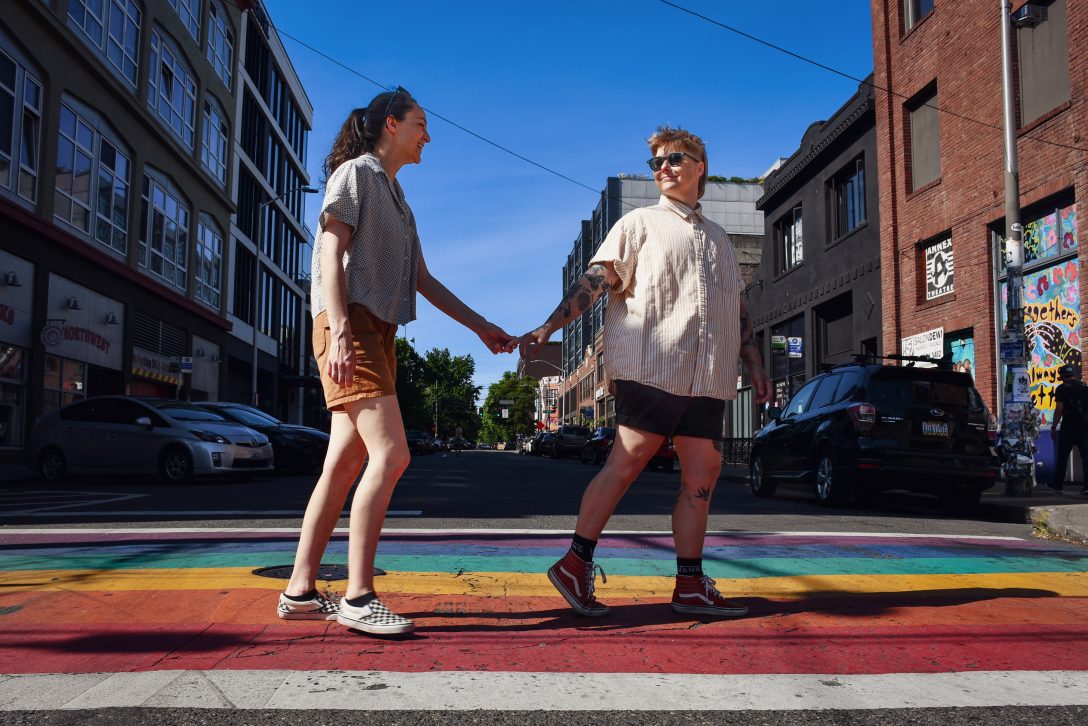
Home can look like a lot of things, but at its core, it provides a feeling of comfort and safety. Together, the couple has felt welcome in Seattle, where Mayan feels safe holding hands with Sarah in public. With their new Habitat home, they can put down roots in this inclusive city and help invite the next wave of transplants looking for a welcoming place to call home. 

Habitat SKKC Celebrates Successes and Raises $2.7 Million (and Counting!) at the 2025 Beyond the Build Luncheon

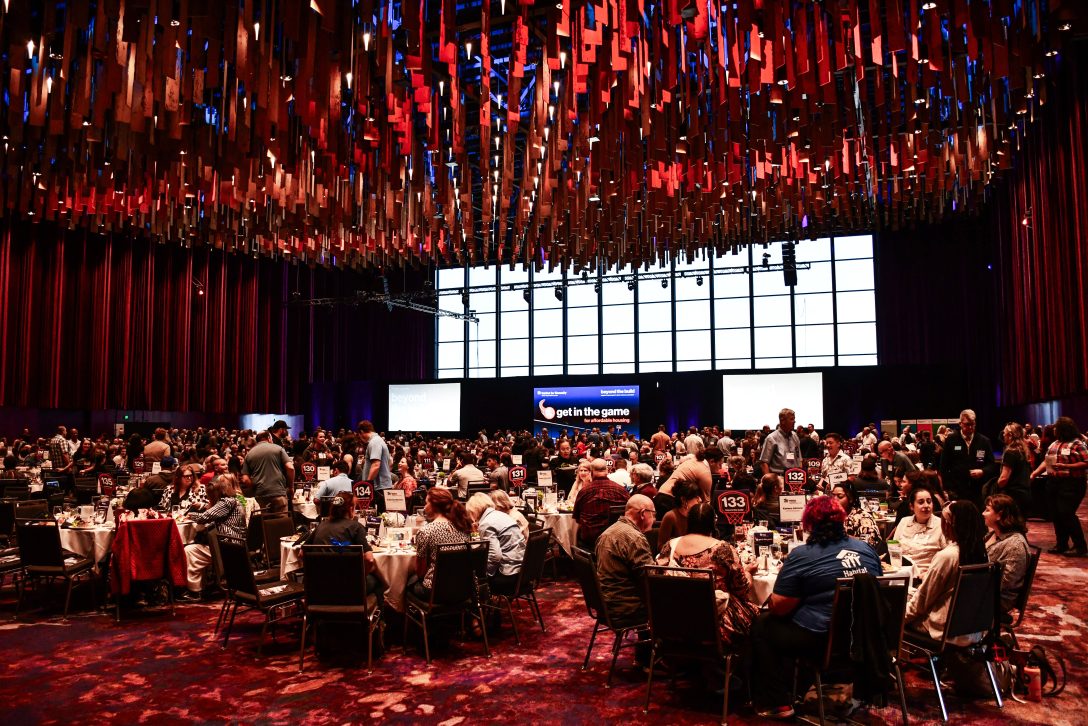
This afternoon, more than 1,400 staff, AmeriCorps, volunteers, Board members, and supporters gathered to celebrate a year of progress at Habitat SKKC’s annual Beyond the Build Luncheon. The event featured heartfelt speeches and videos of Habitat homeowners, an award ceremony honoring the champions who support our work, and an inspiring conversation with Seattle Storm legend Sue Bird. 

Event emcee Joyce Taylor, a celebrated anchor for KING 5, energized the room with her opening remarks. She set the tone for the luncheon by rallying attendees to “get in the game for affordable housing!” 

Taylor also eloquently acknowledged the somber news of former President Jimmy Carter’s death in late 2024: “Habitat lost its most prolific volunteer last year with the passing of President Jimmy Carter, a champion for affordable and decent housing. He and his wife of 77 years, Rosalynn Carter, donated their time and leadership to Habitat through the Jimmy & Rosalynn Carter Work Project.” 

After Taylor gave an overview of Habitat SKKC’s mission and work, she thanked everyone in attendance—from corporate sponsors to the Board of Directors—who makes Habitat SKKC’s work possible. A sizzle reel showed off the impressive achievements of the past year, including breaking ground on our largest single-building multifamily project to date, Liberty Commons. 

Taking the stage next was Habitat SKKC CEO Brett D’Antonio, who transitioned from a look back on the past year’s highlights to a look ahead at the future of Habitat SKKC’s work: “With our scaled-up housing production, we’ll complete 38 new homes in 2025, 67 homes in 2026, and 76 homes in 2027. That means another 181 families who won’t have to uproot their children from their friends and schools, another 181 families who will build community with their neighbors because they know they’ll still be there next year, and another 181 families who will have the financial stability that gives them the freedom to dream of what they and their kids will achieve next.” 

D’Antonio presented three honored guests with awards, beginning with Jim O’Farrell, “whose unwavering passion for and commitment to Habitat for Humanity has left an indelible mark on our organization.” O’Farrell received the Volunteer of the Year Award for work that included mobilizing volunteers from many faiths to participate in our annual Interfaith Build. 

KLB Construction, who “has made strong contributions to multiple Habitat developments, most notably, our Sammamish Cottages project,” received the Community Partner of the Year Award. More than two dozen of their employees volunteered their time to help complete the development. KLB’s General Manager Bill Grady, a dedicated member of our Board of Directors, accepted the award on behalf of KLB. 

Finally, D’Antonio presented the inaugural Habitat Humanitarian Award to “one of our biggest fans and strongest supporters: Lieutenant Governor Denny Heck.” 

Heck is a longtime supporter and champion of Habitat SKKC, welcoming us into his D.C. offices and joining us for the Liberty Commons groundbreaking. 

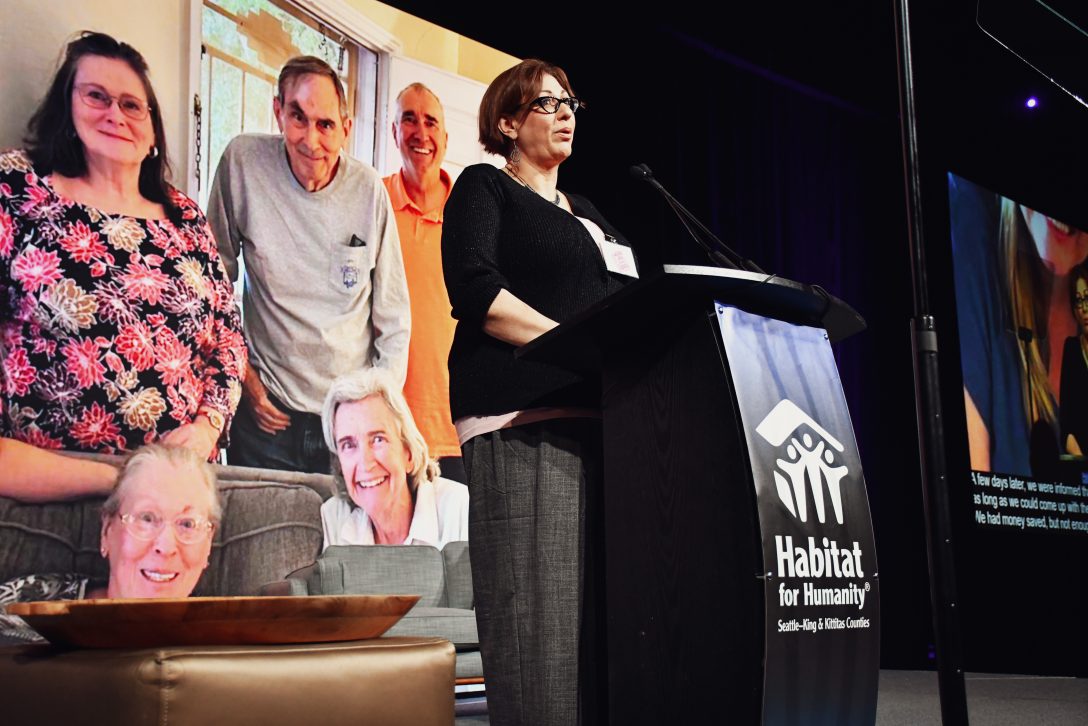
Next to the stage, homeowner Elizabeth S. inspired the audience with the story of her family’s resilience through a job loss, a move to an unsafe neighborhood, and finally finding stability once they became Habitat homeowners. She reflected, “It has been a joy watching our kids transform into secure and happy people. We are so grateful to Habitat for Humanity for our home and the positive changes it has brought into our lives. My hope is that more families, like ours, will have the same opportunity to thrive.” 

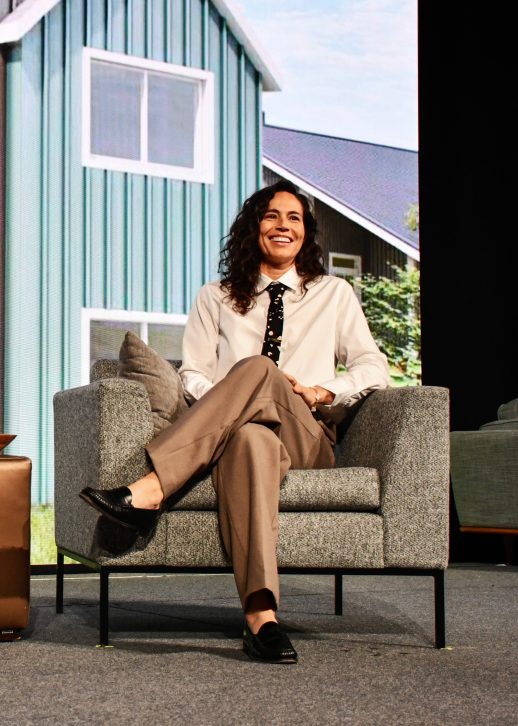
The event’s guest of honor, Sue Bird, joined us mere weeks before she will be inducted into the Women’s Basketball Hall of Fame. Bird, who spent her entire career in Seattle, wanted to give back to her community, and Habitat’s fundraiser was a natural choice.  

Taylor’s interview was wide-ranging, from Bird’s basketball career to her advocacy work.  

Taylor asked, “You could really support any organization. Why is Habitat for Humanity an organization you wanted to bring attention to?” 

“When you want to make a difference and use your platform or voice, you want to be aligned. You want to have trust. When you hear the name Habitat for Humanity, you trust it. You know what it’s about, you know the work they’re doing,” Bird answered. 

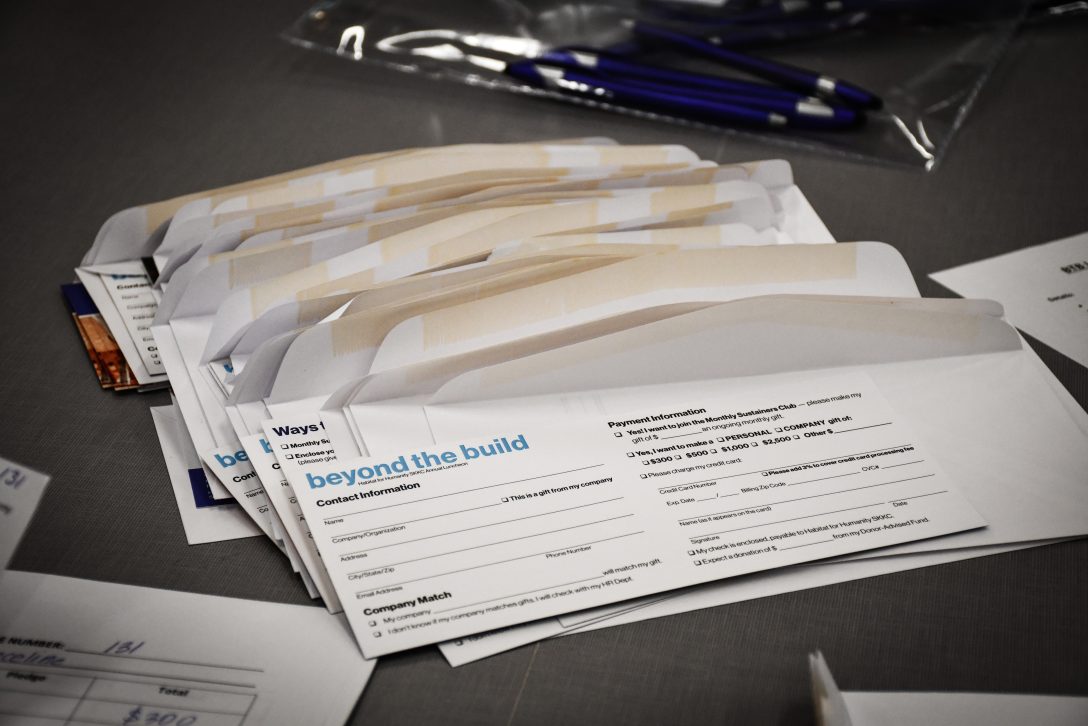
Taylor wrapped up the program with a prize raffle and final thanks to everyone who donated today to make our vision—a world where everyone has a decent place to live—a reality.  

Thanks to everyone who gave today, we raised $2.7 million (and counting)! 

It was another powerful and motivational Beyond the Build luncheon, and our largest to-date! It was an opportunity to gather and celebrate all we have accomplished and to dream of all that is possible in the next year, when we come together as a community. 

A New Beginning: Repair Client Linda M.’s Journey to a Healthier Home  

Linda M., who works in healthcare, has found herself in the important role of caregiver for both her mom and daughter in recent years. She relocated to Bellevue in 2012 to care for her mom, who was showing early signs of dementia, and she stayed to take care of her for three years. Then her daughter developed a severe health condition, and Linda had to stay home from work to care for her as well. Because of this, she lost about five years of income, so she didn’t have that much money left in savings.  

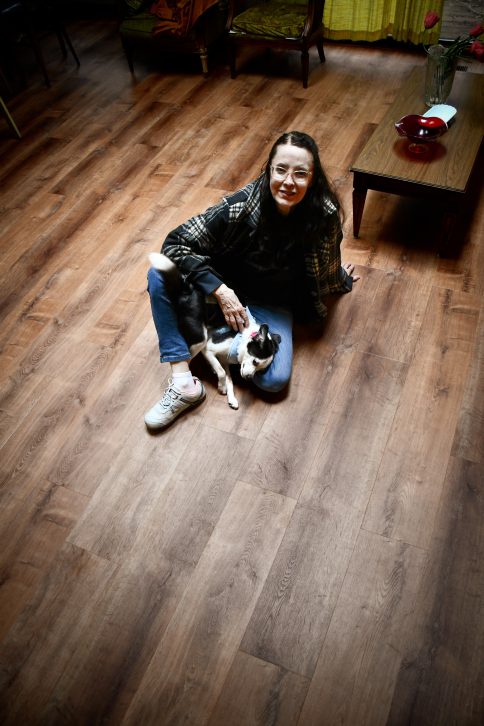
One of the main signs of wear in her home was the floors. The carpet was 40 years old and coming up in places, plus the smell from their service animals emanated throughout the space. Linda didn’t want to relocate because of the community of care she had established in her neighborhood and the health benefits it provided to her daughter. Now 25, her daughter can’t drive because of her condition, and having access to healthcare professionals, shopping, and safe walking spaces in their neighborhood is key to her health. 

“I’m 69-years-old, and I hope to stay here. I’ve been here since 2012 and I know a lot of the neighbors, and I go to church nearby,” Linda says. 

In looking for a way to replace her home’s flooring that was cost-effective, she found her way to Habitat SKKC via the City of Bellevue’s Home Repair Program. Once Habitat SKKC was brought in, the Repair Team fully replaced the carpet with vinyl plank flooring.  

“The carpet was old and worn, with lingering pet damage that went down to the subfloor. Our site staff also hauled a good amount of furniture to get access. I imagine that would have been quite a physical burden for Linda if she had to coordinate on her own,” explains Repair Program Manager Mae Amorin. 

Now that the project is complete, Linda and her daughter are enjoying their improved quality of life. 

Linda explains of the home improvement, “The work they did was so meticulous and amazing. It’s much easier to keep clean, and we can take pride in keeping it clean. It’s like a whole new life for us.”