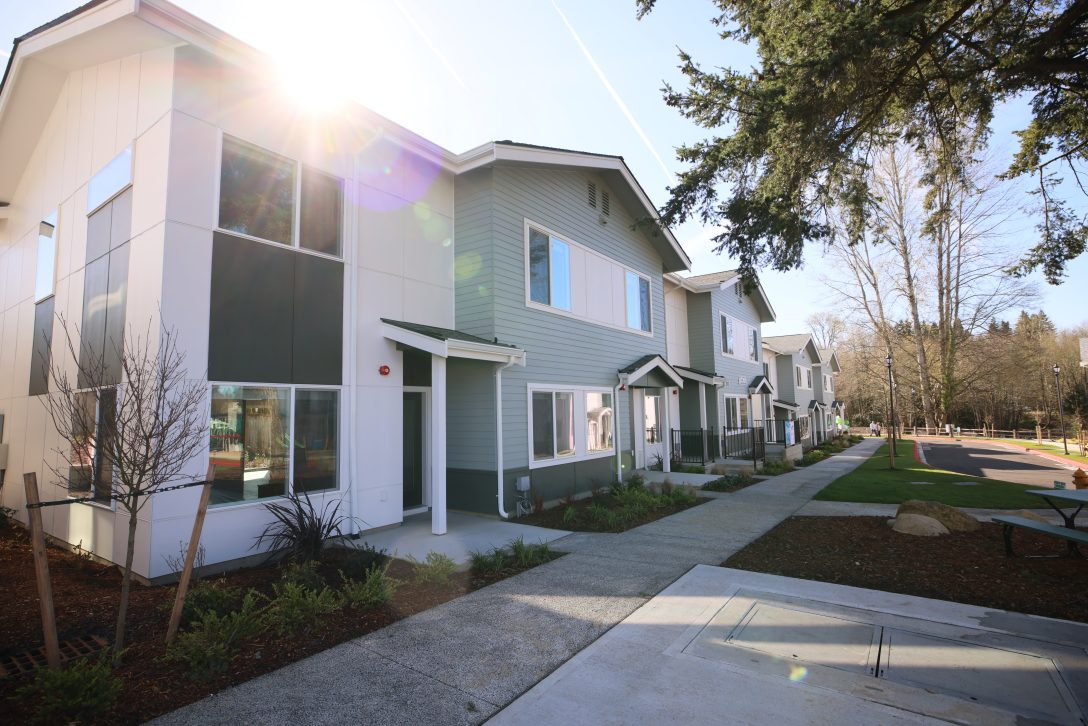
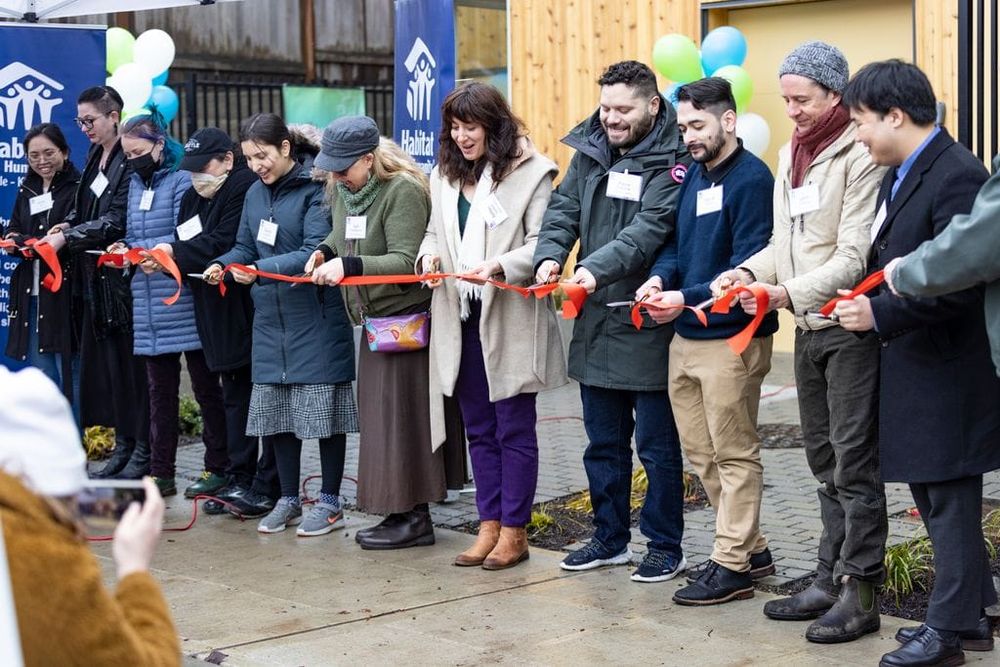
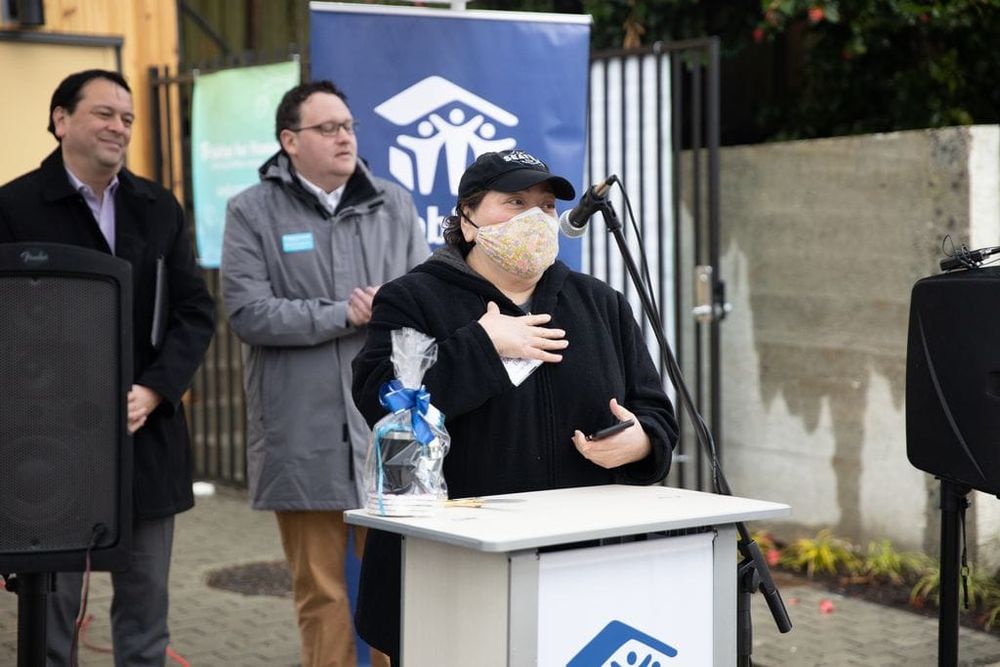
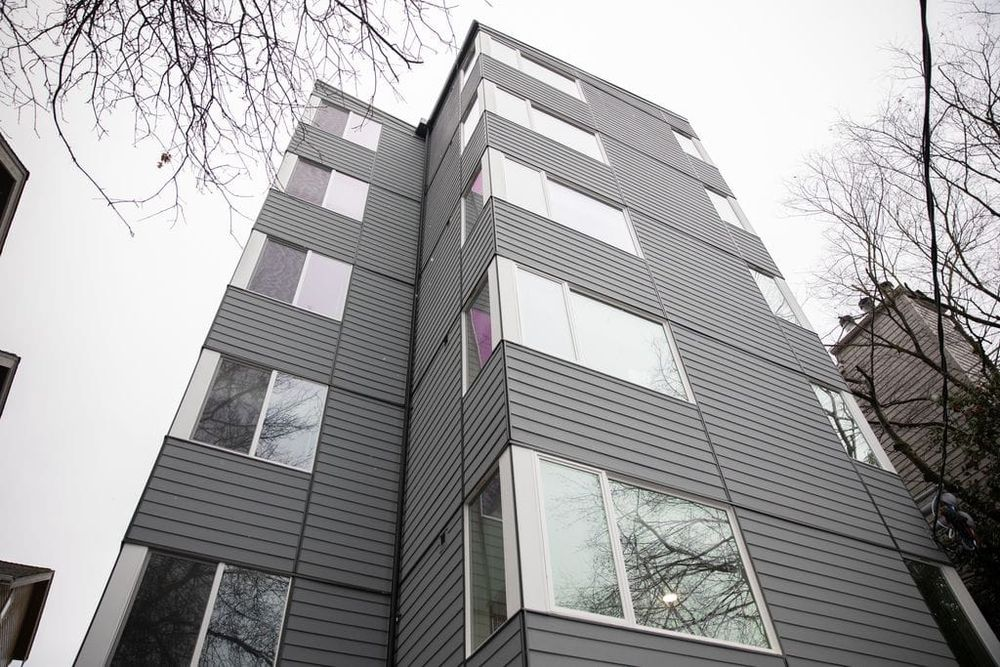
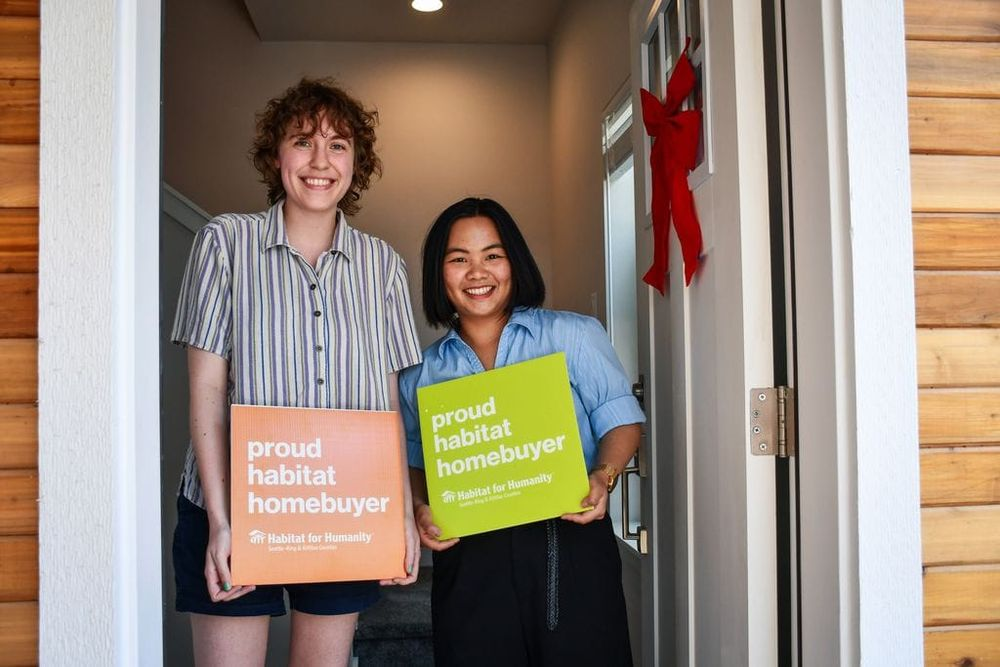
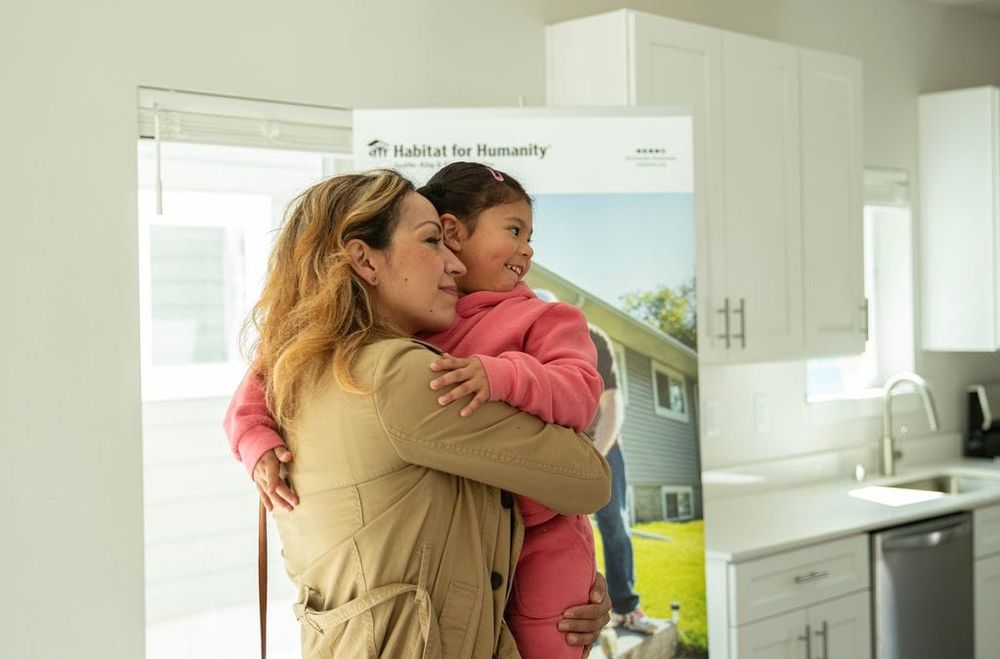
Habitat for Humanity Seattle-King & Kittitas Counties (Habitat SKKC) on Saturday celebrated the completion of Miller’s Creek, a 40-home affordable housing community in Burien aimed at serving low- to moderate-income families.
The development includes 3- and 4-bedroom homes of about 1,250 square feet, each with 1.5 bathrooms, as well as shared amenities such as a playground and green space.
The neighborhood is located within walking distance of schools, shops, and services in Burien.
Homes are reserved for households earning 80% or less of the area median income.
Mortgages are structured to remain affordable, capped at no more than 35% of a household’s income. The property will also be placed in a land trust to ensure long-term affordability.
Construction on the project began after a groundbreaking on Aug. 13, 2024, and was completed Feb. 11, 2026. During that time, 940 volunteers — including 48 groups — contributed more than 6,000 hours alongside Habitat staff and future homeowners.
The completion event is part of Habitat for Humanity’s national “Home is the Key” initiative and coincides with Habitat SKKC’s 40th anniversary.
Similar events are being held this month in Indianapolis, Orlando, Florida, New York, and Washington, D.C., to highlight the need for affordable homeownership.
In King County, where the average home price is about $675,000 and rising, Habitat SKKC officials say projects like Miller’s Creek are critical to helping families remain in the region.
The organization currently has more than 300 homes planned or under construction through 2030 and aims to serve more than 2,000 people over the next five years through affordable homeownership opportunities and home repairs.
This article, published in The Daily Record, was written by Brian Kelly.
It’s time to get to work.
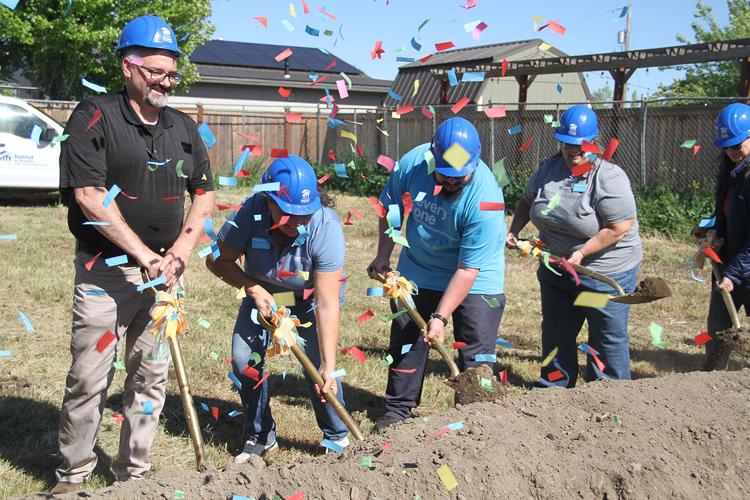
Habitat for Humanity broke ground for three new homes in Ellensburg on Thursday. But as officials grabbed shovels for the ceremonial turning of dirt, they also made the pitch for people to pick up hammers and help get the houses built in time for the new residents to enjoy their first holiday under their own roof in 2027.
“These homes will be built with love,” said Nick Nelson, Kittitas Senior Site Manager for Habitat for Humanity of Seattle-King and Kittitas Counties.
Nelson said he hoped some of that love would come from the volunteer sign-up sheets on a nearby table and made the call for more helping hands.
He asked for volunteers — from the community, businesses and churches — adding, “Bring a friend.”
The three homes will be raised on a vacant lot on South Willow Street, across the street from Mountain View Park. Habitat hopes to finish the homes — 975-square-foot units with two bedrooms and a bath — by fall of next year.
“They will take hundreds of hours. And I mean hundreds,” Nelson said.
“I don’t care about your experience level. I will find something for you to do. I promise you that,” he told the crowd gathered for the groundbreaking.
Stephanie Bohman, area director for Habitat for Humanity, said the residents of the project will have mortgages set no higher than 35% of their household income. Eligible residents must complete volunteer hours with the organization, as well as take homebuyer education courses.
Habitat officials joined with their partners from the city of Ellensburg, local businesses and community members for the June 4 ceremony.
“Welcome to 510 South Willow Street, where three families are going to build their homes,” Bohman told the crowd.
“Look around you: The people standing in this crowd today — that is how homes get built. By communities that decide its neighbors deserve better. That is how Habitat for Humanity has always been. And that’s what it’s about today,” she said.
Bohman noted that Habitat for Humanity is based on the belief that everyone deserves a decent place to live.
“This is a hand up, and in no way a handout,” she said. “We don’t build for people, we build with people.” Homeowners work alongside volunteers, putting sweat equity into the place they’ll call home.
Bohman also shared the challenges for people not only looking to find their first home, but having a place at all to live in an area with skyrocketing housing costs.
“Fifty percent: That’s how much rental prices have risen amongst our region in the last six years. Fifty percent,” she said. “For a family already stretching every dollar, that’s not a statistic. That’s a reality. That is a difference between staying in Kittitas County, or being pushed out of it.”
“The people being priced out are not strangers. They are our co-workers, they’re our neighbors, they are custodians at your kids’ schools, they’re the persons who make your coffee or bag your groceries.”
Habitat works to keep people in the community for the good of the community, she said, from veterans to retirees to single caregivers.
Since the organization’s merger in 2020 that established Habitat for Humanity of Seattle-King and Kittitas Counties, Bohman acknowledged the accomplishments that had already been achieved, like Stuart Meadows, an 18-home community of three-bedroom, single-family homes at Water Street and Bender Road.
She also praised the city of Ellensburg, the primary funder of the Willow Street development.
“That is community leadership,” Bohman said.
City Councilmember Delano Palmer said three families will soon become neighbors on Willow Street.
“These three houses that will be here are more than just the stakes in the ground and the dirt that you see here,” he said.
The future residents will have dinner-table memories of building their own homes from the ground up, Palmer said, and he thanked Habitat and other volunteers who will make the homes a reality.
“Ellensburg has always been a town where people show up for each other,” Palmer said, “and this is the next chapter of our story.”
A Habitat homeowner also thanked those who will help make real those words.
Dana B., who became a Habitat for Humanity homeowner in 2015, recalled moving to Ellensburg in 2014.
She was living with her son and daughter-in-law in a “very tiny house,” and the couple was expecting their third child.
She said she almost didn’t apply to be a homeowner with Habitat because she didn’t think she would be chosen. Besides, she added, there were others who were also looking for a place to live.
“I literally prayed … ‘God, give this to another family that needs it more than me,’” she recalled, her voice breaking with emotion.
She was selected for a Habitat home in Kittitas.
“My grandkids have filled it with memories,” she said.
Habitat gave her more than a home, she added.
“Don’t underestimate what you’re doing,” she told the crowd. “You’re fulfilling a lot of dreams.”
This article, published in The Urbanist, was written by Ryan Donohue.
Seattle’s housing solution can’t come at the expense of the people who need it most.
Seattle has a housing crisis. That’s not a controversial statement. It’s the one thing developers, affordable housing advocates, and city leaders all agree on. Where the agreement ends is what to do about it.
Becaley came to Seattle with a theater group, fell in love with the city, and decided to stay — even after her original opportunity fell through and she found herself living in a homeless shelter. She became a commercial bus driver. She put in her sweat equity hours. And she moved into a home on Capitol Hill, breaking what she calls a generational cycle of never owning a home.
Becaley’s home, and thousands more like it, exist because Seattle’s Mandatory Housing Affordability (MHA) program exists.
That matters, because MHA is now in the crosshairs. A coalition of nearly 30 developers calling itself the Seattle Housing Roundtable is asking the city to reduce MHA fees by 90% this year, tapering to a reduction of 75% over three years, with the goal of permanent reform. Their argument initially appears straightforward: fees are making projects financially unviable in an already brutal market, and without relief, Seattle’s permitting collapse will continue.
The slowdown is real. Permit applications last year were down nearly 90% from the 2020 peak. That should alarm everyone who cares about housing in this city.
But the argument doesn’t hold up under scrutiny. A comprehensive analysis completed in March 2025 by BERK Consulting found that cities without MHA-style programs saw similar production declines during the same period. Interest rates, construction costs, labor shortages, and tariffs are regional and national forces that Seattle cannot control. MHA fees are one line item in a complex financial equation. And there are likely some within the development community who would question whether even the proposed reductions would be enough to move stalled projects forward.
Worth noting, too: the market is already adapting. More developers are choosing MHA’s on-site performance option, building affordable units directly within their projects, rather than paying into the fund because it is more financially feasible in a tough market. In 2024, developers committed to 101 affordable homes through the performance option alone, the second highest total since Seattle’s MHA launched. The program isn’t freezing development; parts of the market are finding ways to successfully work within it.
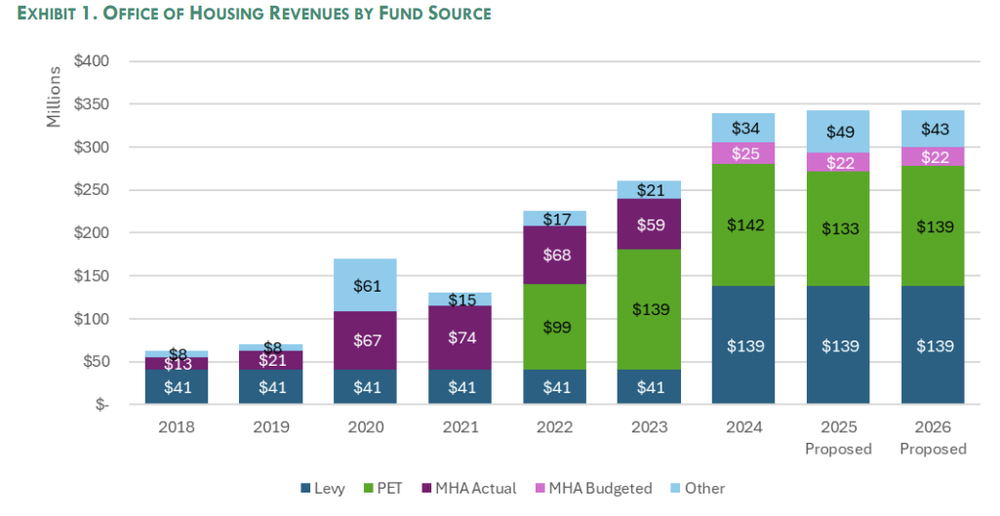
What a 75-90% fee reduction would do is cut the funding stream that built 4,595 affordable homes in Seattle from 2017 through 2024. Not projections. Not promises. Houses that exist today because the MHA exists, houses like the one Becaley calls home.
According to the Seattle Office of Housing’s 2025 annual report, MHA contributes roughly $60,000 per unit toward affordable housing production. At current collections of $22 million annually, that funds approximately 365 new affordable homes each year. A 90% reduction would bring that down to roughly $2.2 million, only enough to fund about 36 homes. That is not a recalibration, it’s a collapse.
The roundtable argues that without relief, development will stall entirely — making the current $22 million baseline irrelevant, and those 365 homes a year out of reach regardless. It’s a fair point to raise. But a 90% fee reduction is a speculative bet that reduced fees will unlock enough volume to offset what’s lost — and that assumption is far from settled, including among some in the development community itself.
MHA is also 85% of the way to its original 10-year goal of 6,000 affordable homes, a promise Seattle made to its residents when it struck the grand bargain with developers in 2017. This proposal doesn’t just slow that pipeline. It stops the clock on a commitment the city made and halts progress on a tangible solution to our housing affordability crisis.
At Habitat for Humanity Seattle-King & Kittitas Counties, we built 86 of the 105 MHA-funded homeownership units in this city: Olympic Ridge, Yarrow Townhomes, Yarrow Cottages, and Capitol View. These are not abstractions. They are communities where people like Becaley put down roots.
The developers asking for relief are not bad actors. They are facing a genuine problem and reaching for the closest lever. We understand that impulse, and we are not reflexively opposed to reform. If there are targeted adjustments that can help unlock production without gutting affordable housing funding, we want to be part of that conversation. There are good ideas about how fees are structured and when they are collected that deserve serious examination by the city and the development community together.
We are encouraged that those conversations are already underway, and we are hopeful they will produce a path forward that unlocks increased private development activity while honoring the commitment to affordable housing that MHA represents. That is a balance worth finding, and we hope to be at the table as the city, and the development community, both for profit and nonprofit, works toward longer-term reforms that serve everyone.
But the financial relief that a 90% fee reduction provides to market-rate development comes directly at the cost of the affordable housing pipeline and the people depending on it. That is not a tradeoff the city should make on behalf of the people the housing system has already failed.
Mayor Katie Wilson’s “taller, denser, faster” vision is the right instinct. Seattle needs more housing at every income level, and we share that perspective and sense of urgency. But density without affordability doesn’t solve the housing crisis. It just reshapes who gets to live here.
The goal was never just more units. It was a city where everyone, from the bus driver to, the nurse to, the warehouse worker, has a safe, decent, and affordable place to call home.
That’s the city Becaley chose to stay in, even when it was hard. It should stay worthy of that choice.
Ryan Donohue is the chief advocacy officer at Habitat for Humanity Seattle-King & Kittitas Counties.
This article, published in 425 Magazine, was written by John Stearns.
Bellevue-based nonprofit housing provider Imagine Housing is partnering with Habitat for Humanity Seattle-King & Kittitas Counties and the city of Kenmore to build a mixed-used development in downtown Kenmore that includes about 121 affordable-housing units through a mix of rentals and condominium-style homes, the parties announced Tuesday.
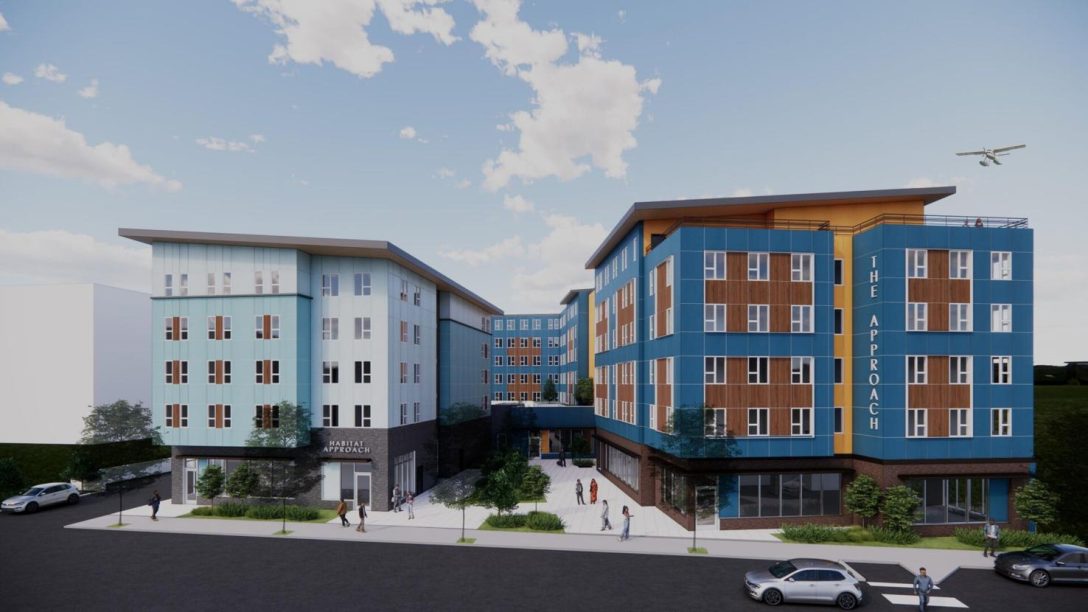
The Approach at Kenmore, to be located at 7010 NE. 181st St., is expected to include about 103 apartments consisting of studio, one-, two-, and three-bedroom units, and 18 homeownership units through Habitat for Humanity. Due to timing of funding cycles, groundbreaking is expected in about 2028, with units ready for move-in by early 2031.
The project, planned across 181st Street from Safeway, is on formerly underutilized land the city sold for $1.5 million at below-market value to Imagine Housing to advance the city’s priority for more affordable housing. The sale closed last month, according to King County records, which showed the 1.1-acre parcel was appraised at almost $3.2 million for the current tax year.
The Approach will be family-focused and include an expansive courtyard, rooftop terrace, community space, and activity spaces for children, according to a news release on the project. It will be Imagine Housing’s largest housing-development project to date, and one that’s creative for its structure that brings two nonprofits together with a municipality in a joint model of affordable rentals and homeownership.
“The Approach at Kenmore demonstrates that innovation and collaboration are key to the effort to build the inclusive, welcoming community we all want,” Yi Zhao, president of Imagine Housing, said in the release. “The city of Kenmore has prioritized housing access and Imagine Housing is thrilled to make good on that vision and bring nearly 120 affordable homes to Kenmore’s downtown core. Permanent affordable housing is central to our shared future. As a longtime Eastside resident — and as an affordable-housing success story myself — I’m especially proud to lead Imagine Housing into this partnership with the city of Kenmore and Habitat for Humanity.”
Imagine Housing is the largest provider of affordable housing based on the Eastside, where it builds homes and fosters stability for more than 1,500 people — families, veterans, single parents, youth, and adults — whose income is below 60% of the area median income, according to its website. It owns and operates 15 apartment communities across the Eastside and it also partners with developers to offer resident programming at three other communities that it does not own or operate.
Including The Approach, Imagine Housing has three projects in planning, including two in Bellevue — Forest Edge on St. Andrew’s Lutheran Church property and Peter’s Ridge on former St. Peter’s United Methodist Church property, both targeted for 2027 groundbreakings.
Kenmore is proud to partner with Imagine Housing and Habitat for Humanity on the project, Mayor Nigel Herbig said in the release. Herbig will proclaim May as “Affordable Housing Month” throughout the city at Monday’s City Council meeting.
Brett D’Antonio, CEO at Habitat for Humanity Seattle-King & Kittitas Counties, added in a statement that his organization “looks forward to contributing to Kenmore’s growth and community by providing affordable home-ownership opportunities in the heart of the city. Together with Imagine Housing, we will create a substantial development of affordable rental and ownership with community services in one location, which is quite unique. We are all in alignment with the belief that everyone deserves a safe, decent, and affordable place to call home.”
The announcement of the new affordable housing comes at a time when housing costs are stressing many families, as shown by figures in the 2025 Out of Reach report from the National Low Income Housing Coalition, which includes data on each state, including breakdowns by metro area and county.
Having a place to call home and stability for basic needs benefits everyone in the community, the release added.
Meanwhile, the St. Andrew’s project planned for Bellevue is notable for its connection to Imagine Housing. Under a 2024 blog titled “Back to Our Roots in a New Way,” Imagine Housing wrote, “Imagine Housing was founded in 1987 by a small group of highly passionate people who were members of Saint Andrew’s Lutheran Church and was called Saint Andrew’s Housing Group at that time. In partnership with the church, we are working to proceed in developing a community affordable for families and individuals on the east side of the church property. This brings us back to our roots in a totally new way, thanks to the advocacy of community members and Bellevue city leadership.”
This article, published in 425 Business, was written by John Stearns.
Bellevue-based nonprofit housing provider Imagine Housing is partnering with Habitat for Humanity Seattle-King & Kittitas Counties and the city of Kenmore to build a mixed-used development in downtown Kenmore that includes about 121 affordable-housing units through a mix of rentals and condominium-style homes, the parties announced Tuesday.
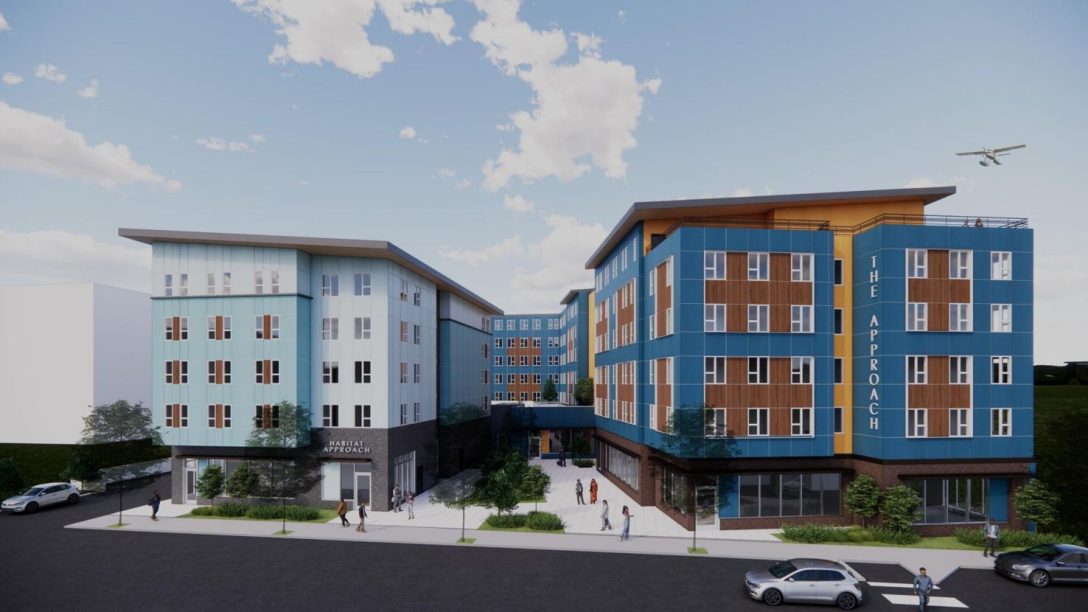
The Approach at Kenmore, to be located at 7010 NE. 181st St., is expected to include about 103 apartments consisting of studio, one-, two-, and three-bedroom units, and 18 homeownership units through Habitat for Humanity. Due to timing of funding cycles, groundbreaking is expected in about 2028, with units ready for move-in by early 2031.
The project, planned across 181st Street from Safeway, is on formerly underutilized land the city sold for $1.5 million at below-market value to Imagine Housing to advance the city’s priority for more affordable housing. The sale closed last month, according to King County records, which showed the 1.1-acre parcel was appraised at almost $3.2 million for the current tax year.
The Approach will be family-focused and include an expansive courtyard, rooftop terrace, community space, and activity spaces for children, according to a news release on the project. It will be Imagine Housing’s largest housing-development project to date, and one that’s creative for its structure that brings two nonprofits together with a municipality in a joint model of affordable rentals and homeownership.
“The Approach at Kenmore demonstrates that innovation and collaboration are key to the effort to build the inclusive, welcoming community we all want,” Yi Zhao, president of Imagine Housing, said in the release. “The city of Kenmore has prioritized housing access and Imagine Housing is thrilled to make good on that vision and bring nearly 120 affordable homes to Kenmore’s downtown core. Permanent affordable housing is central to our shared future. As a longtime Eastside resident — and as an affordable-housing success story myself — I’m especially proud to lead Imagine Housing into this partnership with the city of Kenmore and Habitat for Humanity.”
Imagine Housing is the largest provider of affordable housing based on the Eastside, where it builds homes and fosters stability for more than 1,500 people — families, veterans, single parents, youth, and adults — whose income is below 60% of the area median income, according to its website. It owns and operates 15 apartment communities across the Eastside and it also partners with developers to offer resident programming at three other communities that it does not own or operate.
Including The Approach, Imagine Housing has three projects in planning, including two in Bellevue — Forest Edge on St. Andrew’s Lutheran Church property and Peter’s Ridge on former St. Peter’s United Methodist Church property, both targeted for 2027 groundbreakings.
Kenmore is proud to partner with Imagine Housing and Habitat for Humanity on the project, Mayor Nigel Herbig said in the release. Herbig will proclaim May as “Affordable Housing Month” throughout the city at Monday’s City Council meeting.
Brett D’Antonio, CEO at Habitat for Humanity Seattle-King & Kittitas Counties, added in a statement that his organization “looks forward to contributing to Kenmore’s growth and community by providing affordable home-ownership opportunities in the heart of the city. Together with Imagine Housing, we will create a substantial development of affordable rental and ownership with community services in one location, which is quite unique. We are all in alignment with the belief that everyone deserves a safe, decent, and affordable place to call home.”
The announcement of the new affordable housing comes at a time when housing costs are stressing many families, as shown by figures in the 2025 Out of Reach report from the National Low Income Housing Coalition, which includes data on each state, including breakdowns by metro area and county.
Having a place to call home and stability for basic needs benefits everyone in the community, the release added.
Meanwhile, the St. Andrew’s project planned for Bellevue is notable for its connection to Imagine Housing. Under a 2024 blog titled “Back to Our Roots in a New Way,” Imagine Housing wrote, “Imagine Housing was founded in 1987 by a small group of highly passionate people who were members of Saint Andrew’s Lutheran Church and was called Saint Andrew’s Housing Group at that time. In partnership with the church, we are working to proceed in developing a community affordable for families and individuals on the east side of the church property. This brings us back to our roots in a totally new way, thanks to the advocacy of community members and Bellevue city leadership.”