How Faith Communities Can Help Tackle the Housing Crisis

Learn how to engage your community and congregation to address the affordable housing crisis. Join us on Tuesday, June 27th at 2 p.m. PT for a FREE Live Webinar:

“Accelerate Your Community Engagement, Activate Your Congregation While Addressing the Affordable Housing Crisis”

Register now to join Dr. Jim O’Farrell, Associate Faculty at City University of Seattle, Jess Blanch, AIA, Senior Program Director with Enterprise Community Partners and Rev. Kristin Joyner, Pastor of Community Engagement, Bothell United Methodist Church, for an insightful on-line live seminar to help you understand how you can enhance your community engagement and congregation excitement about solutions to the housing crisis..

During the webinar, you will gain insights into engaging your congregation and community in helping to address the affordable housing crisis here in the Puget Sound area.

This is the second webinar hosted by Dr. Jim O’Farrell, Jess Blanch, AIA, and Rev. Kristin Joyner. The group previously got together for an insightful on-line live seminar to help you understand how you can enhance your community engagement and congregation excitement about solutions to the housing crisis.

By watching the above webinar, you will gain insights into engaging your congregation and community in helping to address the affordable housing crisis here in the Puget Sound area. Here are some facts:

Fact 1: The median home price in King County, Washington, USA was $925,000 in December 2022, making it difficult for many low- and middle-income families to afford to purchase a home.

Fact 2:  A recently published report by the National Low Income Housing Coalition (NHLIC) says that the hourly wage required to afford a 2-bedroom apartment in the Seattle Metro area is $39.31.  https://nlihc.org/oor/state/wa

If you’re committed to engaging your congregation in working to help solve the affordable housing crisis but are unsure of how to get started, this webinar is a must-watch.

You’ll learn:

·         Tips for engaging your congregation and community with regards to helping with the affordable housing crisis     

·         Various opportunities unique to faith based communities when it comes to affordable housing solutions (e.g., partnering with Habitat for Humanity, Enterprise Community Partners)

·         Best practices for accelerating your initiatives for affordable housing projects
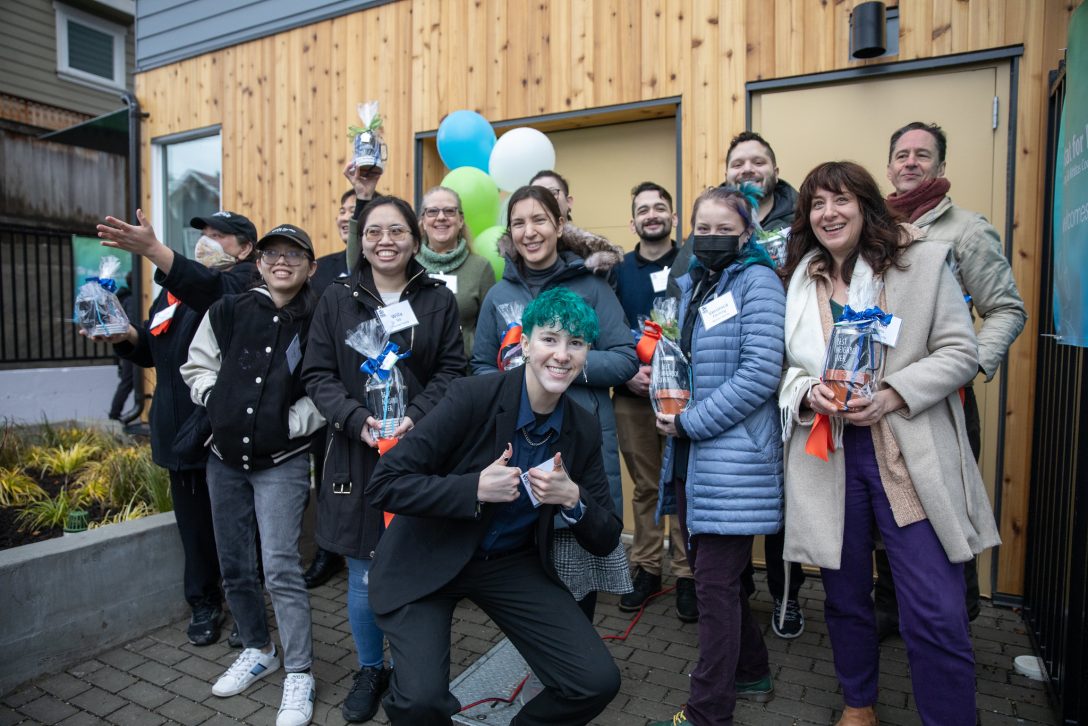
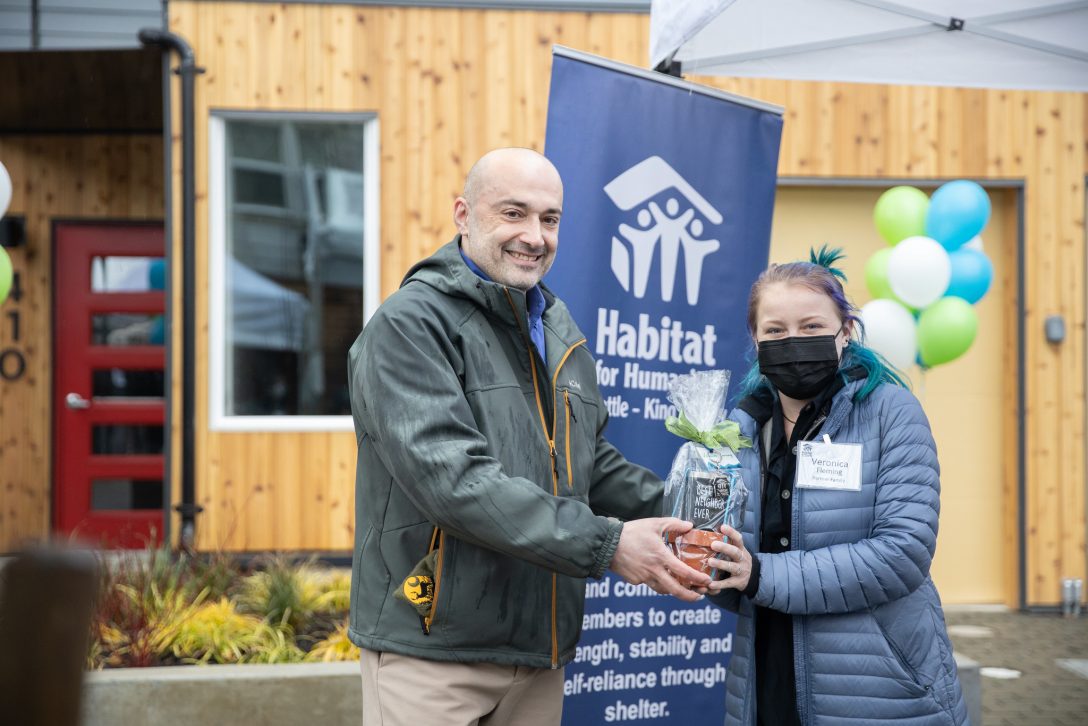
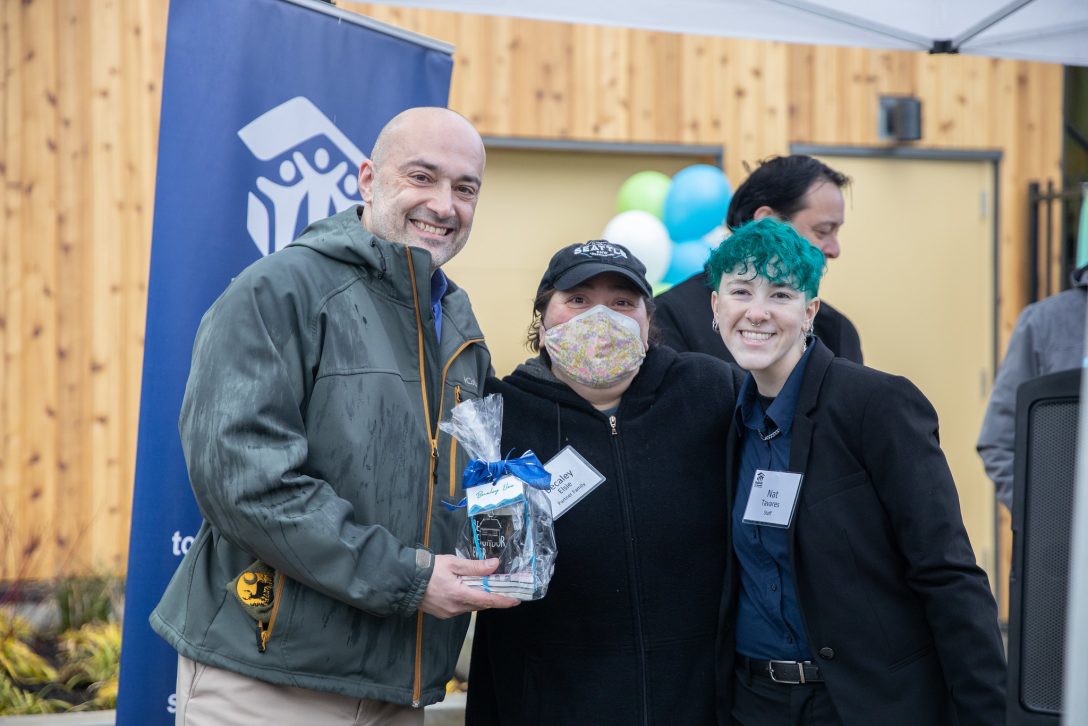
Habitat’s Capitol View Community Houses Women-Led Families

For 16 years, women from all walks of life, corporate and independent businesses and organizations have worked with Habitat for Humanity Seattle-King & Kittitas Counties to fund projects, build homes, and revitalize neighborhoods via the Women Build program.  Over the course of three weeks this year, from April 29 through May 13, working side-by-side with our homeowners and volunteers, women will once again empower one another and help to address the affordable housing crisis.  

Habitat’s recently dedicated community in Capitol Hill – Capitol View – is another in the growing list of examples of how women are supporting women to obtain safe, affordable housing in the region. Nine of the 13 new homes in the Capitol View development are now owned by women-led families.  For a virtual tour of the Capitol View development, follow this link: Capitol View Virtual Tour

Meet the Vo Family

When Willa Vo and her family accepted the keys to their Capitol View home on March 4, it was the reward for six years of hard work.  Willa and her family landed in Seattle from Vietnam, when housing prices were two-thirds below today’s.  Willa, her mother Truc, and sister Thalia worked hard and saved. Still, area home prices outpaced their efforts, making a market home purchase impossible. But Habitat’s Capitol View development revived their hopes for homeownership. “Habitat for Humanity helped me have a home with an affordable price,” says Willa. Today, she and her Mom have shorter commutes to their work in an Amazon fulfillment warehouse.  Thalia is a full time UW student, and they all pursue their love of exploring the region with the free time they’ve gained.  “We have our own completely-new-home, and the affordable mortgage allows us to save for our next dream – opening a restaurant.”

Veronica Fleming Helps Others with Housing

Veronica Fleming moved from Atlanta to Seattle in summer 2021 with a freshly earned bachelor’s degree in psychology and a new job as a Housing Social Worker. She quickly fell in love with the city, especially Capitol Hill. However, when she arrived in Seattle, she learned homeownership was beyond her financial reach…until she found Habitat. Today, Veronica enjoys her own home in the Capitol View development. From her work with housing, she’s keenly aware of the important role housing stability plays in the stability of life overall. She already enjoys the reduction in anxiety that comes with permanent, stable, affordable housing and the welcome impact it’s having on her mental health. “Owning my own home brings me stability, not just rent stability but consistency and lack of fear of leases ending.” And Veronica now has easy access to all there is to discover in and around the city from her Capitol Hill home.

Resilience is Becauley Elsie’s Super Power

Becaley Elsie could be a poster child for resilience.  She came to Seattle from Phoenix, AZ  to work with a theater group. When that opportunity evaporated, she found herself homeless and jobless for a short time, but she was already in love with the city and determined to stay. She found a job as a commercial bus driver while completing her sweat equity hours and preparing to move into her new Capitol View home.  Becauley and her four ‘cat daughters’ accepted the keys to their new home on March 4, delighted for the space to “chase anything that moves,” and the room to host her beloved nephew when he visits. Today she’s concentrating her efforts on a career in podcasting, art, stand-up, and running workshops to heal trauma, while pursuing her passion for small theater. She specializes in the healing process and hopes to expand her reach to help more people. She’s happy to be living in the city where she’s close to the arts and diversity. With her Habitat home, Becauley happily declares, “I am breaking a generational cycle of never owning a home.”

These women and the others currently housed in the Capitol View community have benefited directly from the efforts of other women through Women Build.  This year’s two-week event culminates with a Women of Impact Build on May 6, where volunteers come together to build new affordable homes for hardworking, low-income families at a local project.

It’s not too late to sign up for a spot at Women Build – click here for more information: Habitat for Humaniity SKKC Women Build

KING 5: Women Build kicks off for Habitat SKKC

Linda Hoffner, a senior property manager at Wright-Runstad and an ardent supporter of Habitat SKKC, joined KING 5 on Sunday morning to promote Women Build. Click the link to watch the video.

Women Build provides a space where women can come together to learn construction skills while making a meaningful impact in their community. The initiative aims to empower women to break down gender barriers in the construction industry and take on leadership roles in the workforce.

Women volunteers, both experienced and novice, are given the opportunity to learn a wide range of construction skills, including framing, roofing, siding, and finishing work.

In addition to providing an opportunity to learn valuable skills, Women Build also creates a supportive community of women who are passionate about giving back to their community. Women who have participated in the initiative have reported feeling more empowered, confident, and connected to others.

The impact of Women Build extends beyond the women who participate in the program. The homes built by Habitat SKKC are sold to families in need at an affordable price, providing stable and safe housing to those who might not otherwise be able to afford it. The initiative also helps to strengthen communities by creating more affordable housing options and by bringing together individuals from different backgrounds to work towards a common goal.

Habitat Repairs Support The Spirit of Giving

“The world would be so much better if we all would just take care of one another, and you folks have taken care of me.” That’s what Alesia Cannady has to say about the repairs Habitat for Humanity SKKC volunteers completed on her Skyway home last year. 

Alesia practices what she preaches. She is the founder and Executive Director of Women United Seattle, a group that supports grandmothers who are raising their grandchildren. The organization’s multiple programs reflect Alesia’s creative approach to helping others. Alesia started her work nearly 30 years ago when she discovered a neighbor in need: a mother of two recently abandoned by her husband. “She didn’t have anything,” Alesia recalls, “so I took my boys’ bunk beds to her, an extra mattress I had, so she’d have a bed, and a little TV, so her kids would have something to do.” That was what she calls her first ‘woman in crisis,’ and the ad-hoc beginning of Women United Seattle.

At first, she used her own money to help women pay rent in emergencies. She took in and raised her sister’s newborn daughter and seven-year-old sister. From that experience she learned the challenges of single parenting for a second time after raising her two sons. When her youngest son and his drug addicted girlfriend got pregnant, Alesia was called upon again to raise a child, her granddaughter,Aleiyah. “That opened a door for me,” says Alesia, “though I didn’t realize it at the time.” Aleiyah became the inspiration for the Angel of Hope Engagement Center, hosted in Alesia’s home, where grandmothers now come for personal, and spiritual support, programs and events. Alesia continues to expand the program with help from King County, Seattle Foundation, Champions of change and generous donors. 

When a friend learned that Alesia’s railings and entrance were unsafe for the mobility-impaired women visiting the Engagement Center, she contacted Habitat, and, “They called me right away,” Alesia says with glee. She is delighted at the quality of the improvements Habitat volunteers made to her front and back entrances and the access areas up to a gathering cottage in her backyard. Of course, she befriended the volunteers. “They smelled the catfish I was cooking one day and came inside to share it. After that they came back to help me set up the Winter Wonderland event in my backyard … and they stayed.” She now claims those Habitat volunteers as part of her family.

The repairs Habitat made to Alesia’s house were finished quickly and, she adds, the volunteers took extra care to assure the paint matched her house, so the entry is beautiful as well as strong. The work Habitat did on Alesia Cannady’s home isn’t confined to that place. The benefits will radiate throughout her community as her work impacts multiple families. “We must keep sharing our knowledge with others who’ll be caregivers, even after our grandchildren are grown, so there will always be people here to help one another.” To learn more about Habitat SKKC’s Repairs program or if you know someone who is in need of critical home repairs, please visit: https://www.habitatskc.org/what-we-do/home-repairs/

Sightline: Habitat for Humanity Goes All In for Multifamily Housing

According to Ryan Donohue, there is only one way to solve the shortage of affordable homes in Washington: widescale zoning reform that legalizes multifamily housing without onerous parking mandates, and an influx of public funding to match.  

“If we don’t solve both of these problems, we will never be able to solve the housing crisis,” explained Donohue, the Chief Advocacy Officer for Habitat for Humanity Seattle-King & Kittitas Counties (“Habitat SKKC”), Washington’s largest Habitat for Humanity chapter.  

All across Washington state, people need more homes of all kinds. One million more, the Department of Commerce estimated, by 2044. But local exclusionary zoning laws adopted by city and county governments between 1920 and 1980 have restricted homebuilders’ ability to meet demand. Bans on apartment buildings, townhomes, and duplexes, combined with costly parking mandates, have contributed to Washington having the fifth worst undersupply of housing in the United States.  

Visit the link to read the full story.