Demystifying the Homebuying Process

April is Fair Housing Month, a time that commemorates the passage of the Fair Housing Act of 1968. This landmark legislation prohibited housing discrimination based on protected characteristics including race and national origin, opening up access to housing to more people. While great strides have been made to help make purchasing a home more accessible to all, it’s not always clear where to start. 

Habitat SKKC helps individuals and families find affordable homes, whether they’re looking for a starter home to build their future or a long-term place to put down roots. Below are answers to some of the most common questions about finding affordable homeownership opportunities through Habitat SKKC. 
Where do I find affordable homeownership opportunities in Washington state? 

While most look to websites like Zillow or Redfin to begin their search, if you’re reading this, you could be home now! We have affordable homeownership opportunities in King and Kittitas Counties. You can learn everything you need to know about homes we currently have available at buyhabitat.org. 

How does the homebuying process work at Habitat SKKC? 

While there are a few steps along the journey to affordable homeownership, Habitat SKKC staff will guide you throughout the process: 

  • Ability to Pay: Applicants must demonstrate that they can afford the home’s mortgage payment without being cost-burdened. This includes having at least 1% of the purchase price set aside at the time of application. 
  • Residency: Applicant must live or work in the county they are applying in, must not have owned a home within the last three years, and must use the home as their primary residence. 
  • Willingness to Partner: Buyers must fulfill six partnership activities, including volunteering at Habitat construction sites or stores, speaking at a Habitat fundraiser or advocacy event, or giving an interview for print and digital storytelling. Additional activities are available. 
  • Once you understand the selection criteria, choose the home you’re interested in and fill out an application. (Applications are for specific homes, not our homeownership program in general.) 
  • If you qualify, you’ll have an opportunity to meet with Habitat SKKC staff to review your specific financial obligations, including your estimated monthly payments and up-front cash contribution, for your home purchase. 
  • If you are selected for a home, you’ll be connected with one of our approved lenders to apply for a mortgage. 

How do I prepare for homeownership? 

Habitat SKKC offers some homeownership readiness education to those enrolled in our program. Resources are also available on our YouTube channel. 

Several government and nonprofit websites also provide resources: 

Are there any special programs that could help me with homebuying? 

  • Black Homeownership Initiative (BHI): Many organizations working in the affordable homeownership space acknowledge the historical housing discrimination that has kept too many people locked out of homeownership. One of our key advocacy partners, the Black Homeownership Initiative (BHI), is a network of nonprofits, companies, government bodies, and associations focused on increasing Black homeownership. The BHI has set a goal of achieving 1,500 new Black homeowners in South Seattle, South King County, and North Pierce County within the next five years. A signature achievement of the BHI network is the Covenant Homeownership Program, which aims to right historical housing injustices by offering downpayment assistance to homebuyers with a family history in Washington dating back to before the passing of the 1968 Fair Housing Act. Learn more about program eligibility here. 
     
  • Debt Barrier Removal Program (DBRP): Every Habitat homeownership applicant is automatically screened for this program, and eligible applicants could have their debts paid off by Habitat SKKC, up to $50,000.  
     
  • Veteran’s Down Payment Assistance Program: Habitat SKKC offers down payment assistance, up to $150,000, exclusively for veteran buyers of Habitat homes. This includes a 0% deferred loan due upon transfer or sale. In an effort to prioritize veteran homeownership, Habitat SKKC reserves homes for veteran buyers and offers additional points in our selection process for veteran status. 
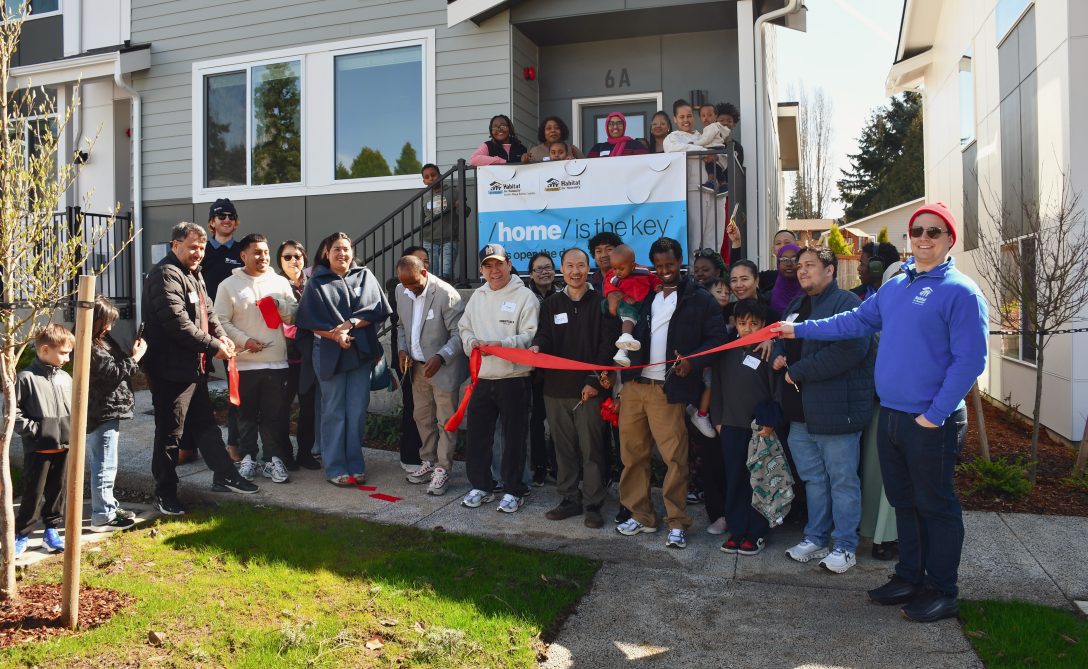
Welcome Home: Habitat SKKC Celebrates Completed Miller’s Creek Neighborhood

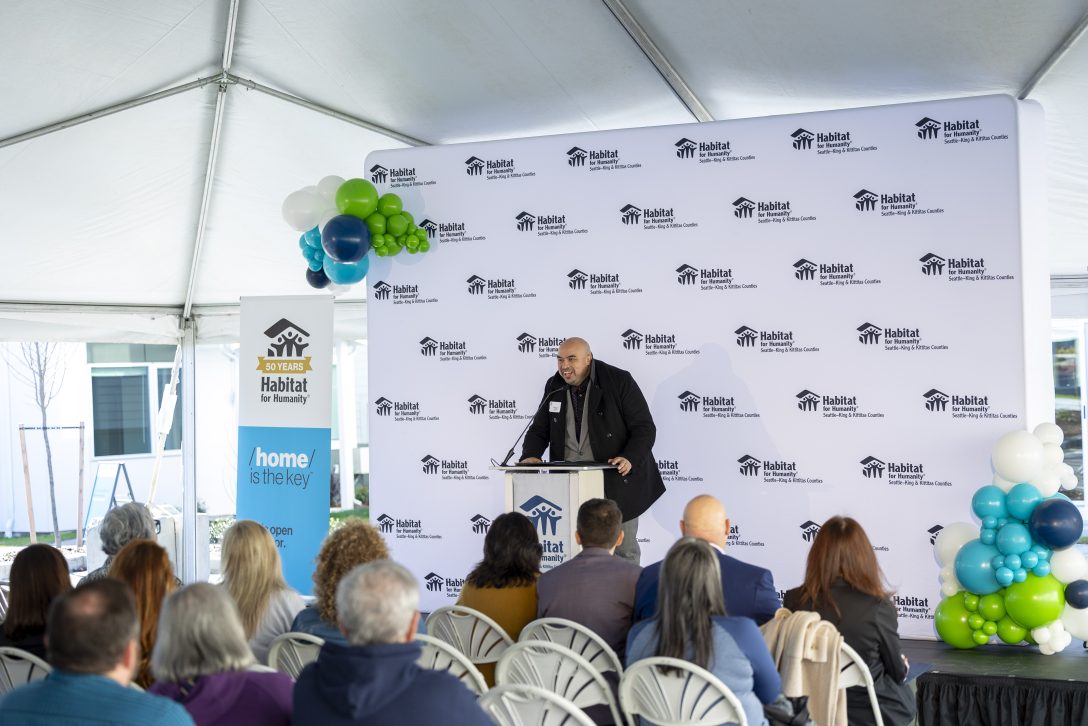
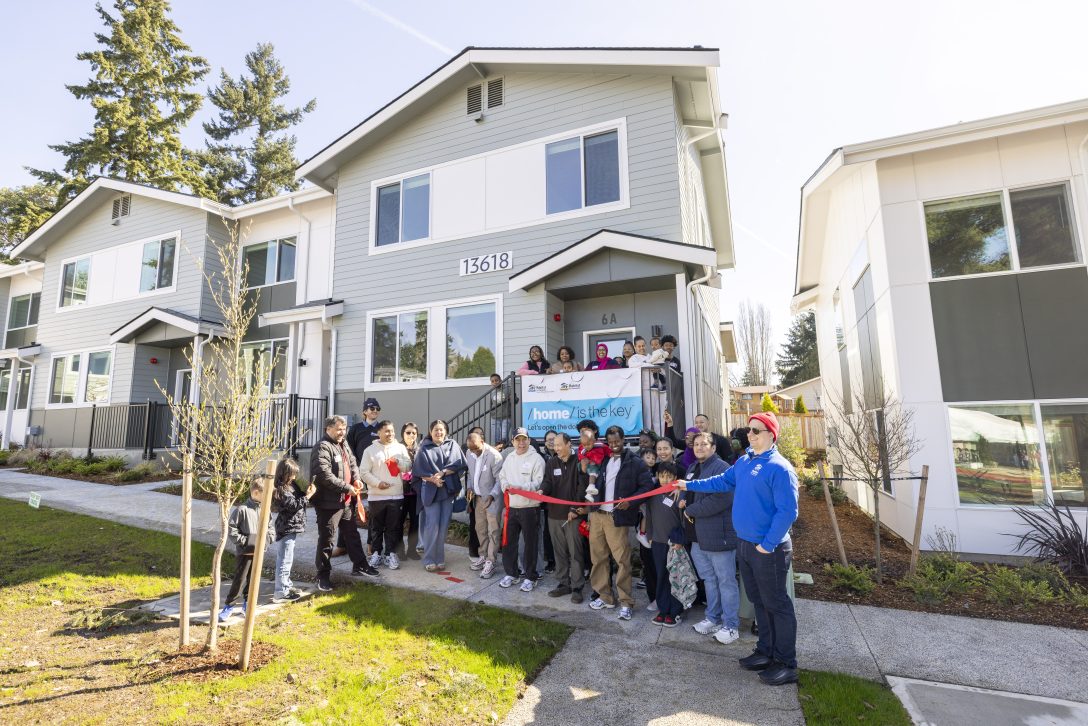
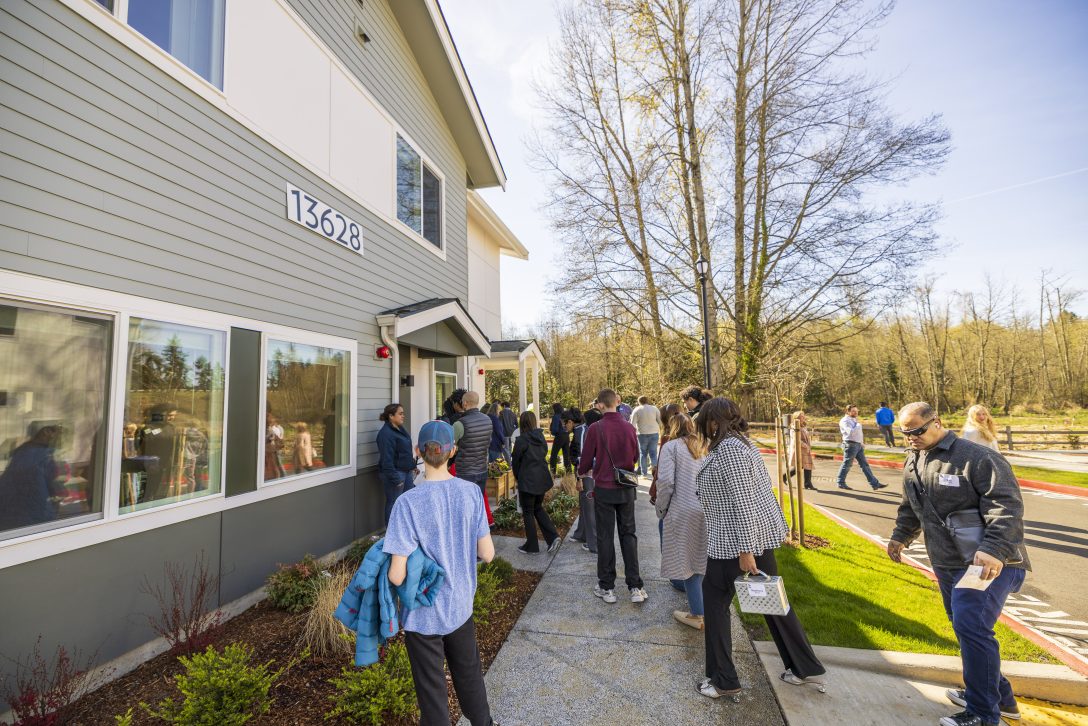
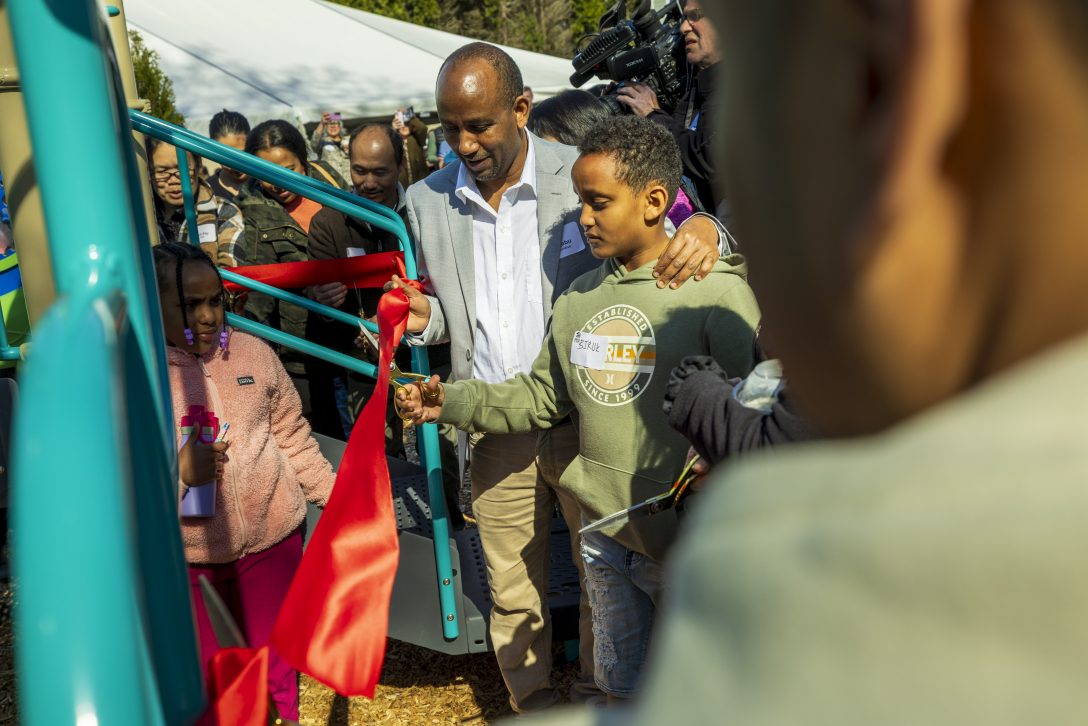
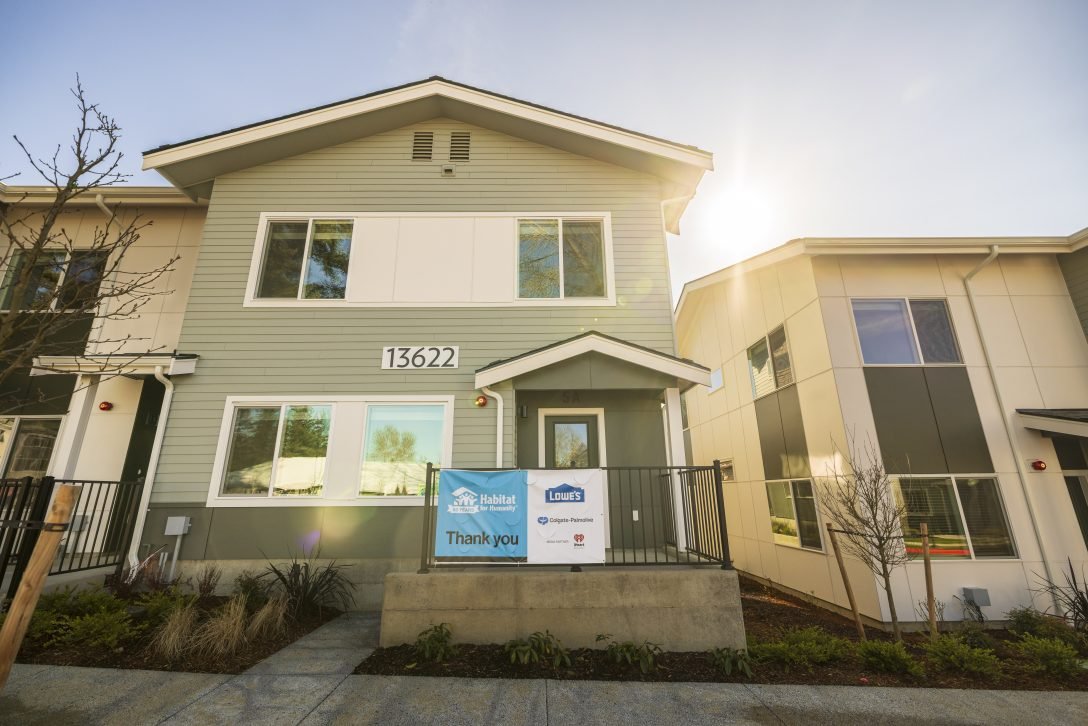
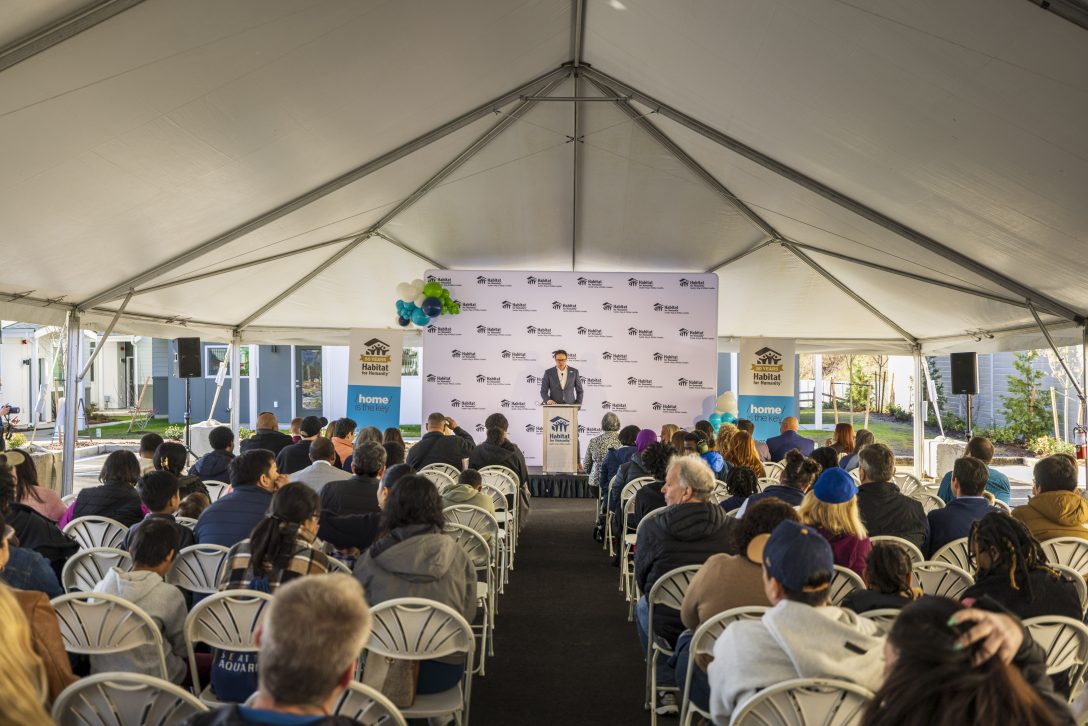
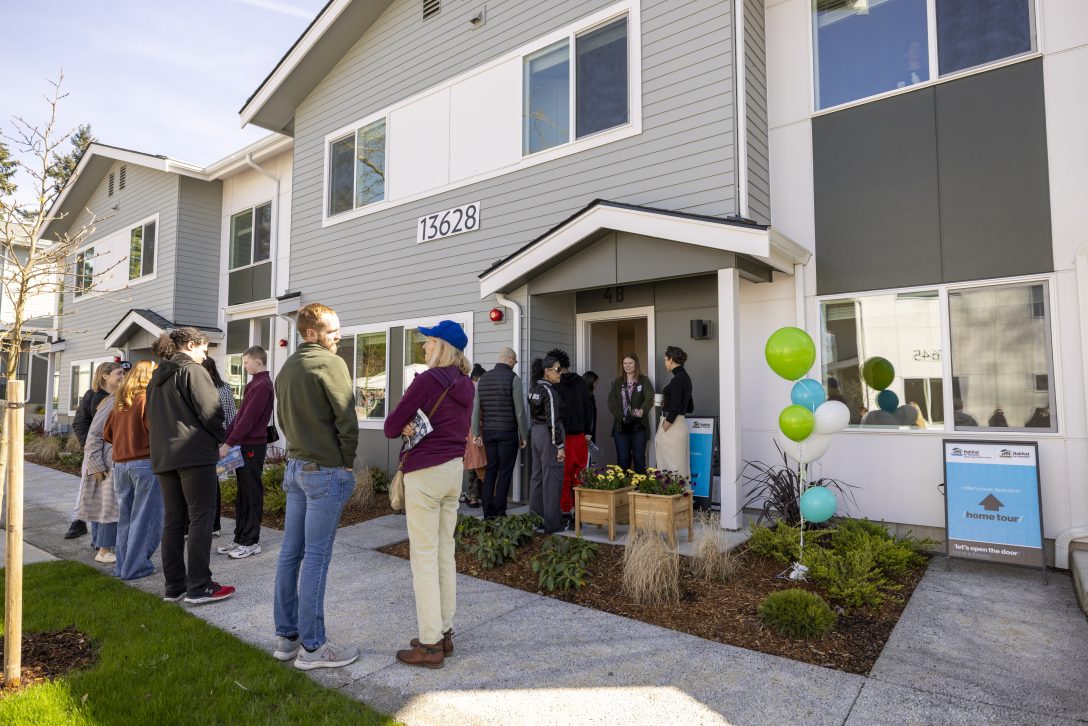
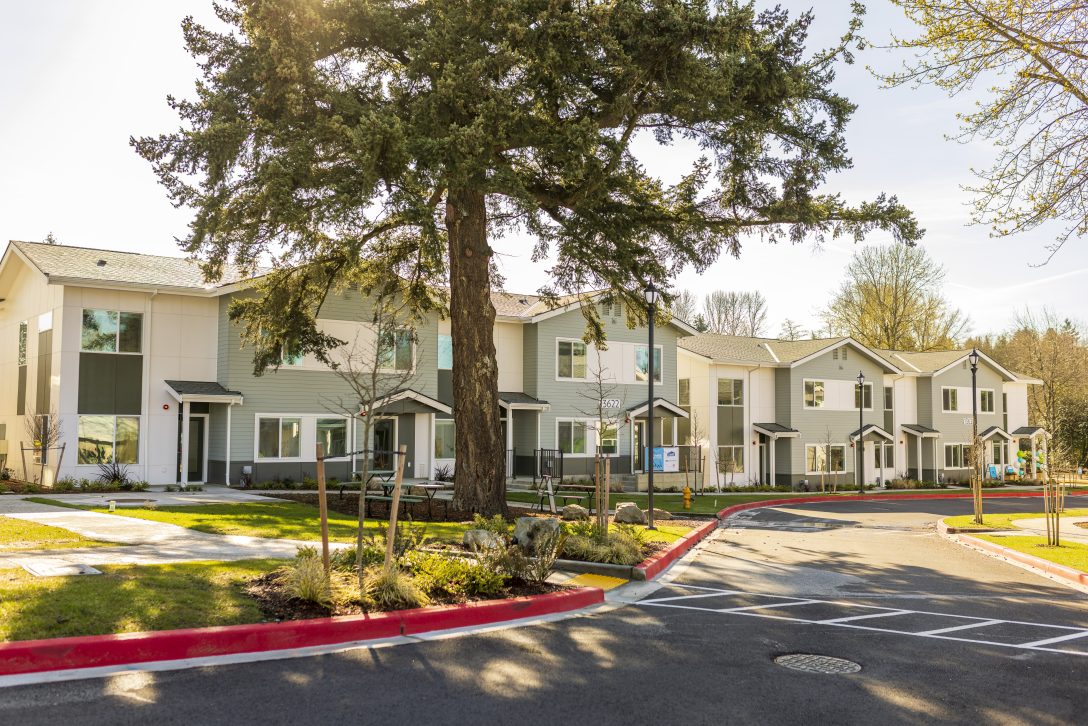
On Saturday, April 4, 2026, Habitat SKKC welcomed its newest partner homeowners and families to celebrate the completion of the new Miller’s Creek community in Burien. The event, part of Habitat for Humanity International’s Home is the Key initiative, brought together families, partners, volunteers, and supporters to mark the milestone completion of 40 homes during Habitat SKKC’s 40th anniversary year. 

This project is part of an ongoing commitment to creating abundant affordable housing across King and Kittitas Counties. Miller’s Creek will be added to Habitat SKKC’s portfolio of homes utilizing the land trust model, maintaining permanent affordability for future generations. If a homeowner chooses to sell their home, Habitat SKKC ensures the home remains affordable for the next income-qualified buyer. 

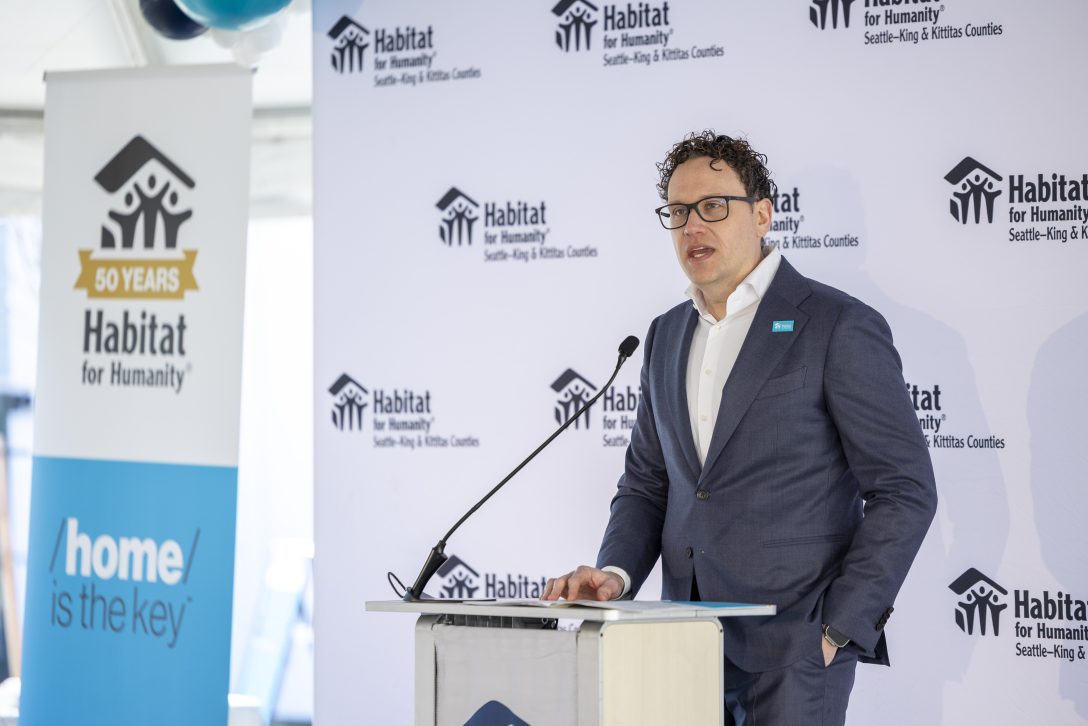
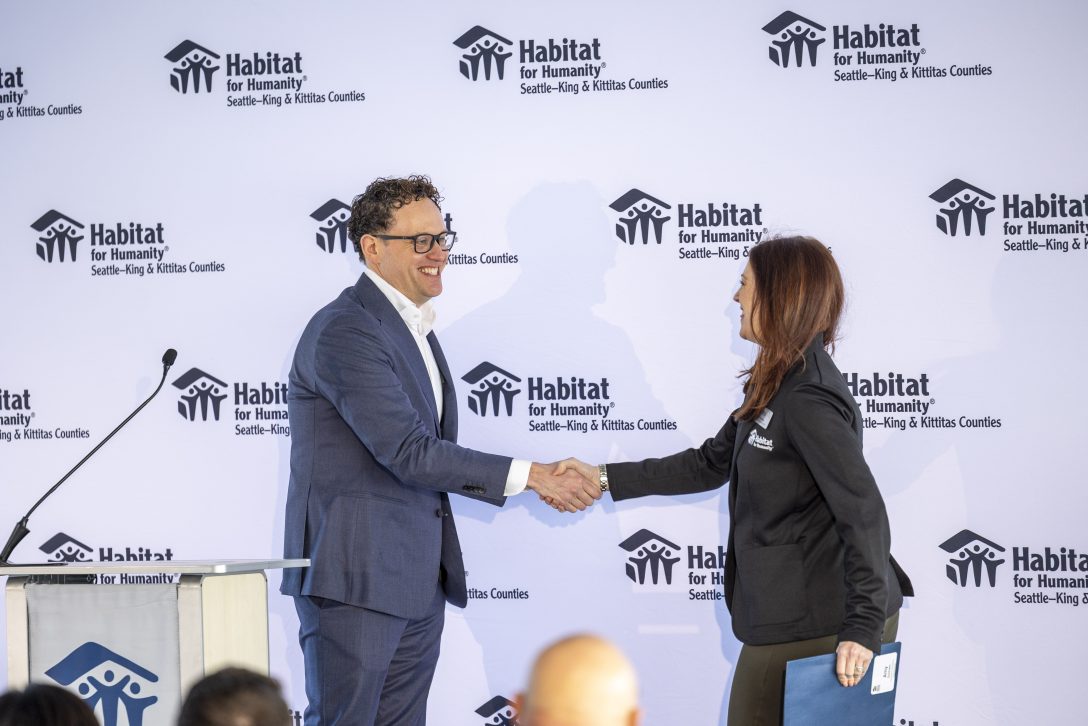
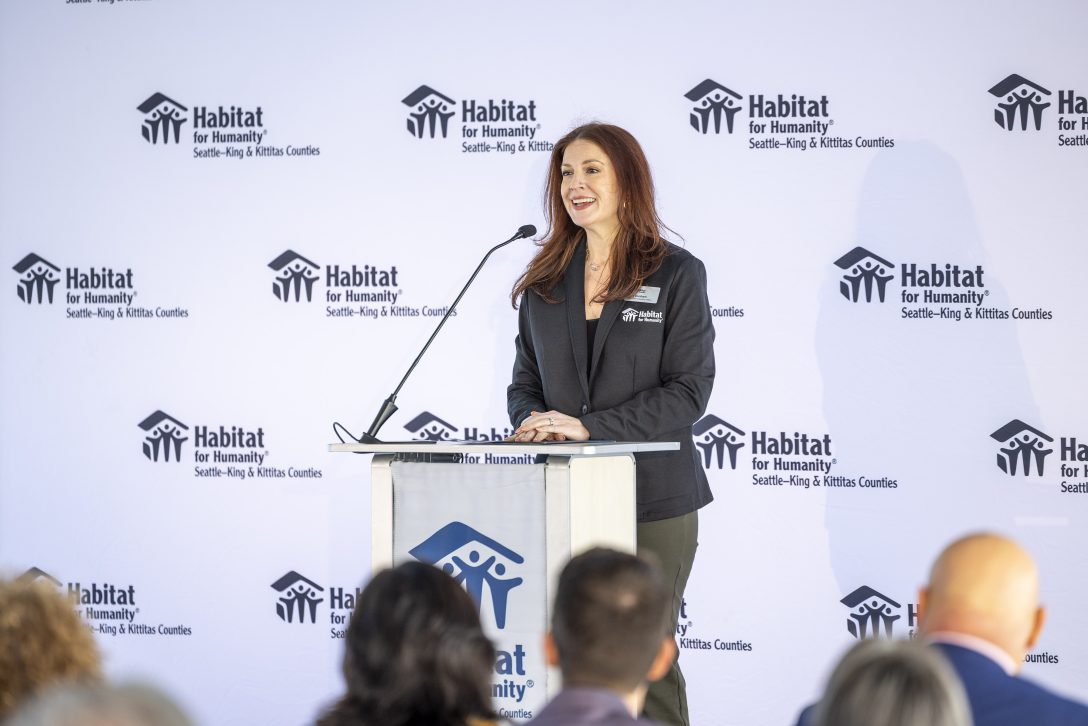
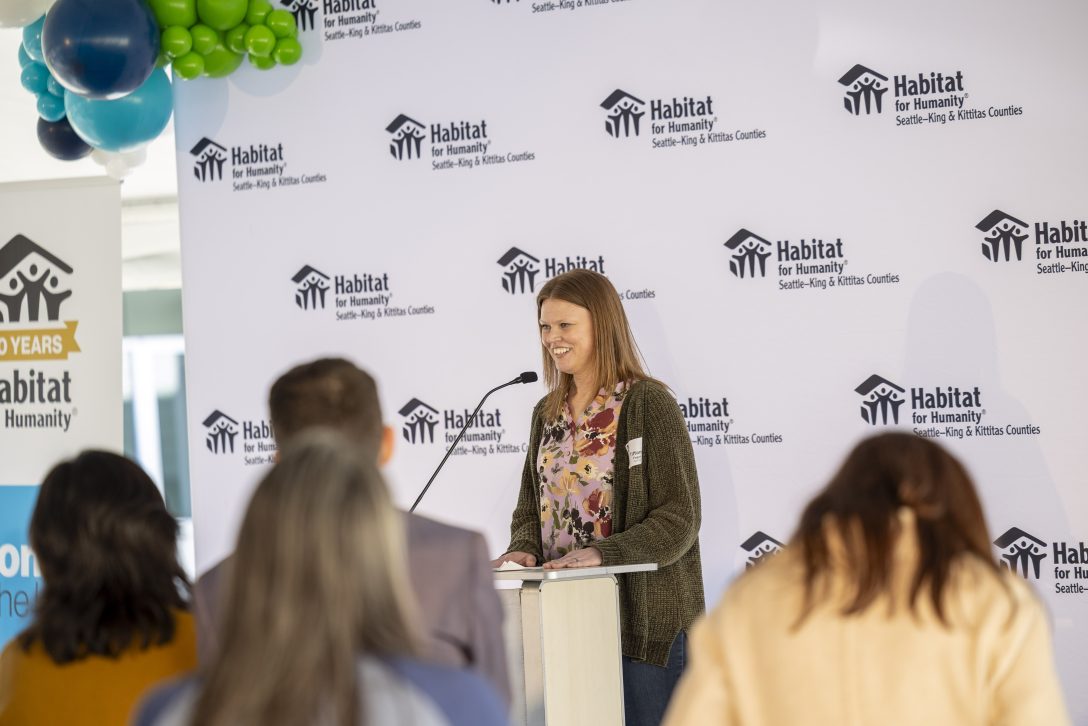
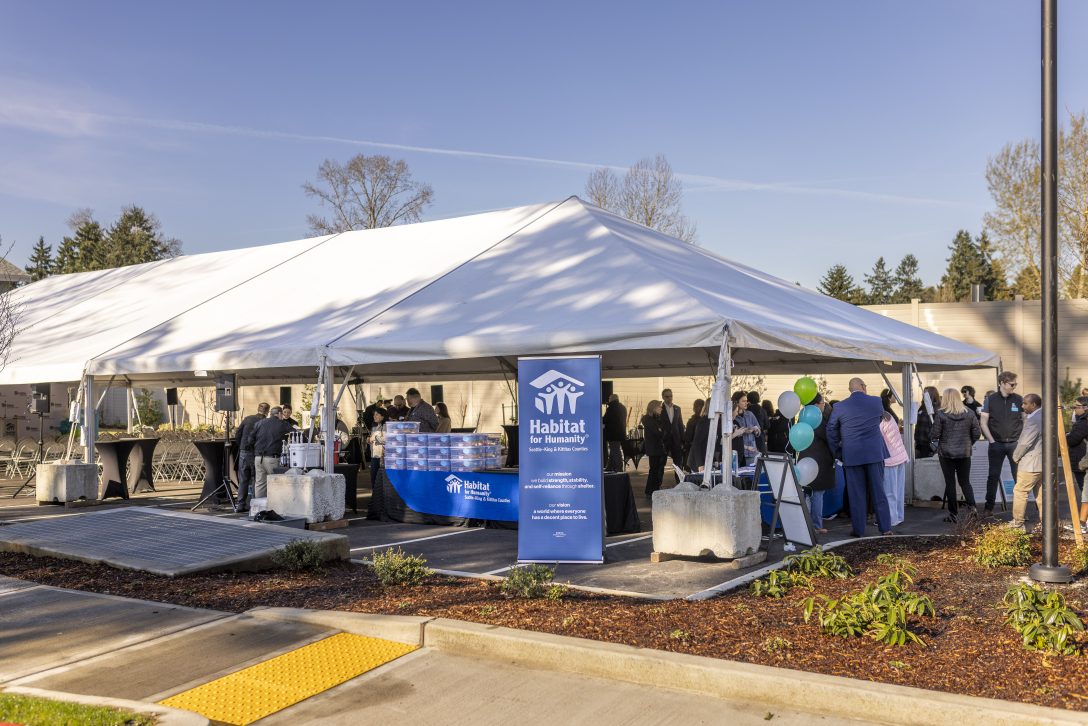
At the neighborhood dedication, over 170 people gathered to hear from a lineup of speakers that included Habitat SKKC CEO Brett D’Antonio and Habitat for Humanity International’s (HFHI) Amy Dunham, who both reflected on the need for collaboration to address the housing crisis. Dunham, HFHI’s Chief Communications Officer, put it succinctly: “One in three humans wake up without a safe, decent home. Partnership is how we address this problem.” 

During his speech, D’Antonio thanked all the community, governmental, and corporate partners who helped make this neighborhood a reality, again acknowledging how crucial our network is to bringing these projects to fruition. He also remarked upon the relationships that have already formed between homebuyers: “Miller’s Creek is more than a neighborhood. It represents forever homes for 40 families. Everyone moving into Miller’s Creek has already begun building a sense of community within Habitat and, more importantly, with each other as neighbors.” 

During his remarks, Burien’s Deputy Mayor Hugo Garcia reminded the new residents of Miller’s Creek that he is not only an elected official, but also their neighbor. Garcia reflected on his adolescence in Burien and how he wouldn’t have risen to his role as Deputy Mayor if it hadn’t been for the stable home he grew up in. He ended his remarks to the Miller’s Creek community, “You chose Burien, and Burien is glad you’re here.” 

New Habitat homeowner Tiffany F. shared her deeply personal story of facing homelessness when mold was discovered in her home. After she and her children lost nearly all their belongings, Tiffany’s resilience led them to Habitat SKKC and turned her into a first-time homeowner. In her speech, she triumphantly addressed the other Miller’s Creek residents, saying, “To the other families here: We are not just neighbors. We are a community. We share a unique bond because we understand what it means to fight for stability and to finally achieve it.” 

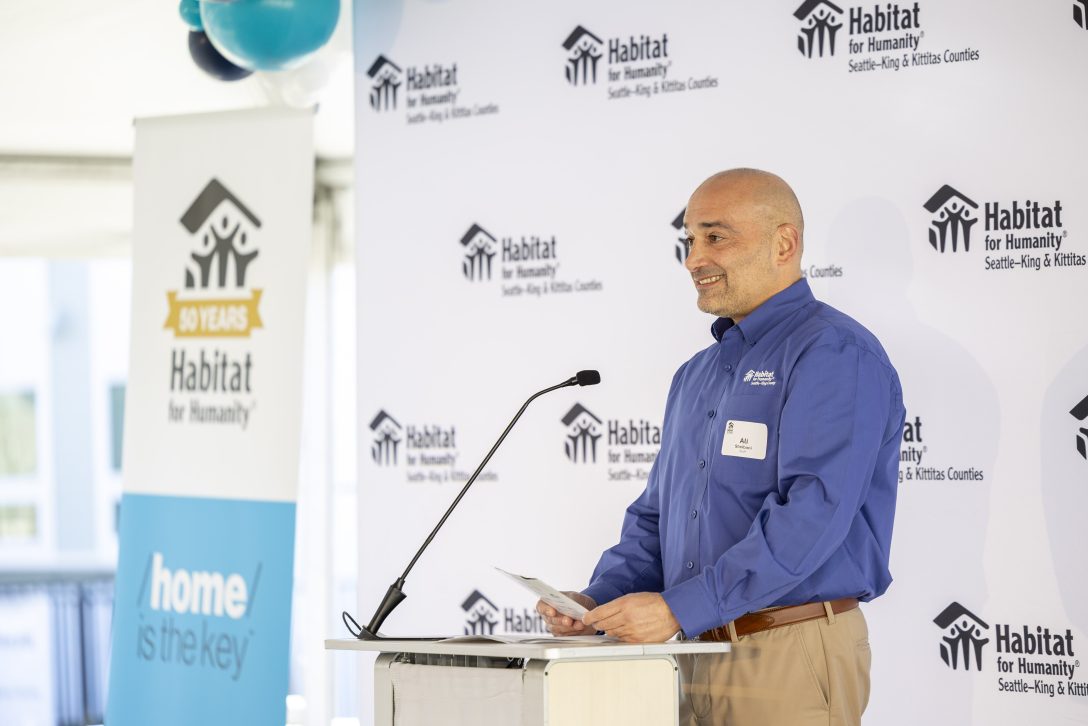
Before Ali Sheibani, Director of Homeowner Services at Habitat SKKC, led the dedication of the neighborhood, he reflected on the journey that turned homebuyers into owners: Preparing their finances, volunteering with Habitat, getting to know each other at “Meet Your Neighbor” events, and taking homeownership workshops. He added, “They have been a part of our growth just as we have been a part of theirs.” 

Growth is evident in the 40-unit Miller’s Creek neighborhood. In the early days of Habitat SKKC, home dedications were held for a single house instead of an entire neighborhood. Back when the affiliate completed its first home, the construction goal was to finish another 40 houses over the next 20 years. Fast forward to the present day at Miller’s Creek: 40 built homes from the ground up in under two years!   

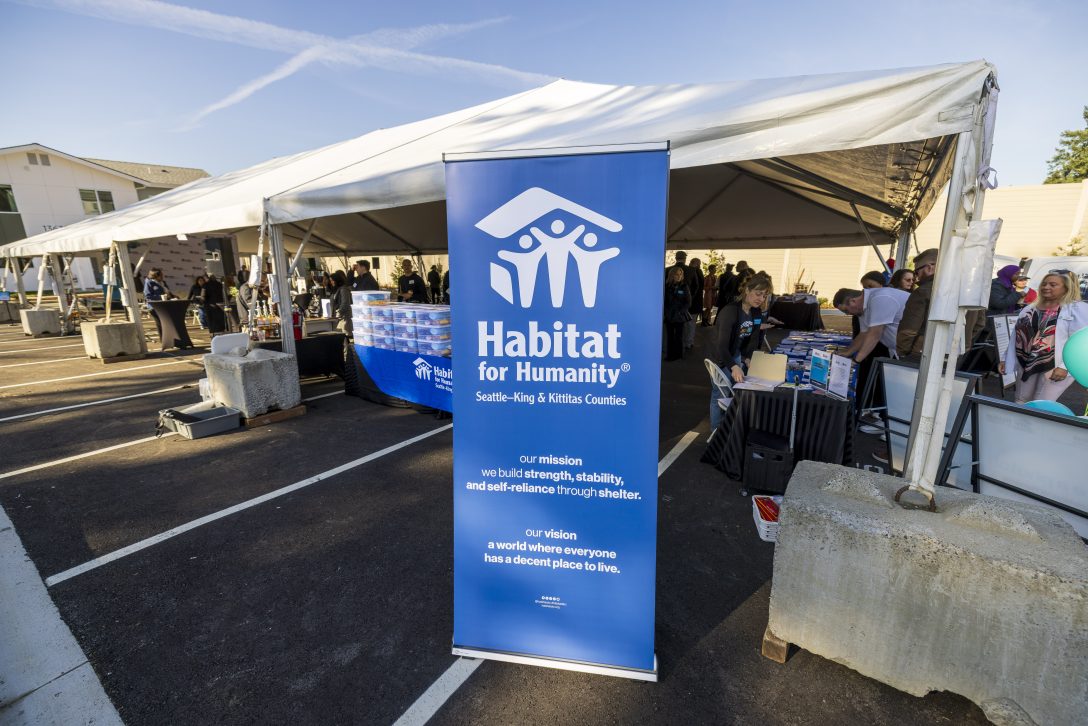
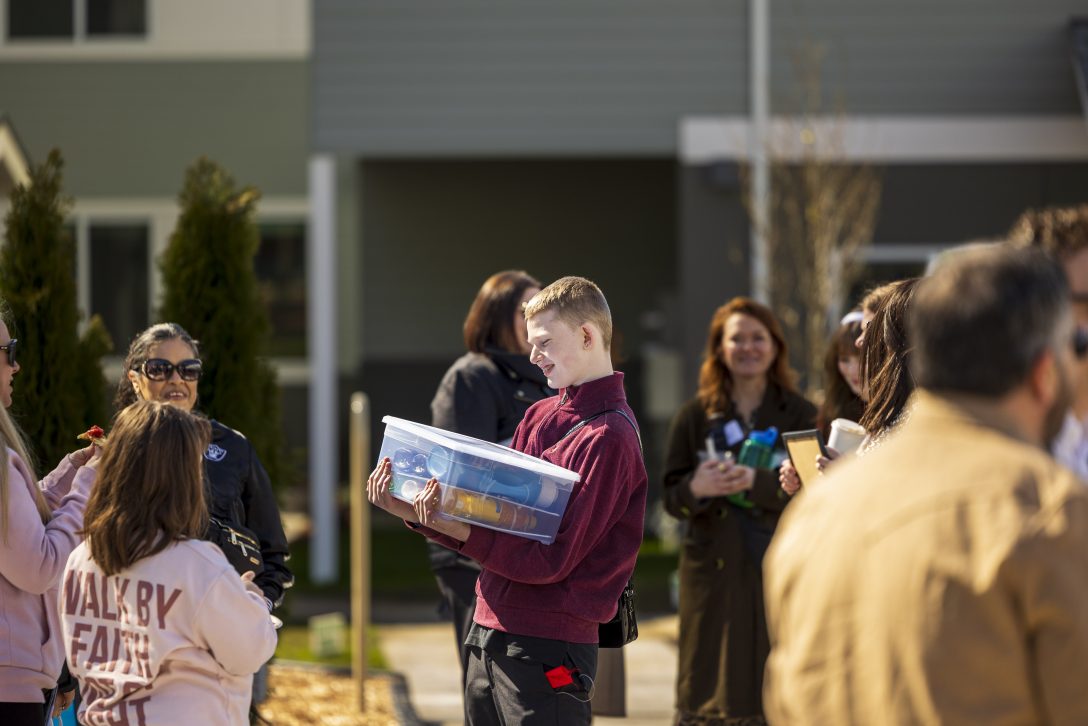
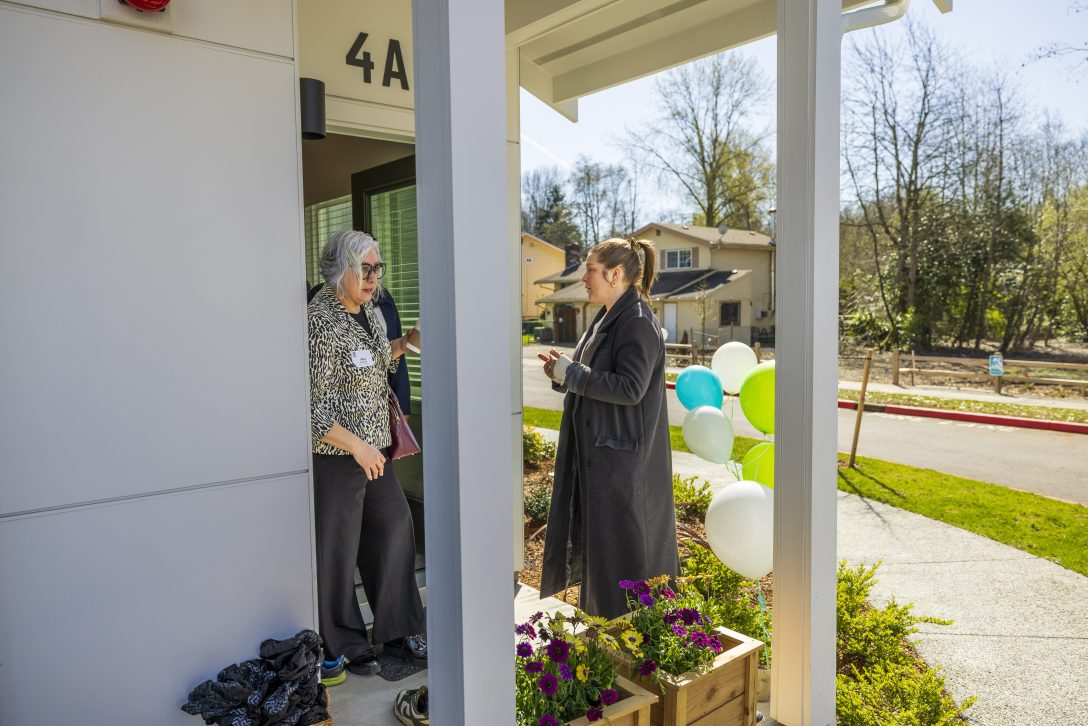
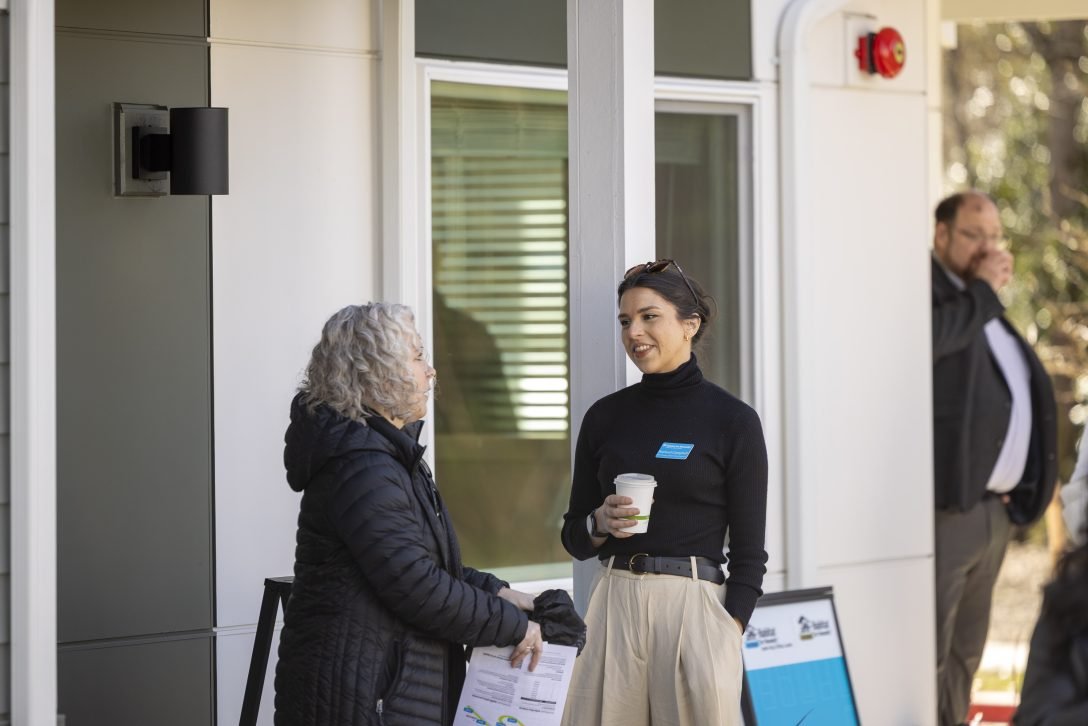
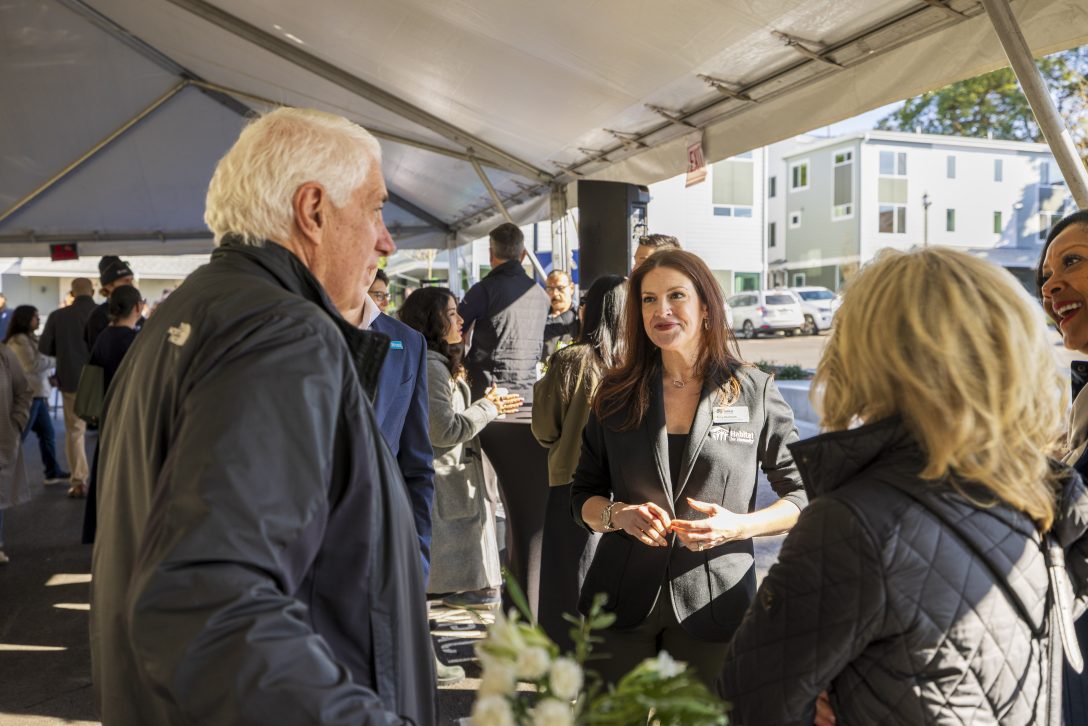
The rest of the event gave guests the opportunity to meet fellow Habitat supporters, volunteers, and staff. They also had the chance to explore the new neighborhood and tour two model units. That sense of community was immediately recognizable as new neighbors mingled after the program while their kids laughed and ran around the playground donated by Symetra. Neighbors from the houses nearby Miller’s Creek joined the festivities, helping the new neighborhood blend seamlessly into the one already established there. 

Critical Repairs, Lasting Impact: Hopie’s Habitat SKKC Repair Story

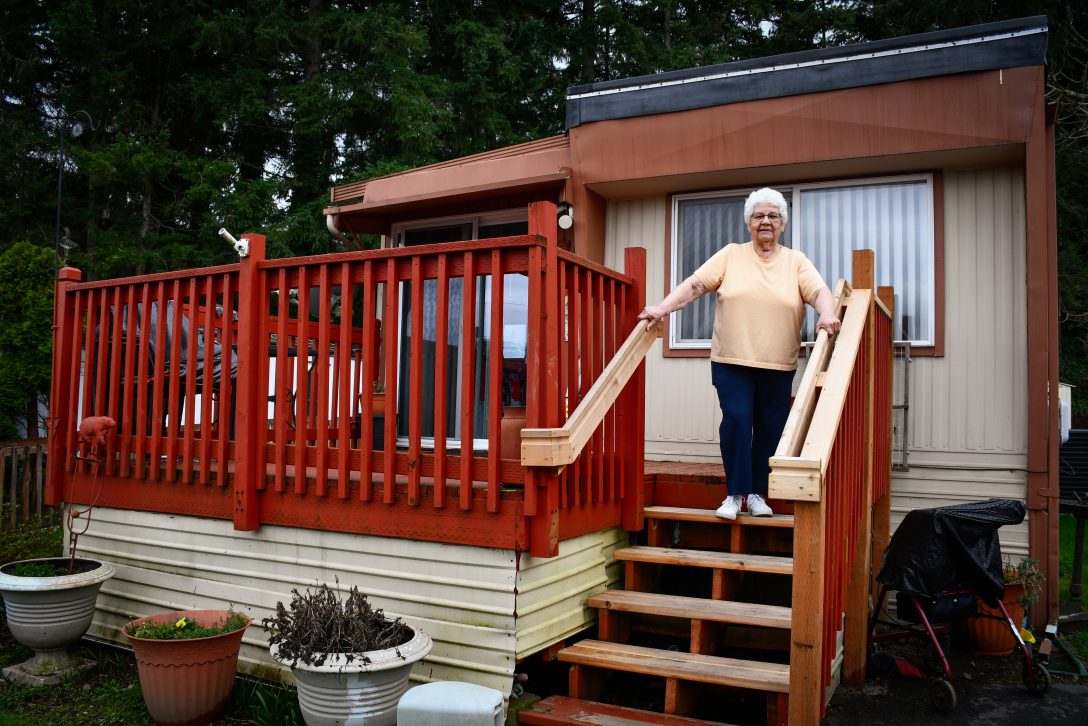
Hopie and her husband Enrique have lived in Kent for more than two decades, having bought their home when his work brought him to the area. Originally from the Yakima Valley in sunny Central Washington, Hopie found adjusting to the Puget Sound weather difficult at first. Over time, she grew used to the rain and settled into life in the region. 

Before retiring, Hopie worked as a caregiver in nursing homes and assisted living facilities. Her husband worked as an alcohol and drug counselor. In retirement, Hopie spends time with her community and family. For more than 20 years, she and several other women in her neighborhood have played dominoes together. While some of the original group have moved away or passed on, two of the original players remain, and the group now meets every two weeks at the senior center in Kent. 

Hopie is the mother of eight children: six sons and two daughters. Her family, including numerous grandchildren, is spread across several locations, including Tacoma, South Seattle, Arizona, the Yakima Valley, and Idaho. 

Hopie first learned about Habitat for Humanity’s repair program through a newspaper several years ago. At the time, she and her husband were experiencing problems with a leaking roof. She applied to the program, and after some time, they were accepted.  

While the roof repair was the original need, the work ultimately extended beyond that. Habitat completed a new roof, installed a new water heater and a new furnace heat pump, added a range hood over the stove, replaced fans, repaired the stairs, remodeled the bathroom, fixed closet doors, and repaired the front door. Hopie described the work as beautifully done and expressed deep gratitude for the improvements. 

The repairs were completed through two different programs through Habitat, CAPABLE and Critical Home Repair. The work took approximately six months, beginning in late fall and continuing through winter, with crews returning to finish what weather initially delayed. Additional repairs, including the bathroom work, were completed after she qualified for the second program. Hopie has recommended the repair program to others and has even encouraged family members to apply. 

Since the repairs were completed, Hopie has noticed clear improvements in her quality of life: “With all the work, our light bill has come down quite a bit and our heat is better. Our stairs are very sturdy; we’re not afraid to go down them anymore. Everything is wonderful.” 

Forever, Home: April H.

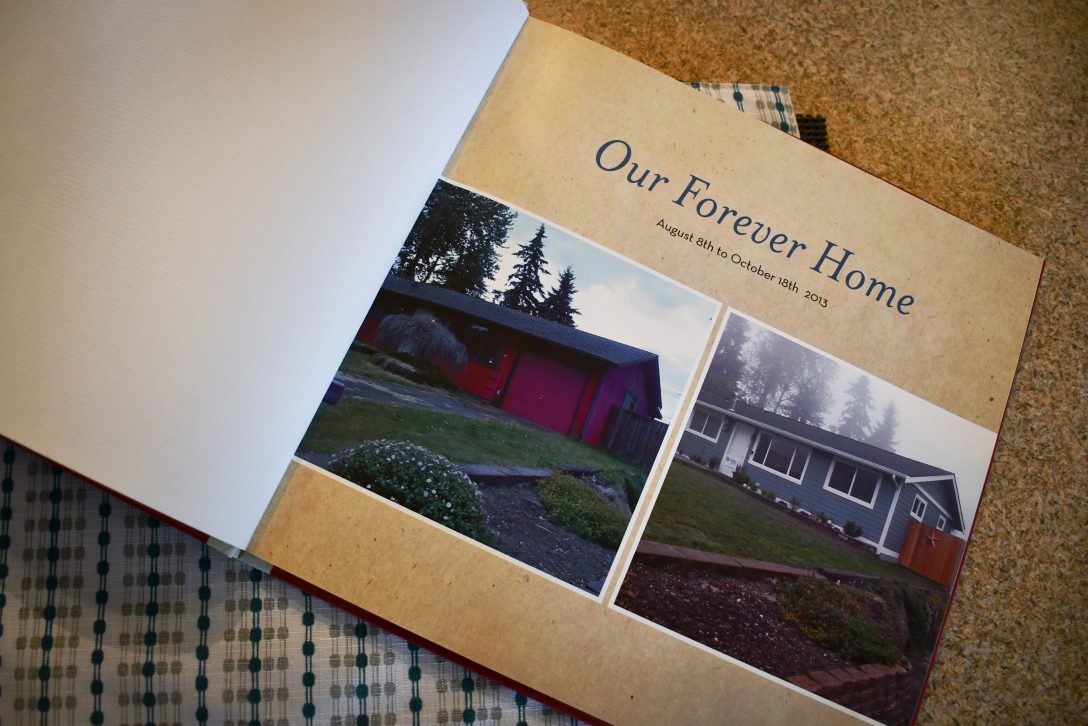
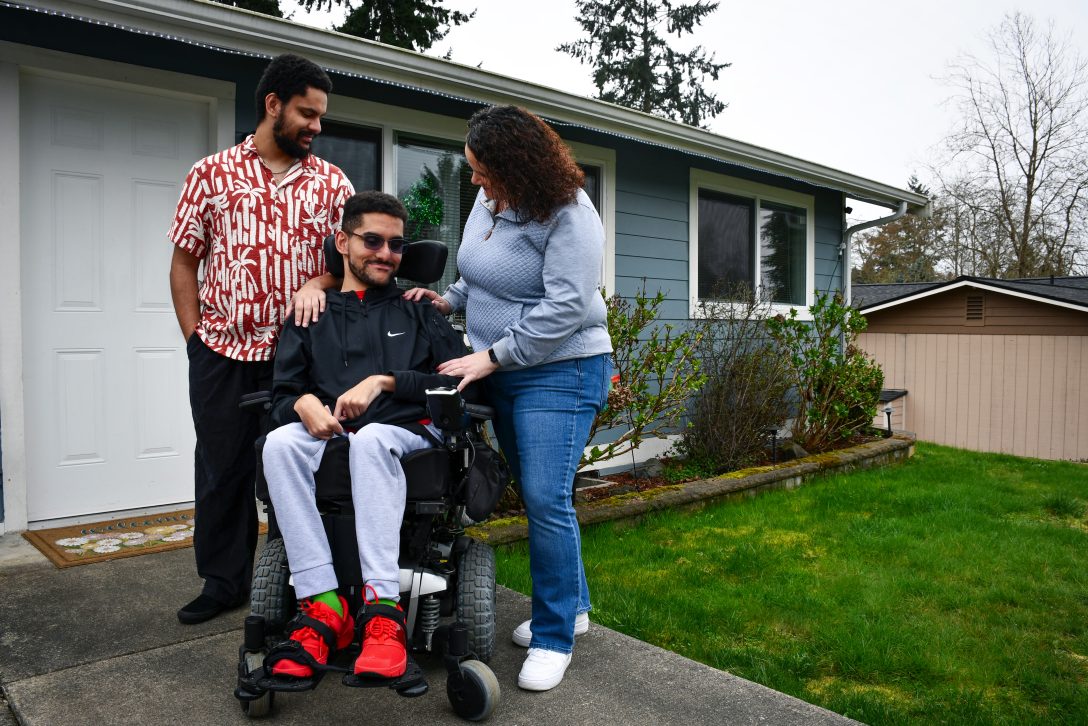
April H. remembers looking at her house before its complete remodel and couldn’t imagine how it would ever be accessible for her family. April’s two sons, Marschae and DaShaun, have Cerebral Palsy, with DaShaun being the most impacted and using a wheelchair for mobility. Habitat staff and volunteers took down walls, converted the garage into a bedroom with an en suite bathroom, with a built-in ceiling lift to hoist DaShaun from his bed into his wheelchair. They widened the doorway, kitchen, and hallways so that the entire house would be wheelchair accessible. After the remodel was finished in the fall of 2013, for the first time in DaShaun’s life, he was able to move throughout his entire home by himself.  

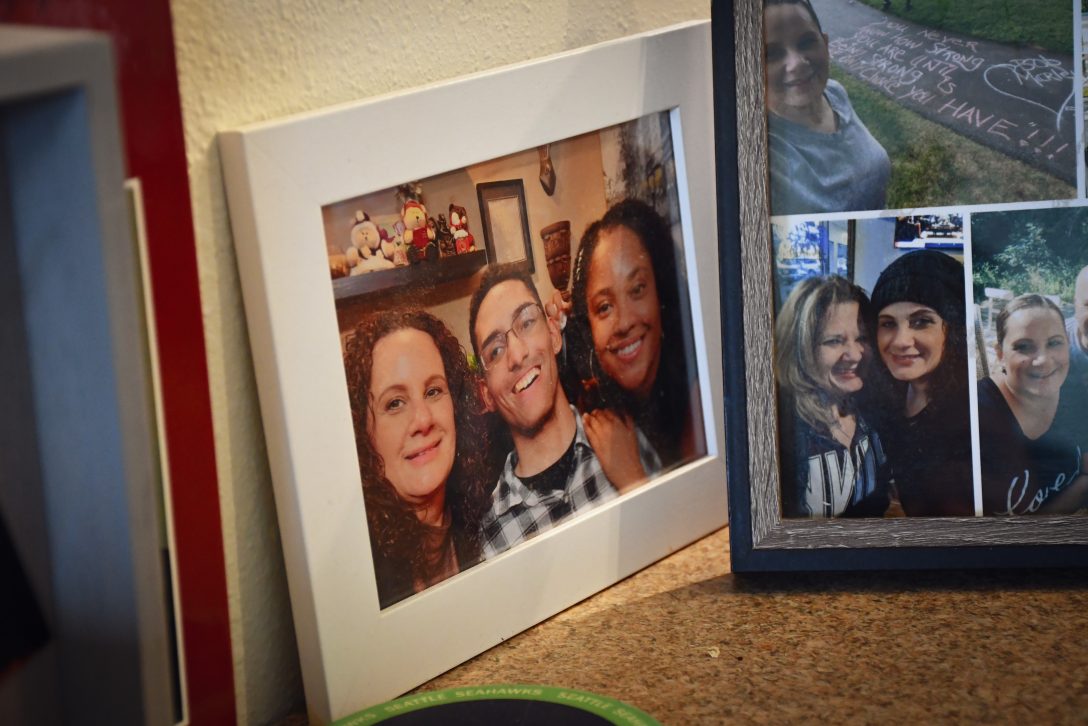
Previously, April, her three children, and their father lived together in a house for 13 years. After they separated and her daughter Brittany, who was accepted to the University of Washington, moved out, it was just April and the twins remaining at home. She couldn’t afford to keep the house, so she and the boys moved into an apartment. It didn’t have a walk-in shower like the apartment that she had originally been shown, so she had to lift DaShaun out of his wheelchair and into a shower chair in the bathtub. This was difficult for them both. But a month later she heard back from Habitat about her application and a home that Habitat had purchased for resale, and then things moved quickly after that.   

When April first moved in, she drove a school bus for the Federal Way School District, then she worked at Head Start. Now she works at a non-profit early intervention child development program. She feels that Head Start’s programs would have been helpful when her boys were young. Instead, she had to drive to Kent for their special care.   

For April, the difference between owning and renting, other than the affordability, has been, “the structure of the house, its accessibility for DaShaun. I have friends in the neighborhood; we do a two-mile walk together. It is familiar to me; it feels safe.” 

April has always been involved in the Federal Way community, through work, church, kids’ sports, schools, and service agencies so that didn’t change when she was selected for her new home. The entire community pitched in to volunteer and help build, from church members to fellow Federal Way bus drivers. 

She gratefully reflects, “I would see somebody who volunteered on my house at the store. I am friends with a lady at church whose husband put in the shower, before we even knew who each other was. A lot of my bus driver friends were here. All these people!”    

From the beginning, homeownership positively impacted the boys’ education. They attended Decatur High School, a nearby neighborhood school that offered better programs and inclusive classes, which DaShaun particularly enjoyed. April adds, “Being stable and having a home allowed them to attend the same school consistently, which was beneficial.”   

April is now the only one living in the home, where she has a small office adjacent to the bedroom that serves as her home office. The boys, now in their late twenties, are both thriving young adults who live together. April is only 20 minutes away, and she now has peace of mind knowing that her sons are in a home that meets all their needs: A safe, welcoming, and well-maintained space where they can grow, pursue their goals, and support each other. 

For April, it is deeply comforting to see them settled in a place that provides stability, security, and independence, knowing that the home she helped provide continues to nurture them and their future. She explains her plans, “The goal is to pay this house off and then DaShaun is going to move in here. Hopefully with a wonderful caregiver or somebody, a housemate or his brother possibly.” 

She would like to build a carport in the front for the van so transferring DaShaun would not put him outside in the elements. When he has the house, she plans to hire someone to help with the yardwork because she would hate to see it become neglected.  

The future is easier to imagine now that her children have all graduated high school and established their careers and lives. Her forever home will remain in the family and continue to provide much-needed stability for her children. When she first moved in, April shared a sentiment that holds true today: “This is a bright beginning for us, and we see no darkness ahead.” 

Hands-on Career Change: Volunteer Spotlight on Lincoln T. 

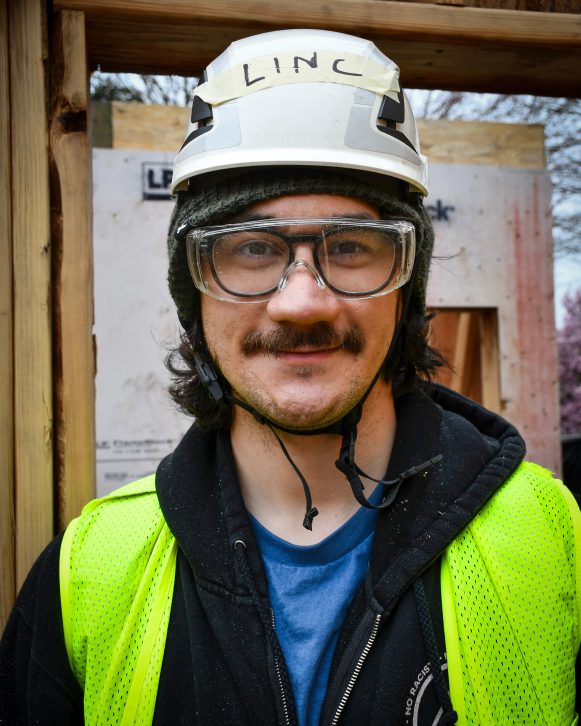
Lincoln T. was in the middle of a career pivot when he learned about Habitat SKKC. After seven years working in tech, the majority of those years in marketing, he had lost his passion for the work. He didn’t feel pride or satisfaction in projects like emails or text campaigns and wanted to help people in tangible ways. He decided to pursue a career that would allow him to work with his hands and see real-world results. 

Lincoln wanted to transition into the trades but had no prior experience. He connected with a pre-apprenticeship program called Anew. They have two programs: a three-month pre-apprenticeship construction education program and another program that helps women pivot into the trades. He sought advice from career counselors, and one told him the best way to start was by volunteering at Habitat construction sites. “The counselor told me Habitat takes the time to teach you how to use tools and show what a day on a site is like,” Lincoln explains. 

Lincoln first volunteered with Habitat SKKC in Ellensburg. He really liked it, and kept coming back, though he lives in Seattle. He has been driving to Ellensburg in the mornings, usually leaving around 5:30 or 6:00 am. Every day onsite has been filled with new tasks, often something he hasn’t done before.  

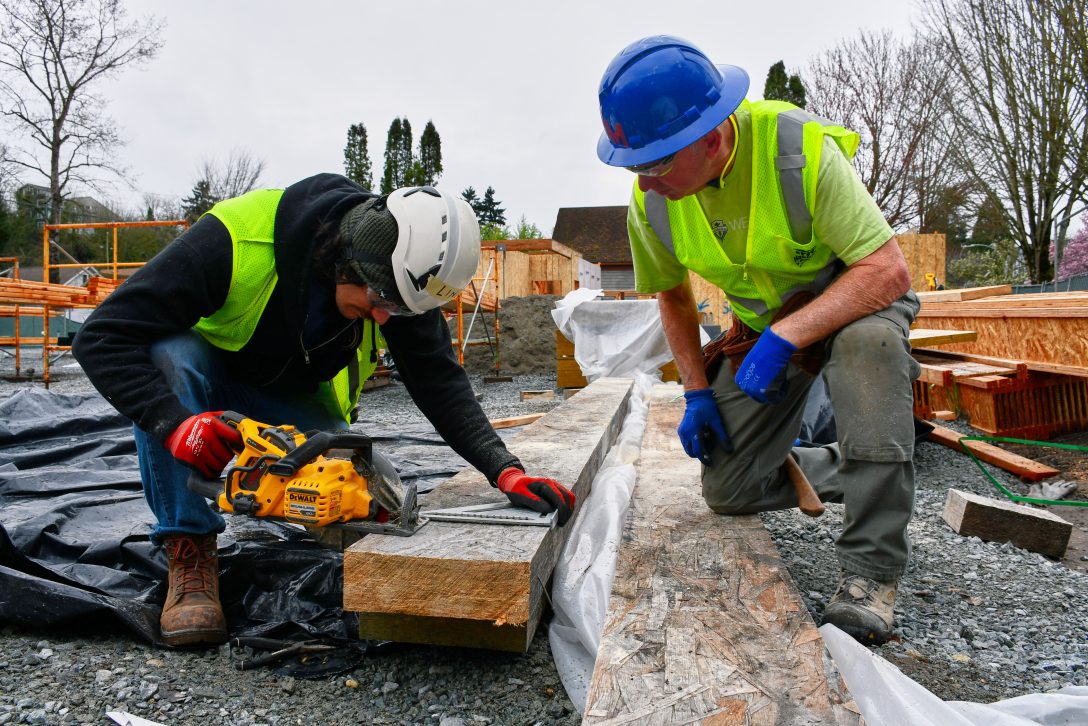
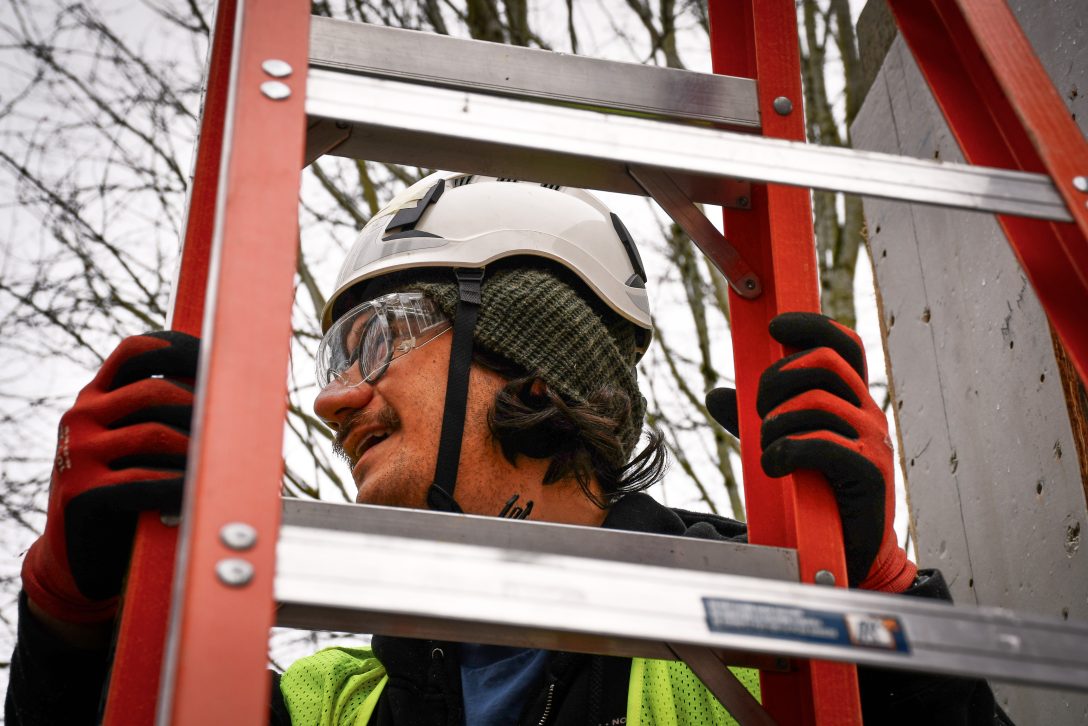
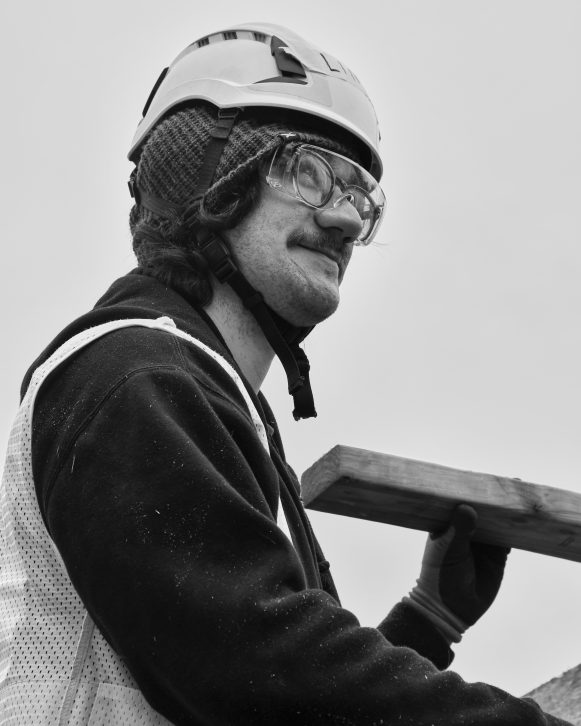
Recently, Lincoln helped out the crew on a framing day as they put up the sides of a brand-new house. He had been volunteering there for a while and had been progressively gaining skills, like using the circular saw and using the tape measure. Recognizing that he was ready for the challenge, Stuart Meadows Site Manager Nick Nelson asked Lincoln to make two more sections of wall. Lincoln studied the existing section, gathered the right boards, and built two giant rectangles that became corner pieces of the walls. He felt proud knowing those pieces would be part of a family’s home for years. 

While that was the most concrete example of being encouraged to take on a task, he often learned by watching other onsite staff members and asking to try tools like nail guns or table saws. He found those tips helpful for increasing his general construction knowledge. 

Lincoln advises new volunteers to come to site ready to work and be open to any job because all tasks are realistic to construction work. After two months of volunteering, he still feels confident about pivoting into the trades and is working on getting an apprenticeship with the Electrical Union. He feels happy with his decision and excited to volunteer more with Habitat SKKC. 

Lincoln says, “I know in my previous role I was helping people, if more abstractly, but it feels more meaningful to help people in ways that I can see and touch.” 

Learn more and sign up for volunteer opportunities here.