Last week, the Washington State Senate passed a resolution recognizing Habitat SKKC’s four decades of impact. The resolution highlights the essential role affordable housing plays in building strong, stable communities across Washington. It also reflects Habitat’s ongoing efforts to elevate housing affordability as a shared statewide priority, while celebrating the impact of affordable homeownership and honoring the volunteers and partners who make this work possible.
Senate Resolution 8697, sponsored by Senator Emily Alvarado (D-Seattle), recognizes the connection between stable housing and outcomes such as improved health, educational success, and economic opportunity. As part of Habitat’s ongoing advocacy and awareness efforts, Habitat SKKC works to raise awareness of the housing challenges facing Washington residents and highlight the proven, results-driven solutions that address them. The full resolution can be found online here.
During the resolution testimony, multiple elected officials spoke in support of our work, including Senator Emily Alvarado (D-34th Legislative District and sponsor of the resolution), Senator Judy Warnick (R-13th Legislative District, which includes Kittitas County, home of our Cle Elum and Ellensburg projects), Senator Rebecca Saldaña (D-37th Legislative District, which includes the neighborhood where we build Liberty Commons), and Senator Keith Wagoner (R-39th Legislative District).
TVW was on hand to film the proceedings. Watch the inspiring clip below:
Habitat SKKC returned to Olympia on February 18 for our second annual Housing Impact Day, and we brought with us more passionate affordable housing advocates! Housing Impact Day is a full day during the Washington State legislative session dedicated to direct engagement with state legislators and their staff. Participants included Habitat staff, homeowners, homebuyers, volunteers, and supporters who shared why affordable homeownership matters and advocated for policies and funding that support it.
Washington is in a housing affordability crisis, particularly in King County and the Puget Sound region, where housing costs far outpace what many households can afford. Because of this, legislators need to hear directly from constituents about how housing policies affect real people, not just from professional advocates or statistics.
At Housing Impact Day, advocacy shows up as the act of everyday people influencing government decisions by sharing their experiences, values, and priorities with elected officials. Housing Impact Day is an important reminder that advocacy is accessible and impactful. It does not require expertise, only a willingness to speak up.
Habitat SKKC’s Advocacy and Policy Manager Ryan Makinster explained the need for advocates to share their personal stories: “This is an opportunity to create connections between our mission, homeowners’ experiences, and legislator’s policy decisions. All work together, but it’s important for elected leaders, especially when they’re in the middle of a legislative session, to connect the dots. As they’re looking at legislation or funding decisions they are making, it can seem clinical, and we need to put color around that. Your voice is more important: You bring the heart. That’s what really moves legislators to make the decisions to support our efforts addressing this housing crisis.”
Attendees kicked off Housing Impact Day with a morning meeting to review talking points, legislative updates, schedules, and expectations for the day. Participants were then assigned to small meeting groups that included at least one constituent of the legislator and an experienced advocate or staff member. Groups spent the day moving between scheduled 15‑minute meetings where they shared short personal stories related to housing and Habitat’s impact, supported by a clear “ask” provided by Habitat.
During their 34 meetings, Habitat SKKC advocates asked that elected officials prioritize affordable housing in the capital budget and invest as much money as possible towards affordable housing in the Housing Trust Fund.
Meanwhile, Chief Advocacy Officer, Ryan Donohue was testifying in support of some of our policy objectives, such as restricting the use of pocket listings in real estate as well as making it easier to bring infill-style condominium projects to the market. Ryan later noted that “Housing Impact Day is always a great opportunity to highlight the importance of homeownership to the housing continuum and having the opportunity to bring Habitat voices into the room at the same time we are testifying on important issues makes this one of the best days of the year.”
Longtime Habitat SKKC volunteer Vince S. took part in Housing and Homelessness Advocacy Day, a different advocacy day put on by other partner organizations including the Washington Low Income Housing Alliance, several times in past years, and was excited to join for the second annual Housing Impact Day. He reflected, “I believe the lack of affordable housing is one of the most serious issues facing our society. If many people struggle to afford — or cannot afford at all — the basic necessity of decent shelter, our entire city, state, and nation are worse off. This has to be a central concern for our government at all levels, and it must find meaningful ways to partner with organizations such as Habitat for Humanity so that they can do more to provide the needed affordable shelter. Habitat can’t solve the problem for each family, but the problems Habitat solves tend to stay solved.”
If you’re interested in participating in next year’s Housing Impact Day, learn more and sign up for our Advocacy Alerts here. No advocacy experience is required, and participants are supported with preparation, materials, and staff guidance.
Every home has a story, and as Habitat SKKC celebrates our 40th anniversary in 2026, we’re excited to share the stories that have shaped the past four decades. Throughout the year, we’ll be highlighting legacy family stories from across our history — stories of partnership, resilience, and hope that remind us why this work matters.
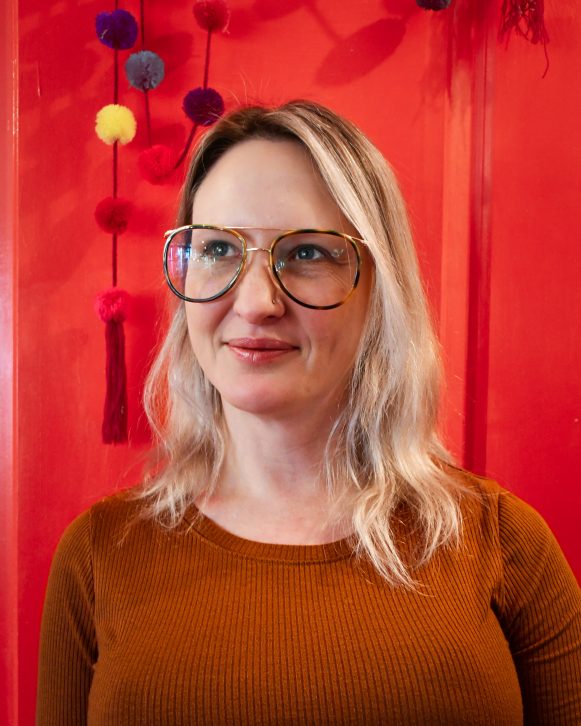
Asha D. is a creative and curious artist and mother of Leisl, Margot, and Francis. She grew up in the Florida panhandle and spent many years traveling the country with her three children to find the region that felt most like home. She found it in Washington state in 2017, and since putting down roots here has become engaged in the local theater and arts community.
When Asha discovered that Margot needed speech-language therapy as a baby and toddler, her daughter’s journey inspired Asha to become a speech-language pathologist. After graduating with a master’s degree in 2017, Asha began working in the public schools in King County. Asha finds a lot of joy in her work, thanks in no small part to the amazing kids she serves. “I love the weird stuff they come up with (plus, of course, it’s rewarding to see them grow and all that). But they really do have the best jokes,” she adds.
When she first moved her kids up to the Seattle area, she found an affordable two-bedroom house in Lynnwood that had not been updated since at least the mid-1980s. Sometimes, the dishwasher malfunctioned spectacularly, spewing water two feet into the air. Once, while hanging Christmas lights on the back deck, her foot softly fell through the boards of the porch. The house had no A/C, terrible ventilation in the summer, and a disappointing heater—but it backed onto a sweet little park.
Everyone who visited told her the house was so nice, and Asha did love it. Trying to keep things in perspective, Asha reminded herself that if she maintained a house like that back in Florida, it would be invaded with bugs and mold within a couple of months. This is one reason she loves the Pacific Northwest. She adored their quirky little house, but it was a rental, and the price kept going up. She feared she would have to leave the community she had just started to connect with, priced out by 2020.
Asha first learned about Habitat for Humanity when she moved to Seattle, as she had volunteered with another Habitat affiliate in Portland. She signed up for the email newsletter, and when the house she now lives in appeared, she applied on a whim. She ended up closing on her home within three months. A few weeks later, the COVID-19 pandemic shut the world down.
—
The family moved into their Habitat home in June of 2020, a “pretty quiet but super weird year.” Her home quickly morphed, becoming both the kids’ school and her workplace. Asha tried to help them with schoolwork while also working full time.
Because she didn’t have to commute that year, she tackled many home projects. YouTube taught her how to change out ceiling lights and install wallpaper in the bathroom. That DIY project helped turn the room into her favorite in the house. The bathroom features four different styles of toile wallpaper, including one depicting Greek gods and another a French countryside, and a hand-painted sink from Mexico. It’s a tiny room, but it’s pretty and 100% hers. Asha also painted the house and really rooted down, making it a home.
Not much surprised Asha about homeownership, which she attributes to being a “bit of a research nut.” She watched a ton of videos leading up to buying the home and even has a savings account specifically for appliances. She knows she’ll have to replace things eventually. But coming from a place where hurricanes tore the city apart every year, she considers replacing a water heater a privilege in comparison—and far less expensive than replacing a roof.
Maintaining a comfortable home for her family is a central priority for her. Asha jokes, “I like to pretend that my most prolific hobby is cleaning my house—because if I tell myself it’s a hobby, then the fact that I spend so many hours doing it a week won’t make me feel like I’m wasting the crucial moments of my life that I could be spending with my kids or engaging in creative work on yet another set of dishes.”
She is selling herself short. When not working, parenting, or keeping up her house, Asha is also a writer and journalist. She loves all the amazing people she has had the opportunity to meet and work with over the years. She believes there are so many ways of being in this world, and through her reporting, she can connect and learn about the ways different folks think and live their lives. She also volunteers at her kids’ schools and has recently taken up roller skating. She adds, “I’m an actual disaster on wheels. But it’s loads of fun to meet up with my local friends and zoom around (incredibly slowly) on Pride Night.”
—
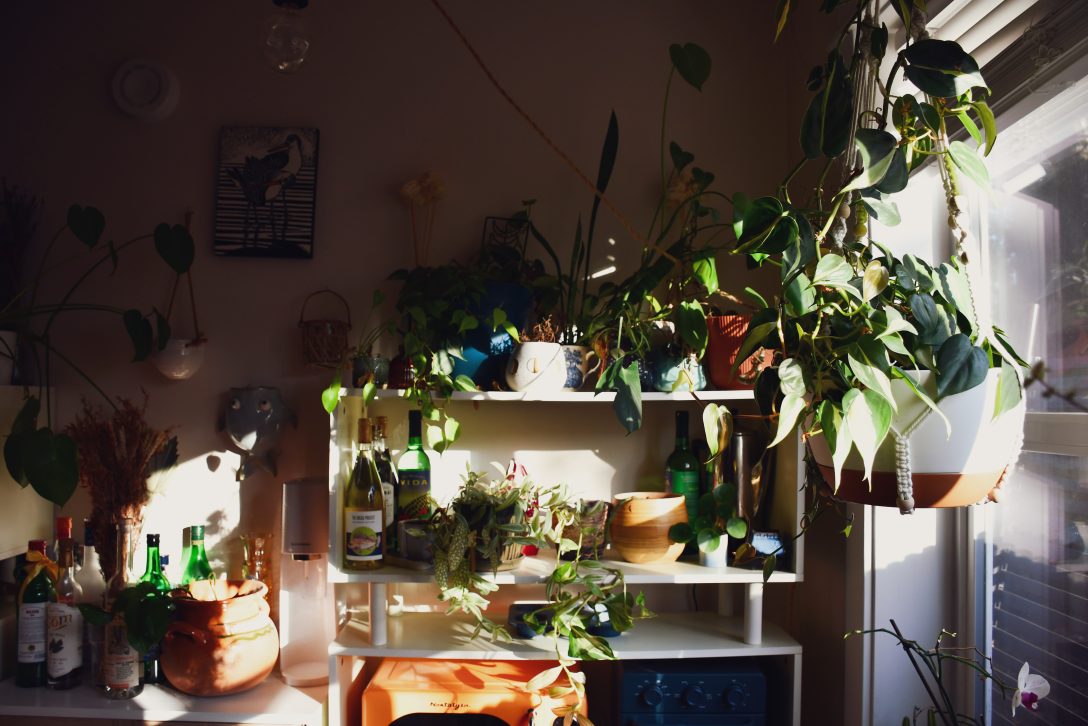
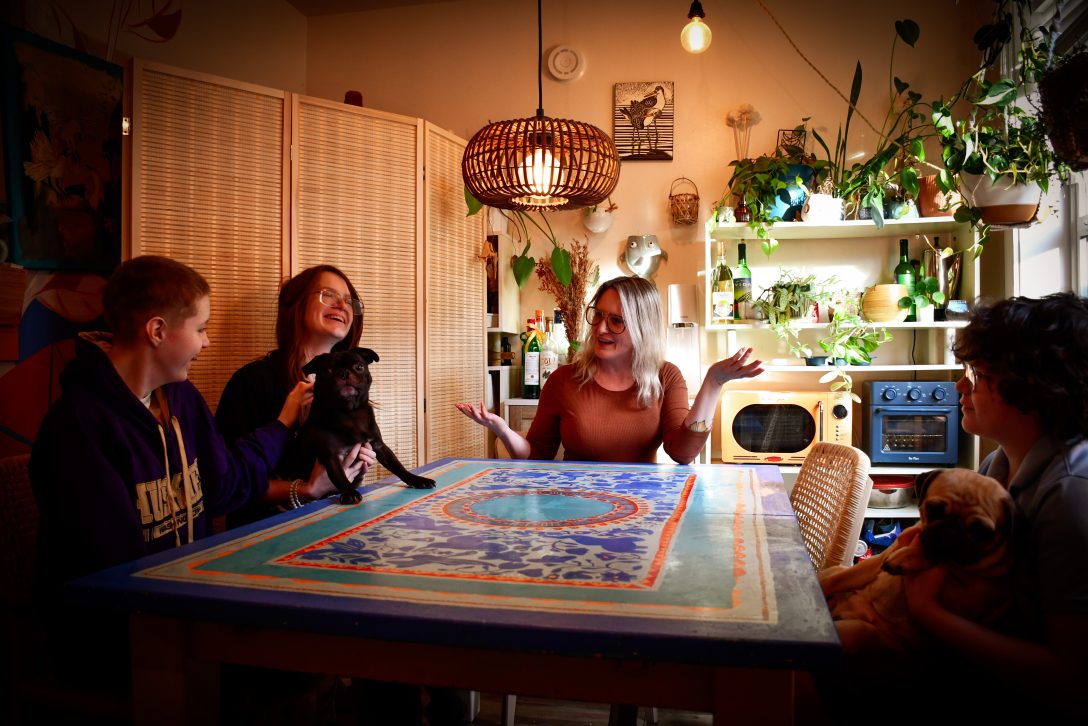
The dining room is the center of their house. One of her other COVID projects was painting a mural on the dining room table. On holidays, the family squeezes in and eats together, surrounded by the vines and monstera she has managed to keep alive. They’ve lived there for 5.5 years now, which is half of her youngest child’s life.
Asha reflects, “It’s not a perfect house, but it’s the kind of togetherness that can only happen with roots. I love the idea that my kids will associate the place and the moments we’ve made there with home.”
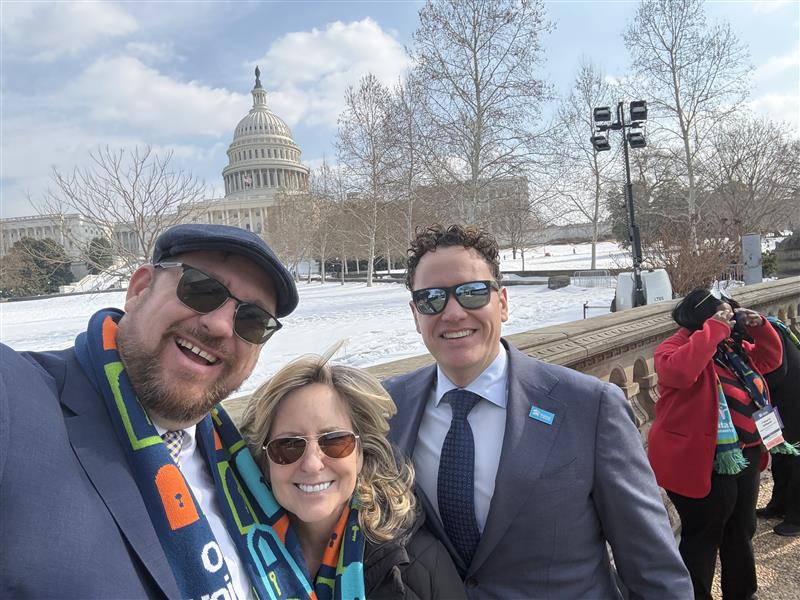
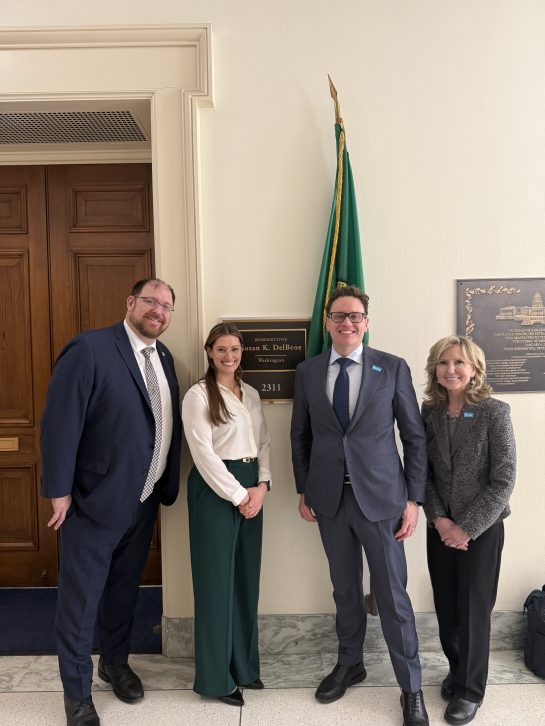
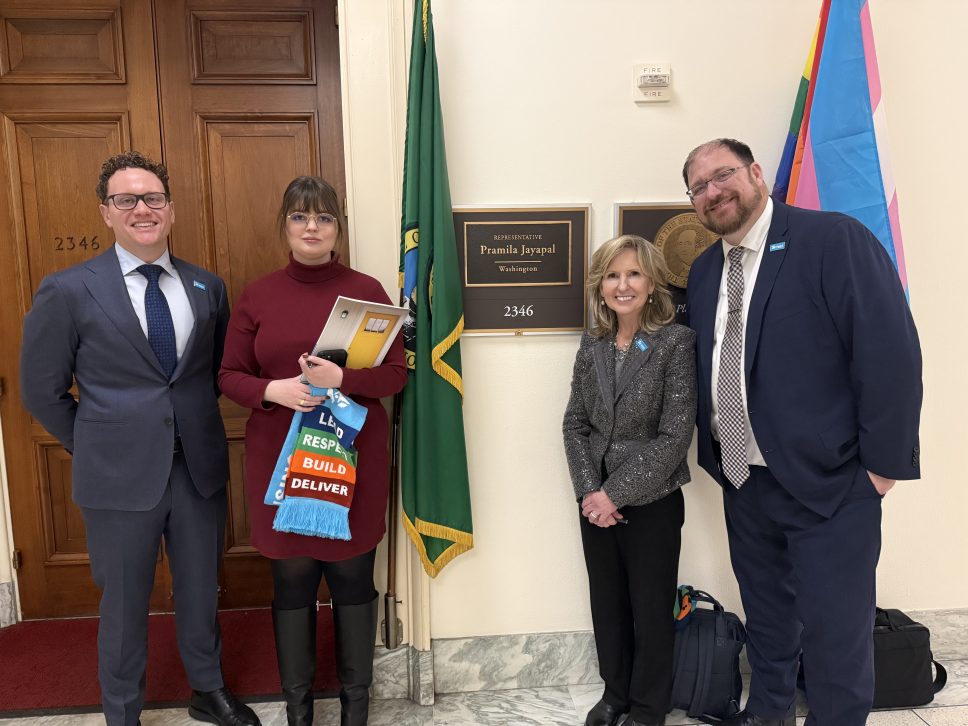
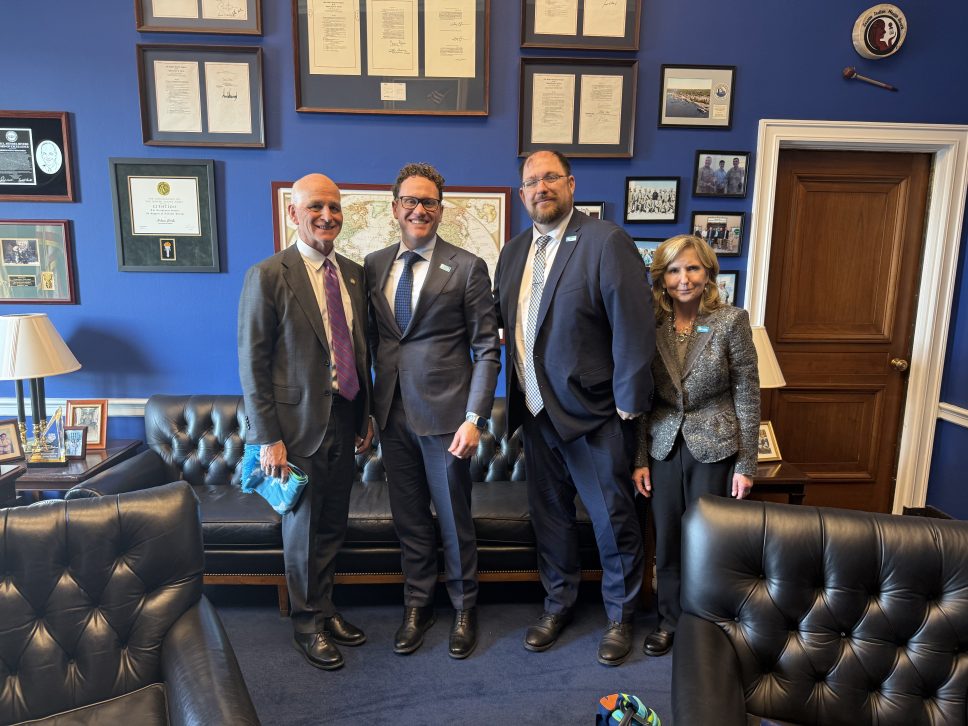
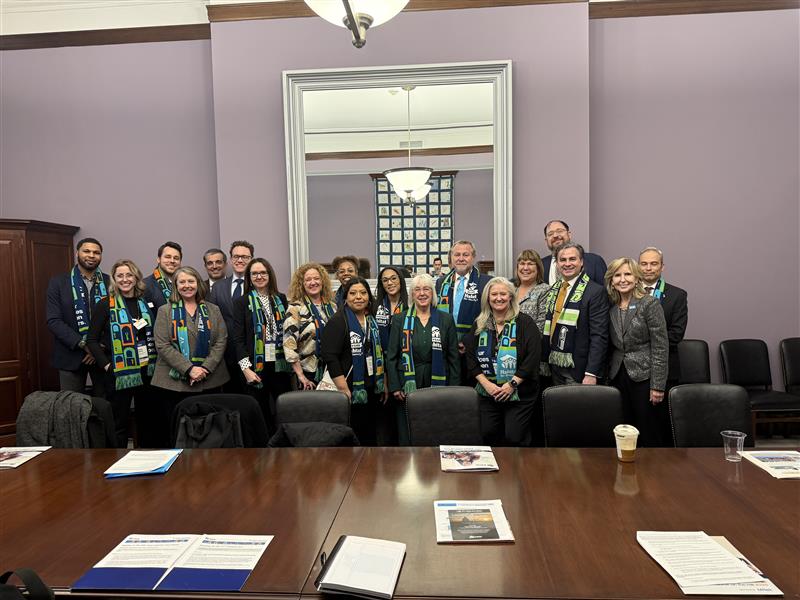
At this year’s Habitat on the Hill (Feb. 10-12, 2026), Habitat SKKC leadership joined close to 500 other Habitat for Humanity representatives from across the country in Washington D.C. to advocate for abundant affordable housing. This year’s Habitat on the Hill fell during a milestone year: It’s Habitat SKKC’s 40th anniversary, Habitat for Humanity International’s 50th anniversary, and the 20th anniversary of the annual advocacy conference.
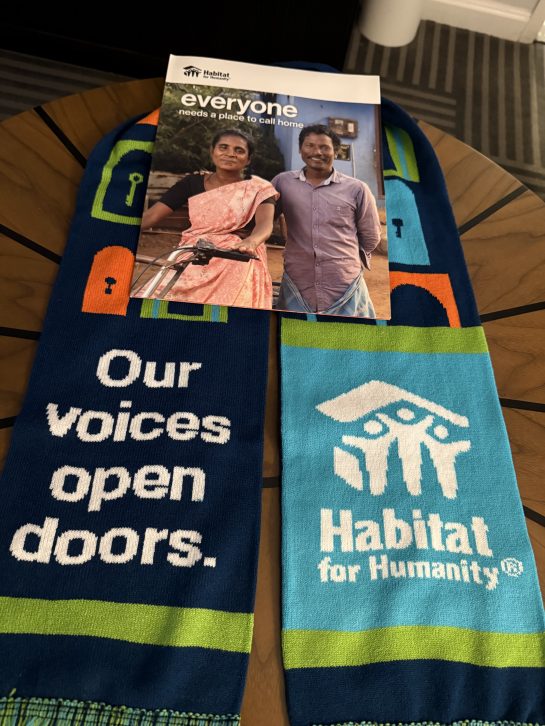
This year’s conference theme was “Our Voices Open Doors,” and together, we opened a lot of doors at our nation’s capital! Alongside our colleagues from other Habitat affiliates, Habitat SKKC CEO Brett D’Antonio, Chief Development Officer Amy Farrier, and Chief Advocacy Officer Ryan Donohue had the opportunity to meet with some 300 lawmakers. Their aim was to build on the momentum of recently passed legislation in both the Senate and House: The Senate’s ROAD to Housing Act (S. 2651) and the House’s Housing for the 21st Century Act (H.R. 6644).
Habitat representatives came to their meetings equipped with a list of affordable housing priorities they wanted to put directly in front of elected officials:
Funding for the Self-help Homeownership Opportunity Program at no less than $20 million in the Transportation-HUD appropriations bill
Funding for the Home Investment Partnerships Program at no less than $1.5 billion in the Transportation-HUD appropriations bill
Funding for the USDA Section 502 Direct Loan Program at no less than $1.25 billion in the Agriculture, Rural Development, Food and Drug Administration appropriations bill
As we did last year, Habitat affiliates once again urged legislators to champion the Homeownership Supply Accelerator, the innovative federal policy concept that will make homeownership a reality for hardworking people nationwide.
Reflecting on his time in D.C., Ryan Donohue said, “Being able to go to Washington, D.C., and talk with our representatives about the importance of affordable housing and homeownership is critically important. We make the trip to the other Washington once a year because putting affordable homeownership on the agenda is something only Habitat for Humanity can do.”
“If we are going to build a world where everyone has a safe, decent, and affordable place to call home, we need the federal government to play a part,” he continued. “Fortunately, our representatives in D.C. understand that and fight for us in the halls of Congress every day.”
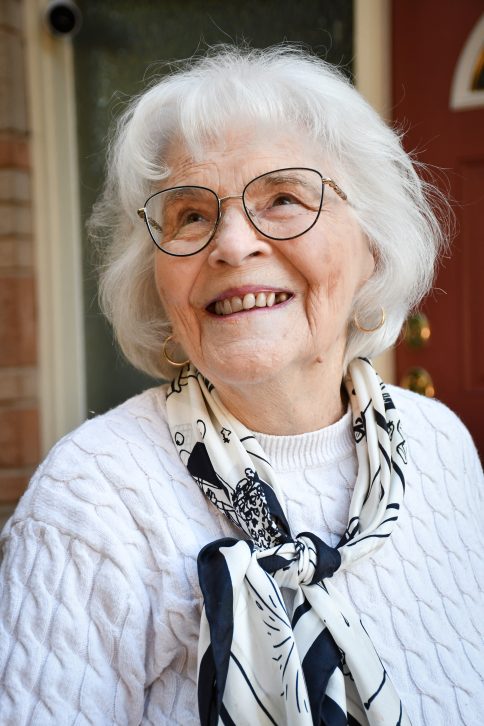
Lois has lived in her Bothell home for about 56 years. She and her husband moved from the Midwest when he accepted a position as a professor at the University of Washington. Adjusting to the climate was difficult at first, but she eventually grew to love it. Lois worked in education after moving, teaching first and sixth grades, serving as a reading specialist, and later working in the central office on testing and research.
In retirement, Lois spends time organizing and enjoys monthly lunches with her husband’s former students, which she describes as the highlight of her month. Living in Bothell, she values her community because her neighbors look out for her. She once stayed with a neighbor during a power outage so she wouldn’t be alone at home.
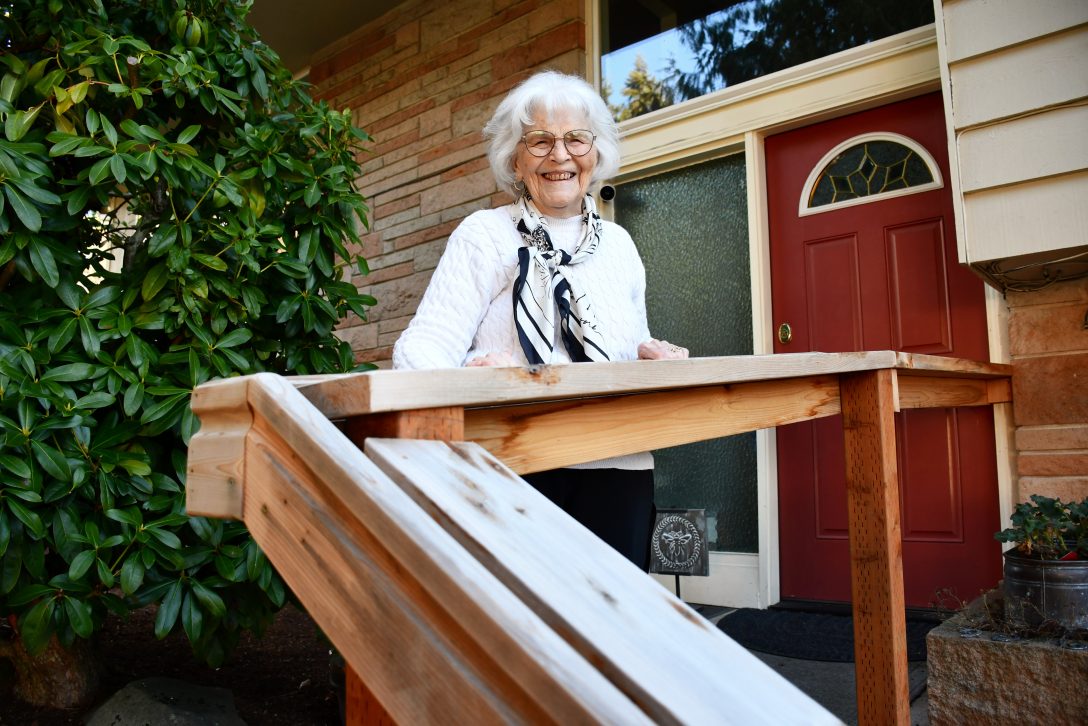
At ninety and widowed, Lois has difficulty walking up and down her front steps. In order to leave her home without assistance, she needed to exit through her garage. She explains, “There’s no way I could get down the stairs because Jack was gone and he always held my hand to take me down the stairs.”
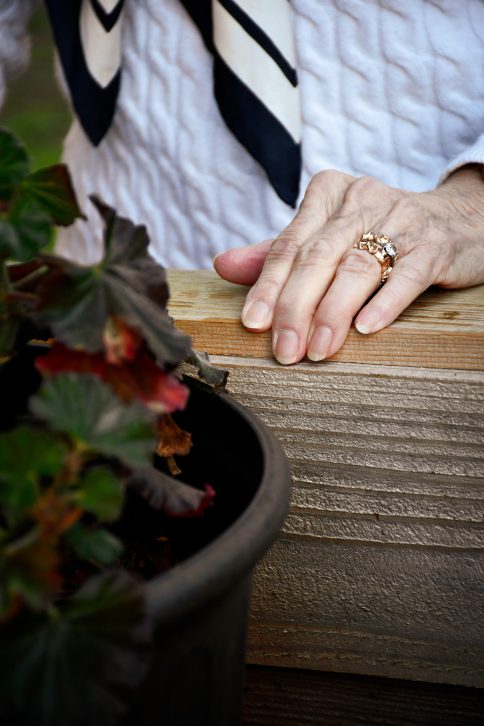
The Habitat SKKC repair team installed a railing and gave Lois newfound independence. The team also installed a lever in her bathtub because her hands couldn’t turn the knobs tightly enough. They also added a creative feature so she didn’t have to stoop down to tend her flowers: a flower box that extended from her stairs into the yard, making it easy for her to work at waist level. Her husband, who passed away a year and a half ago, loved red geraniums, so she continues the tradition of planting them in the yard.
Lois learned about Habitat’s repair program through fire department volunteers who visited after her husband had several hospital stays. They referred her to Habitat because of her needs.
Lois appreciates the repair team for being skilled, kind, and considerate, noting that they always arrived smiling and ready to work.
Lois says gratefully of the work done on her home, “It’s life changing. I appreciate it so much. It gave me back my humanity.”