KIRO 7’s Michelle Millman and Linzi Sheldon were on the scene during our Women of Impact event on May 6 at our Yarrow Cottages development in Seattle’s South Park neighborhood.
Social Media
WA State 2023 Legislative Session Favored Affordable Housing!

This year’s legislative session in Olympia featured significant activity to address the housing crisis, from both the affordability and supply perspectives.
Habitat SKKC’s Chief Advocacy Officer, Ryan Donohue, worked closely with legislators throughout the session, and reported progress… with more to be done. Legislation that made its way to the Governor’s desk addressed elements that support Habitat efforts throughout the region by allowing for increased housing density by helping first time homebuyers financially and by providing that climate change be considered as housing access grows.
Legislators allocated over $400 million in affordable housing and affordable homeownership – this is a record level of state dollars invested in affordable housing. Among other areas, this year’s budget allocations support Transit Oriented Development (TOD), a focus for Habitat SKKC in the coming years. It also supported Affordable Homeownership at record levels, allocating $40 million specifically for competitively awarded funds for homeownership. That smashes the previous record of $25 million, set just last year!
There were policy wins too! Legislation that specifically supports affordable housing includes the much-discussed HB 1110 which changed zoning in Urban Growth Areas to allow for increased middle housing. Middle housing includes townhomes, duplexes and multi-family dwellings, the housing types Habitat is developing region wide. Zoning changes in HB 1110 vary according to a city’s population, but we at Habitat will be able to build a duplex at minimum across King County, and a six-plex throughout almost all of Seattle! It’s a perfect example of how Habitat for Humanity is working on policy change to build more homes in more places all across Washington!
Another huge win was the passage of the Covenant Homeownership Account bill, or HB 1474. This bill, which was a priority agenda item for Habitat, works to address past racial harms that the state enforced using racial covenants on homes, blocking people of color from owning homes across much of Washington. It creates a Special Purpose Credit Program which will provide down payment and closing cost assistance to first time homebuyers who are at or below 100% AMI, descendants of a Washington State resident who resided here on or before the enactment of the FHA on April 11, 1968, and was or would have been excluded from homeownership by a racially restrictive real estate covenant.
Another bill we at Habitat and other members of the affordable housing coalition focused on passing was HB 1250 which cleaned up the Home Rehab Loan Program (HRLP) by converting it from a loan to a grant program. And it changed eligibility for the program to include applicants at 80% AMI, 200% of the Federal Poverty Level, or 60% of state AMI, whichever is greater. This opens the eligibility for more homeowners to stay in their homes instead of having to start back at the beginning of the housing continuum. The new program takes effect July 1, 2023, and will convert all existing loans to grants.
We supported a wide range of legislation this year and saw much of it cross the finish line!
Other legislation that we supported and helped pass in this session favors housing affordability, development density, and supply.
SB 5301 – Changes the Housing Trust Fund (HTF) to simplify the application process for first time homebuyers by adjusting the definition and timelines for loan applicants. The bill also requires comparison of the total project and per-unit costs to similar housing projects in the same geographic area. HTF awards must fund projects sufficiently to complete an applicant’s financing package, and the bill provides for no maximum on per-applicant awards.
HB1337 – Requires that cities allow the construction of ADUs . This must be implemented with the upcoming comprehensive plan updates.
SB 5258 – Creates a process for construction defect claims on condos to be addressed before lawsuits occur, making it easier to build more condos and provide more homeownership opportunities for people looking for something other than a traditional single family detached house.
SB 5142 – Exempts all residential projects in an Urban Growth Area from SEPA on the assumption that development regulations are satisfied, and the city/county has prepared an EIS for the proposed use or density in the area. And it includes analysis of multi-modal transportation impacts.
HB 1349 – Allows a referral to mediation on foreclosures until 90 days prior to the date of sale. It also requires that a trustee delay a foreclosure sale for at least 30 days upon receipt of written notice from the Homeowner Assistance Fund Program that a federal relief fund application has been submitted.
HB 1042 – Restricts cities from preventing residential conversions that increase density if they are constructed entirely within an existing building envelope and generally meet health and safety standards. Additionally, cities are prohibited from imposing parking requirements, extraordinary permitting, or design standard requirements beyond those generally applicable to residential development.
HB 1695 – Specifies that one can use surplus property for affordable homeownership. This means that the cost of the mortgage principal, interest, property taxes, homeowner’s insurance, homeowner’s association fees, and land lease fees, do not exceed 38% of the household’s monthly income, and total household debt does not exceed 45% of the household’s monthly income.
SB 5290 – Establishes an abbreviation of permit review process times to 45 days for permits not needing public notice, 70 days for permits that need public notice and 120 days for those that need public notice and a public hearing. It does allow modification by local ordinance.
HB 1181 – Adds climate change and resiliency to goals of the Growth Management Act and requires that cities include it in their comprehensive plan. The Department of Commerce is mandated by this bill to create a model climate change and resilience element, and to publish guidelines that specify a set of actions counties and cities can access to reduce Green House Gas emissions and per capita Vehicle Miles Traveled by, among other things, adding density in housing supply.
HB 1326 – Authorizes city water and sewerage systems to establish programs that waive connection charges for properties owned or developed by, or on the behalf of, a nonprofit
organization, public development authority, housing authority, or local agency that provides emergency shelter, transitional housing, permanent supportive housing, or affordable housing.
Over the rest of the year, we will focus on the renewal of the Seattle Housing Levy, Comprehensive Plan updates in cities all across King and Kittitas Counties and preparing for the 2024 legislative session!
Be sure to sign up for Habitat Action Alerts by using the link here and stay up to date on all the efforts of the Habitat Advocacy Team as we work to build a world where everyone has a safe, decent, and affordable place to call home.
How Faith Communities Can Help Tackle the Housing Crisis
Learn how to engage your community and congregation to address the affordable housing crisis. Join us on Tuesday, June 27th at 2 p.m. PT for a FREE Live Webinar:
“Accelerate Your Community Engagement, Activate Your Congregation While Addressing the Affordable Housing Crisis”
Register now to join Dr. Jim O’Farrell, Associate Faculty at City University of Seattle, Jess Blanch, AIA, Senior Program Director with Enterprise Community Partners and Rev. Kristin Joyner, Pastor of Community Engagement, Bothell United Methodist Church, for an insightful on-line live seminar to help you understand how you can enhance your community engagement and congregation excitement about solutions to the housing crisis..
During the webinar, you will gain insights into engaging your congregation and community in helping to address the affordable housing crisis here in the Puget Sound area.
This is the second webinar hosted by Dr. Jim O’Farrell, Jess Blanch, AIA, and Rev. Kristin Joyner. The group previously got together for an insightful on-line live seminar to help you understand how you can enhance your community engagement and congregation excitement about solutions to the housing crisis.
By watching the above webinar, you will gain insights into engaging your congregation and community in helping to address the affordable housing crisis here in the Puget Sound area. Here are some facts:
Fact 1: The median home price in King County, Washington, USA was $925,000 in December 2022, making it difficult for many low- and middle-income families to afford to purchase a home.
Fact 2: A recently published report by the National Low Income Housing Coalition (NHLIC) says that the hourly wage required to afford a 2-bedroom apartment in the Seattle Metro area is $39.31. https://nlihc.org/oor/state/wa
If you’re committed to engaging your congregation in working to help solve the affordable housing crisis but are unsure of how to get started, this webinar is a must-watch.
You’ll learn:
· Tips for engaging your congregation and community with regards to helping with the affordable housing crisis
· Various opportunities unique to faith based communities when it comes to affordable housing solutions (e.g., partnering with Habitat for Humanity, Enterprise Community Partners)
· Best practices for accelerating your initiatives for affordable housing projects
Habitat’s Capitol View Community Houses Women-Led Families
For 16 years, women from all walks of life, corporate and independent businesses and organizations have worked with Habitat for Humanity Seattle-King & Kittitas Counties to fund projects, build homes, and revitalize neighborhoods via the Women Build program. Over the course of three weeks this year, from April 29 through May 13, working side-by-side with our homeowners and volunteers, women will once again empower one another and help to address the affordable housing crisis.
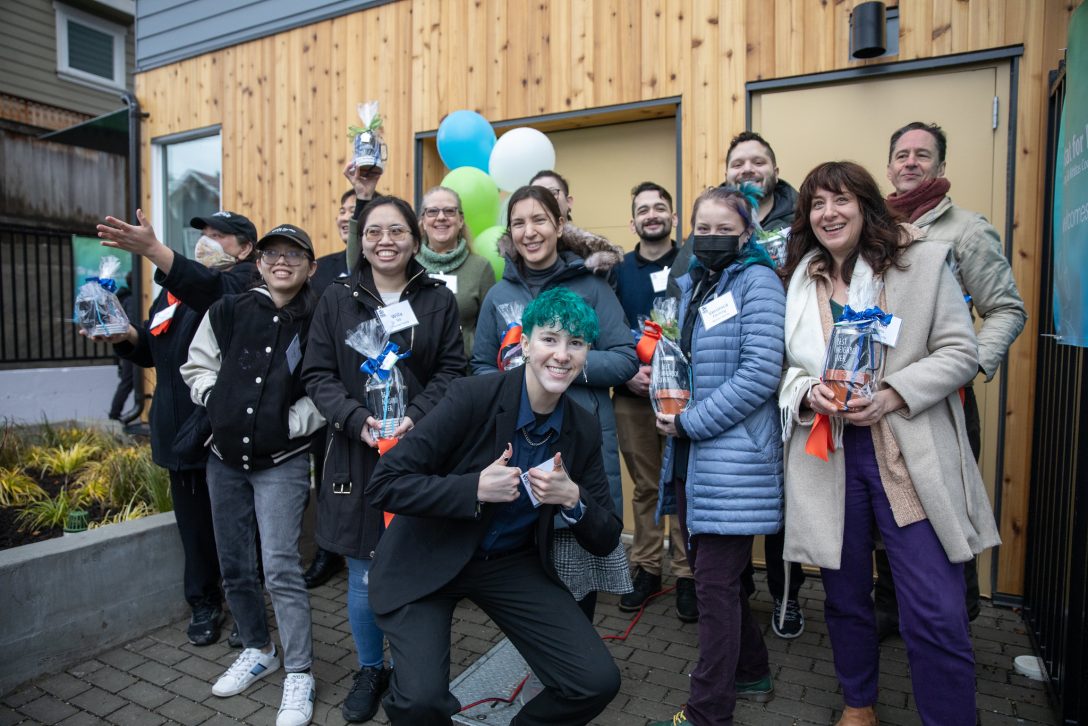
Habitat’s recently dedicated community in Capitol Hill – Capitol View – is another in the growing list of examples of how women are supporting women to obtain safe, affordable housing in the region. Nine of the 13 new homes in the Capitol View development are now owned by women-led families. For a virtual tour of the Capitol View development, follow this link: Capitol View Virtual Tour

Meet the Vo Family
When Willa Vo and her family accepted the keys to their Capitol View home on March 4, it was the reward for six years of hard work. Willa and her family landed in Seattle from Vietnam, when housing prices were two-thirds below today’s. Willa, her mother Truc, and sister Thalia worked hard and saved. Still, area home prices outpaced their efforts, making a market home purchase impossible. But Habitat’s Capitol View development revived their hopes for homeownership. “Habitat for Humanity helped me have a home with an affordable price,” says Willa. Today, she and her Mom have shorter commutes to their work in an Amazon fulfillment warehouse. Thalia is a full time UW student, and they all pursue their love of exploring the region with the free time they’ve gained. “We have our own completely-new-home, and the affordable mortgage allows us to save for our next dream – opening a restaurant.”
Veronica Fleming Helps Others with Housing
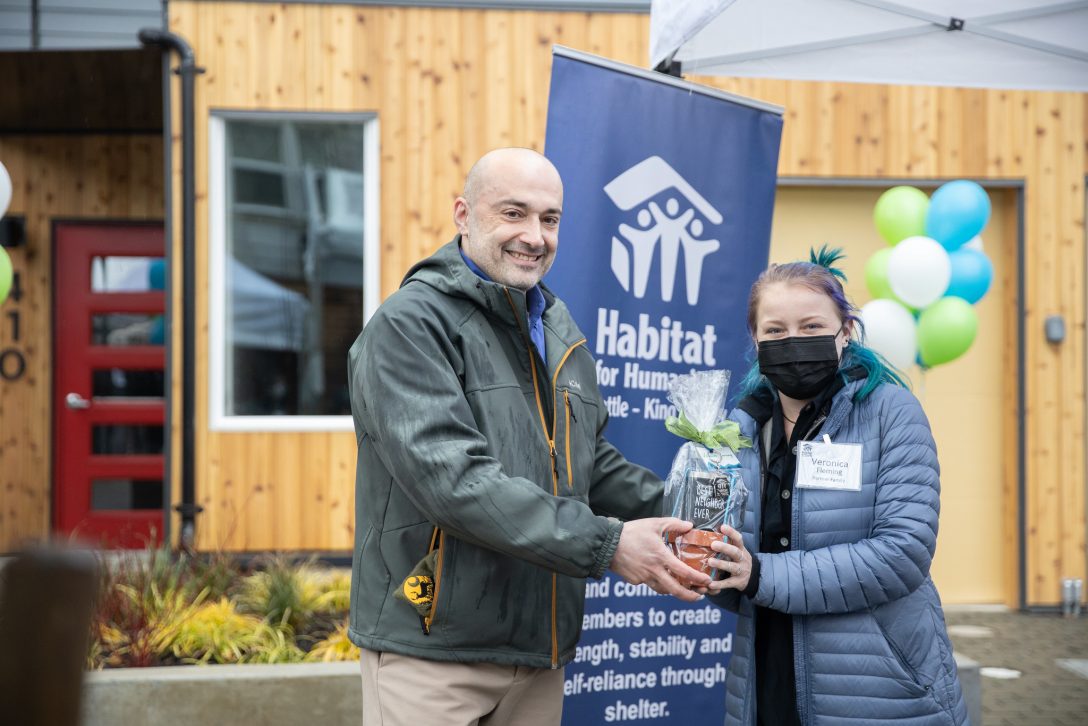
Veronica Fleming moved from Atlanta to Seattle in summer 2021 with a freshly earned bachelor’s degree in psychology and a new job as a Housing Social Worker. She quickly fell in love with the city, especially Capitol Hill. However, when she arrived in Seattle, she learned homeownership was beyond her financial reach…until she found Habitat. Today, Veronica enjoys her own home in the Capitol View development. From her work with housing, she’s keenly aware of the important role housing stability plays in the stability of life overall. She already enjoys the reduction in anxiety that comes with permanent, stable, affordable housing and the welcome impact it’s having on her mental health. “Owning my own home brings me stability, not just rent stability but consistency and lack of fear of leases ending.” And Veronica now has easy access to all there is to discover in and around the city from her Capitol Hill home.
Resilience is Becauley Elsie’s Super Power
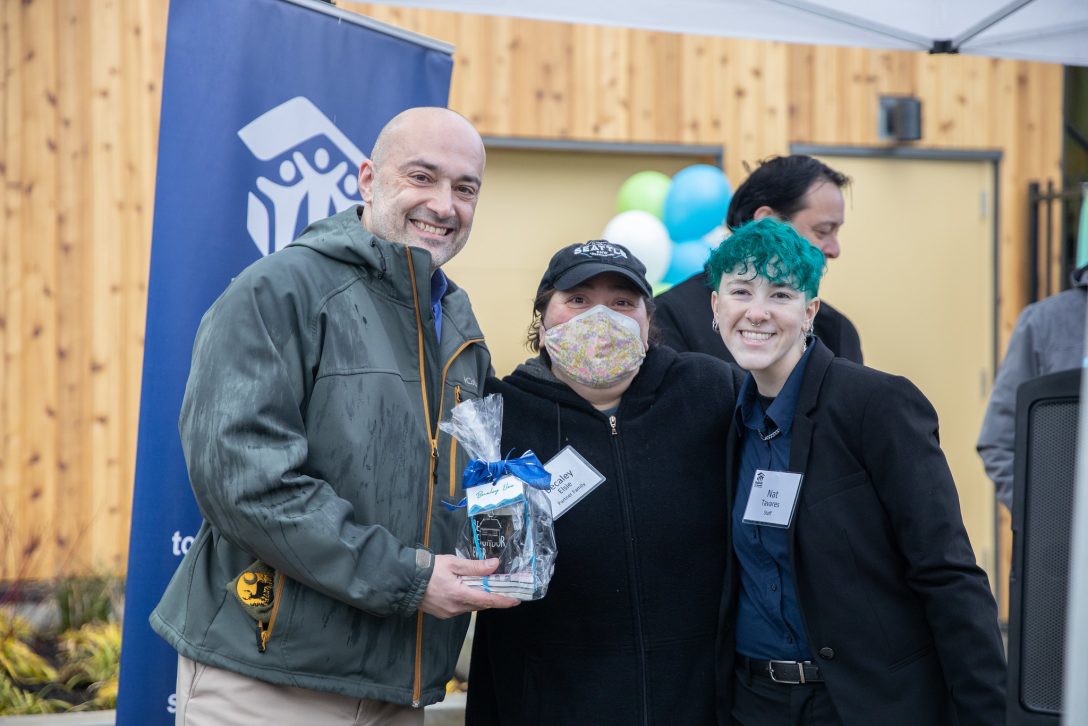
Becaley Elsie could be a poster child for resilience. She came to Seattle from Phoenix, AZ to work with a theater group. When that opportunity evaporated, she found herself homeless and jobless for a short time, but she was already in love with the city and determined to stay. She found a job as a commercial bus driver while completing her sweat equity hours and preparing to move into her new Capitol View home. Becauley and her four ‘cat daughters’ accepted the keys to their new home on March 4, delighted for the space to “chase anything that moves,” and the room to host her beloved nephew when he visits. Today she’s concentrating her efforts on a career in podcasting, art, stand-up, and running workshops to heal trauma, while pursuing her passion for small theater. She specializes in the healing process and hopes to expand her reach to help more people. She’s happy to be living in the city where she’s close to the arts and diversity. With her Habitat home, Becauley happily declares, “I am breaking a generational cycle of never owning a home.”
These women and the others currently housed in the Capitol View community have benefited directly from the efforts of other women through Women Build. This year’s two-week event culminates with a Women of Impact Build on May 6, where volunteers come together to build new affordable homes for hardworking, low-income families at a local project.
It’s not too late to sign up for a spot at Women Build – click here for more information: Habitat for Humaniity SKKC Women Build
KING 5: Women Build kicks off for Habitat SKKC

Linda Hoffner, a senior property manager at Wright-Runstad and an ardent supporter of Habitat SKKC, joined KING 5 on Sunday morning to promote Women Build. Click the link to watch the video.
Women Build provides a space where women can come together to learn construction skills while making a meaningful impact in their community. The initiative aims to empower women to break down gender barriers in the construction industry and take on leadership roles in the workforce.
Women volunteers, both experienced and novice, are given the opportunity to learn a wide range of construction skills, including framing, roofing, siding, and finishing work.
In addition to providing an opportunity to learn valuable skills, Women Build also creates a supportive community of women who are passionate about giving back to their community. Women who have participated in the initiative have reported feeling more empowered, confident, and connected to others.
The impact of Women Build extends beyond the women who participate in the program. The homes built by Habitat SKKC are sold to families in need at an affordable price, providing stable and safe housing to those who might not otherwise be able to afford it. The initiative also helps to strengthen communities by creating more affordable housing options and by bringing together individuals from different backgrounds to work towards a common goal.